
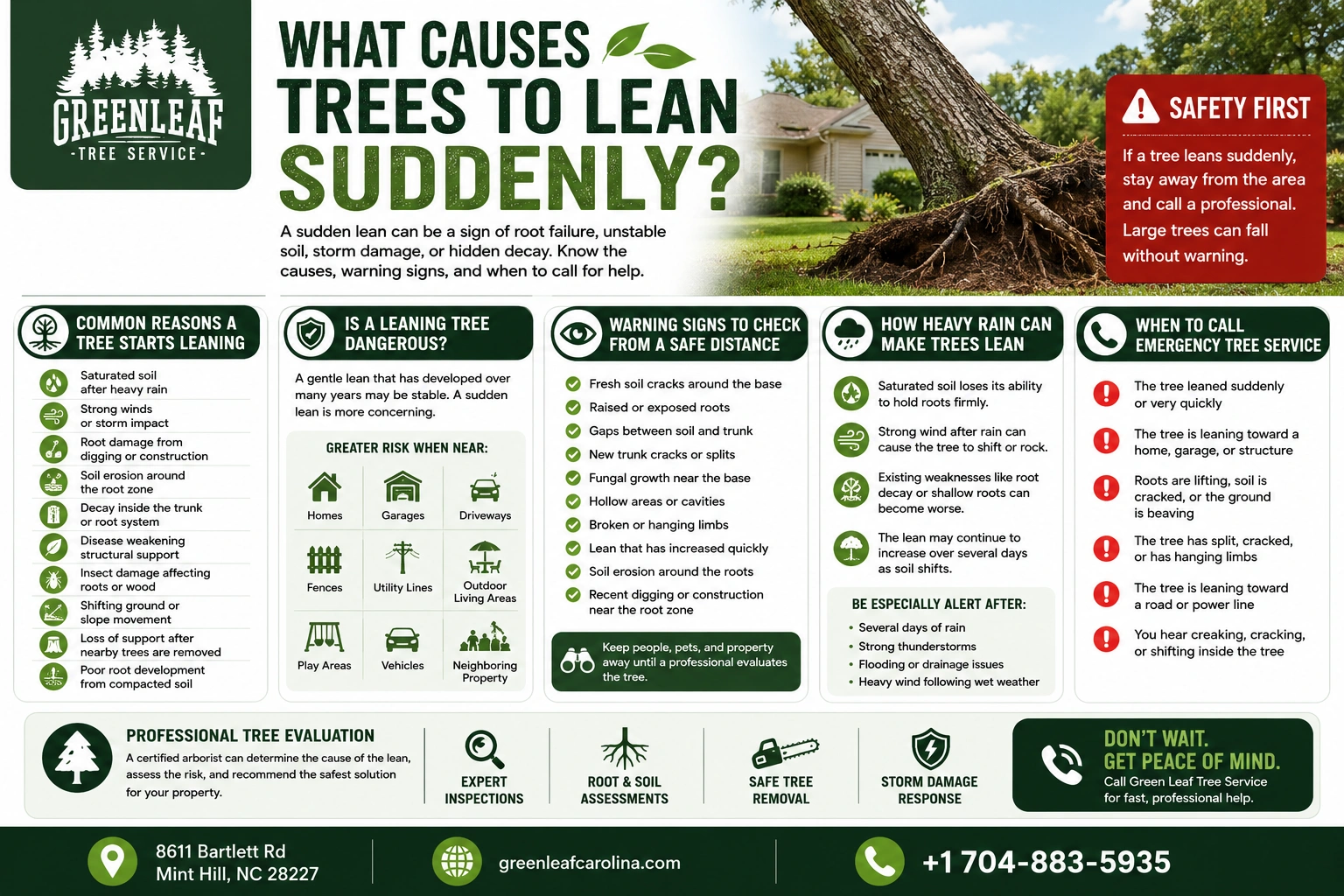
A tree may lean suddenly because its roots, soil, trunk, or surrounding ground have become unstable. Heavy rain, strong wind, root damage, erosion, decay, disease, or construction activity can all weaken the support system that keeps a tree upright.
A tree that has leaned slightly for years is not always a problem. Some trees naturally grow at an angle as they reach for sunlight, adapt to slope conditions, or respond to wind exposure over time. Sudden leaning is different. When a tree quickly changes position, it may be a sign that the root system or soil support has been compromised.
If a leaning tree is near your home, driveway, fence, utility line, or outdoor living area, avoid the area and schedule a professional evaluation. In urgent situations, emergency tree removal may be necessary. For less immediate concerns, a tree inspection can help determine whether the tree is stable, declining, or at risk of failure.
For homeowners in Rock Hill, SC, understanding what causes trees to lean suddenly can help you act before the situation becomes more dangerous.
A leaning tree can be dangerous.
Call today for safe tree inspection, trimming, or removal from experienced professionals.
Common Reasons a Tree Starts Leaning
A tree may begin leaning suddenly when something changes in the soil, roots, trunk, or surrounding environment. Trees rely on their root systems for anchoring. If those roots are weakened, loosened, damaged, or unable to grip the soil properly, the tree may shift.
Common leaning tree causes include:
- Saturated soil after heavy rain
- Strong winds or storm impact
- Root damage from digging or construction
- Soil erosion around the root zone
- Decay inside the trunk or root system
- Disease weakening structural support
- Insect damage affecting roots or wood
- Shifting ground or slope movement
- Loss of support after nearby trees are removed
- Poor root development from compacted soil
- Previous storm damage that worsens over time
Sometimes the cause is obvious, such as a storm that pushes the tree over at an angle. Other times, the problem develops slowly underground before the lean becomes noticeable above ground. A tree may appear healthy in the canopy while its roots are damaged, decayed, or loosened.
A sudden lean is especially concerning when it is paired with cracked soil, exposed roots, a raised root plate, trunk splitting, or fresh gaps around the base of the tree.
Is a Leaning Tree Dangerous?
A leaning tree can be dangerous, but not every leaning tree is an emergency. The level of risk depends on how quickly the lean developed, the condition of the tree, the stability of the roots, and what could be hit if the tree fails.
A tree that has grown with a gentle lean for many years may be stable if the trunk, roots, and soil are healthy. A tree that suddenly leans after a storm or period of heavy rain is more concerning because it may have shifted due to root failure or loosened soil.
A leaning tree becomes more serious when it is near:
- Homes
- Garages
- Driveways
- Vehicles
- Fences
- Sidewalks
- Utility lines
- Outdoor seating areas
- Play areas
- Neighboring property
The direction of the lean also matters. A tree leaning toward open space may still need attention, but a tree leaning toward a home, driveway, utility area, or outdoor gathering space creates a higher concern.
Large trees carry significant weight, and if the root system is failing, the tree may fall with little warning. Homeowners should avoid standing under, pulling on, cutting, or trying to brace a suddenly leaning tree. These actions can be dangerous and may make the situation worse.
Warning Signs to Check From a Safe Distance
If you notice a tree leaning suddenly, check it from a safe distance. Do not walk under the canopy, stand near the trunk, or approach the tree if the ground is moving, roots are lifting, or the tree appears unstable.
From a safe area, look for:
- Fresh soil cracks around the base
- Raised or exposed roots
- A lifted root plate
- Gaps between the soil and trunk
- New trunk cracks or splits
- Bark separating from the trunk
- Hollow areas or cavities
- Fungal growth near the base
- Broken or hanging limbs
- A lean that has increased quickly
- Soil erosion around the roots
- Water pooling near the tree
- Recent digging or construction near the root zone
Also check the surrounding property from a safe distance. Look for cracked sidewalks, disturbed mulch beds, shifted soil, damaged retaining walls, or roots pulling upward. These signs may indicate that the root system is moving.
If the tree is leaning toward a structure, vehicle, driveway, or power line, keep people and pets away from the area until a professional can evaluate it.

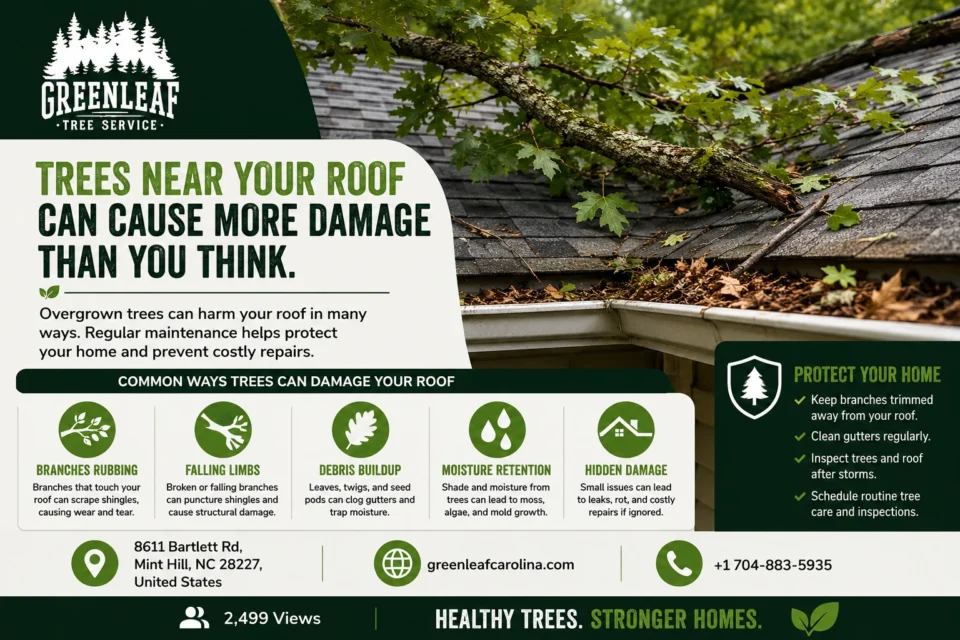
Can Overgrown Trees Damage Your Roof? What Homeowners Should Know
Yes, overgrown trees can damage your roof. Branches can scrape shingles, falling limbs can puncture roofing materials, and leaves or…
How Heavy Rain and Saturated Soil Can Make Trees Lean
Heavy rain can play a major role in sudden tree leaning. When soil becomes saturated, it can lose some of its ability to hold roots firmly in place. This is especially true in areas with poor drainage, compacted soil, slopes, erosion, or shallow root systems.
After prolonged rain, the ground around a tree may become soft and unstable. If strong wind follows, the tree may begin to rock or shift. The roots may still be attached, but the soil may no longer provide enough resistance to keep the tree upright.
Saturated soil can also reveal existing weaknesses. A tree with root decay, poor anchoring, previous construction damage, or a shallow root system may appear stable during dry weather but begin leaning when the soil becomes too wet.
Homeowners should be especially alert after:
- Several days of rain
- Strong thunderstorms
- Tropical weather systems
- Flooding or drainage backups
- Heavy wind following wet weather
- Soil erosion around slopes or drainage paths
In some cases, the tree may not fall immediately after the storm. It may continue leaning over the next few days as the soil shifts or roots lose support. That is why a new lean after heavy rain should not be ignored.
When to Call Emergency Tree Service for a Leaning Tree
You should call emergency tree service when a leaning tree appears unstable or creates an immediate risk to people, structures, vehicles, or access areas. A sudden lean does not always mean the tree will fall right away, but certain warning signs call for faster action.
Call for urgent tree service if:
- The tree suddenly leaned after a storm
- The tree is leaning toward your home or garage
- Roots are lifting out of the ground
- Soil is cracked or raised around the base
- The trunk is split or cracking
- Large limbs are broken or hanging
- The tree is resting on another tree or structure
- The tree is near power lines
- The lean is increasing quickly
- The tree blocks a driveway, road, or entrance
- You hear cracking, popping, or shifting sounds
Do not try to cut the tree yourself, especially if it is under tension, leaning heavily, or tangled with other limbs. Leaning trees can shift unexpectedly when cut, and unstable root systems can make the tree unpredictable.
If the tree is not an immediate hazard but has changed position, schedule a professional inspection as soon as possible. Early evaluation can help determine whether trimming, monitoring, support, or removal is appropriate.
What a Tree Company Evaluates During an Inspection
A tree company will look at the full situation, not just the angle of the lean. The goal is to understand why the tree is leaning, whether the root system is stable, and whether the tree can remain safely in place.
The goal is not just to measure the angle of the tree. The real question is whether the tree is still anchored, whether the lean is changing, and what could be hit if the tree fails.
A professional evaluation may include:
- Direction and severity of the lean
- Whether the lean is new or long-standing
- Soil cracks, heaving, or root plate movement
- Visible root damage or decay
- Trunk cracks, splits, cavities, or hollow areas
- Fungal growth near the base
- Canopy weight and branch distribution
- Storm damage or broken limbs
- Nearby structures, driveways, fences, and utilities
- Drainage issues or saturated soil
- Construction activity near the root zone
- Access for equipment if removal is needed
The company may also consider whether the tree is still actively moving. A tree that has shifted but stabilized may require a different approach than one that is continuing to lean or uproot.
In some cases, a tree inspection may show that the tree can be monitored or maintained. In other cases, especially when the root system has failed or the tree is leaning toward a structure, removal may be the safest option.
Leaning Trees in Rock Hill, SC: How Green Leaf Tree Service Can Help
Green Leaf Tree Service helps homeowners understand what is happening when a tree suddenly begins leaning. Whether the issue started after heavy rain, storm damage, root disturbance, or no obvious cause, our team can evaluate the tree and explain the safest next step.
For homeowners in Rock Hill, SC and nearby areas, we provide professional tree inspections to assess stability, visible hazards, root concerns, and structural problems. If the tree creates an immediate safety concern, we can also help with emergency tree removal when fast action is needed.
A leaning tree does not always mean disaster is about to happen, but sudden movement should never be ignored. Getting the tree checked early can help protect your home, property, and family while giving you a clear plan.
FAQs
Why did my tree suddenly start leaning?
A tree may suddenly lean because of saturated soil, storm damage, root failure, decay, disease, construction disturbance, erosion, or shifting ground. Sudden leaning usually means something has changed in the tree’s support system.
Is a leaning tree always dangerous?
No. Some trees naturally grow at an angle and remain stable for years. A leaning tree becomes more concerning when the lean is new, increasing, or paired with exposed roots, cracked soil, trunk damage, or nearby property risks.
Can heavy rain make a tree fall?
Yes, heavy rain can soften or saturate soil, making it harder for roots to anchor the tree. If strong wind follows wet conditions, trees with weak roots or poor soil support may begin leaning or fall.
What should I do if a tree is leaning toward my house?
Stay away from the tree and keep people and pets out of the area. Do not try to cut, pull, or brace it yourself. Contact a professional tree company for urgent evaluation.
Can a leaning tree be saved?
Sometimes. If the lean is minor, long-standing, and the tree is structurally sound, it may not need removal. If the root system is failing, the trunk is split, or the tree is actively moving, removal may be necessary.
What are signs that a leaning tree may fall?
Warning signs include raised roots, cracked soil, a lifted root plate, trunk splitting, hollow wood, fungal growth, broken limbs, increasing lean, or movement after storms.
Should I inspect a leaning tree myself?
You can look from a safe distance, but do not stand under the tree, approach unstable roots, or walk near the trunk if the tree appears to be moving. A professional inspection is the safest way to determine the level of risk.
When is a leaning tree an emergency?
It may be an emergency if the tree is leaning toward a house, garage, vehicle, driveway, road, utility line, or area where people walk or gather. A sudden lean after a storm should also be treated as urgent.
Worried about a leaning tree?
Get trusted help identifying the cause and removing the hazard before it falls.