
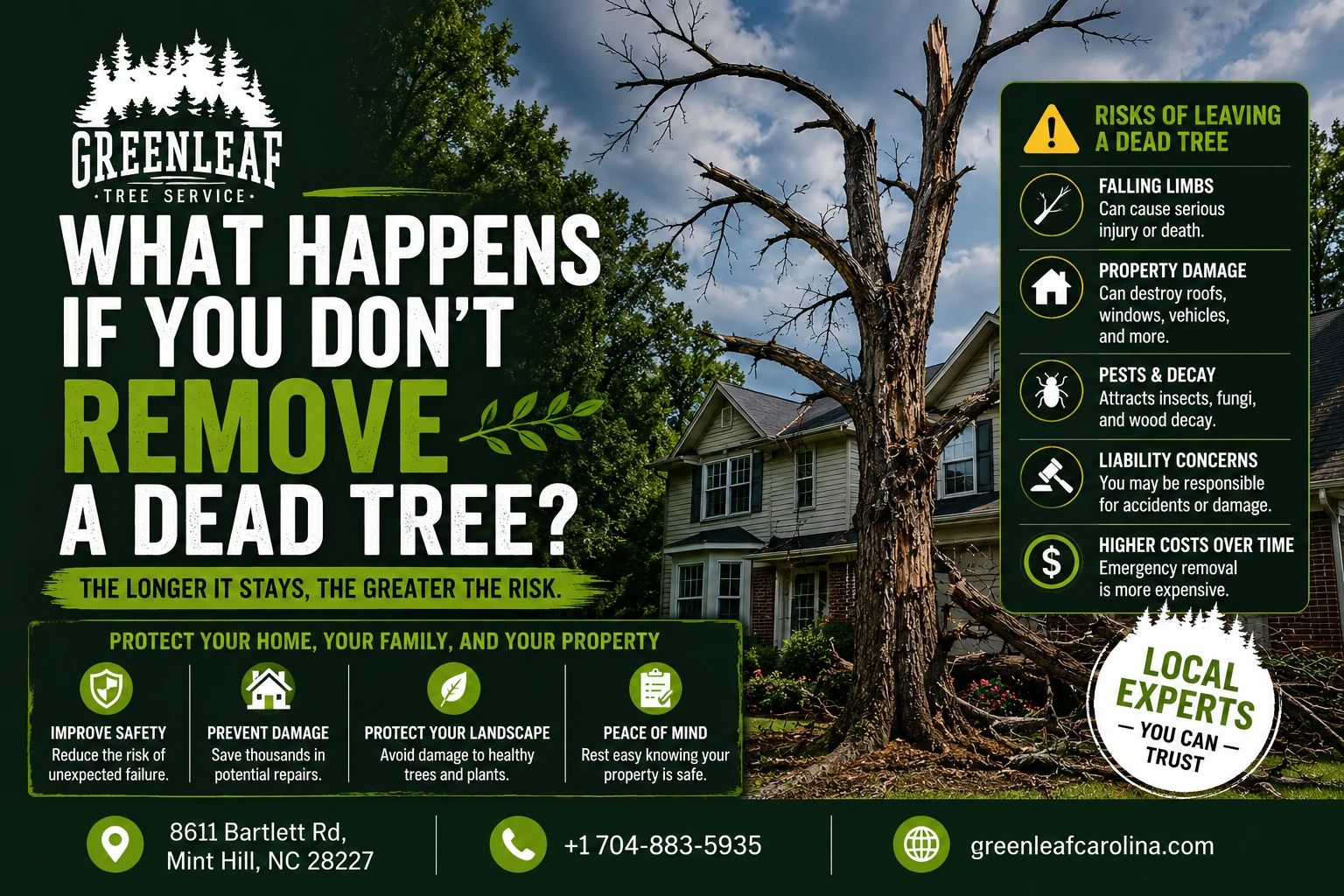
A dead tree becomes more dangerous the longer it remains standing because its wood, roots, and branches continue to weaken. If you do not remove it, the tree can drop limbs, fall without warning, attract pests, damage nearby property, and create significant safety concerns.
Dead trees do not recover, and decay usually spreads over time. Even when a trunk appears stable, hidden structural failure may already be developing inside the wood or root system. Prompt evaluation helps homeowners avoid emergencies, higher removal costs, and preventable injuries during storms or weather.
Remove the Risk Before It Falls
Waiting to remove a dead tree can lead to costly property damage. Get expert tree removal before the problem gets worse.
Why Dead Trees Become Dangerous
A dead tree loses the living tissues that move water, store energy, and support new growth. Once those systems stop functioning, the tree begins a gradual process of drying, cracking, and decay.
Branches often become brittle first. They may break without warning. The trunk and roots also weaken as fungi and insects break down the wood.
Structural Strength Declines
Living trees can respond to stress by producing new wood and sealing some injuries. Dead trees cannot repair cracks, cavities, or damaged roots.
Every season of exposure can reduce stability. Large limbs may separate from the trunk, and the trunk may split where decay has spread internally.
Weather Speeds Up Failure
Storms place pressure on weakened trees. Wind can twist the canopy, while saturated soil reduces support around decaying roots.
Freezing conditions, heavy rain, and extreme heat can also expand cracks or weaken connections between limbs and the trunk.
Is Leaving a Dead Tree Risky?
Leaving a dead tree is risky when it stands near people, buildings, vehicles, roads, fences, utility lines, or frequently used outdoor areas.
The level of risk depends on the tree’s size, condition, location, and likelihood of failure.
Falling Limbs Can Cause Injury
A dead branch can weigh hundreds of pounds. Even smaller limbs can cause serious injury when they fall from height.
Children, pets, guests, workers, and neighbors may not recognize the danger before entering the area.
Property Damage Can Be Expensive
Falling trees can damage roofs, siding, windows, decks, vehicles, sheds, and landscaping. They may also block driveways or roads.
What Should Homeowners Look For?
Missing Leaves or Buds
A tree that does not produce leaves during the normal growing season may be dead or severely declining.
Brittle Branches
Dead branches snap easily and show dry, pale, or brown wood beneath the bark.
Do not climb the tree or break large branches to test it.
Loose Bark and Cracks
Peeling bark, deep vertical cracks, cavities, and exposed wood can indicate advanced decline.
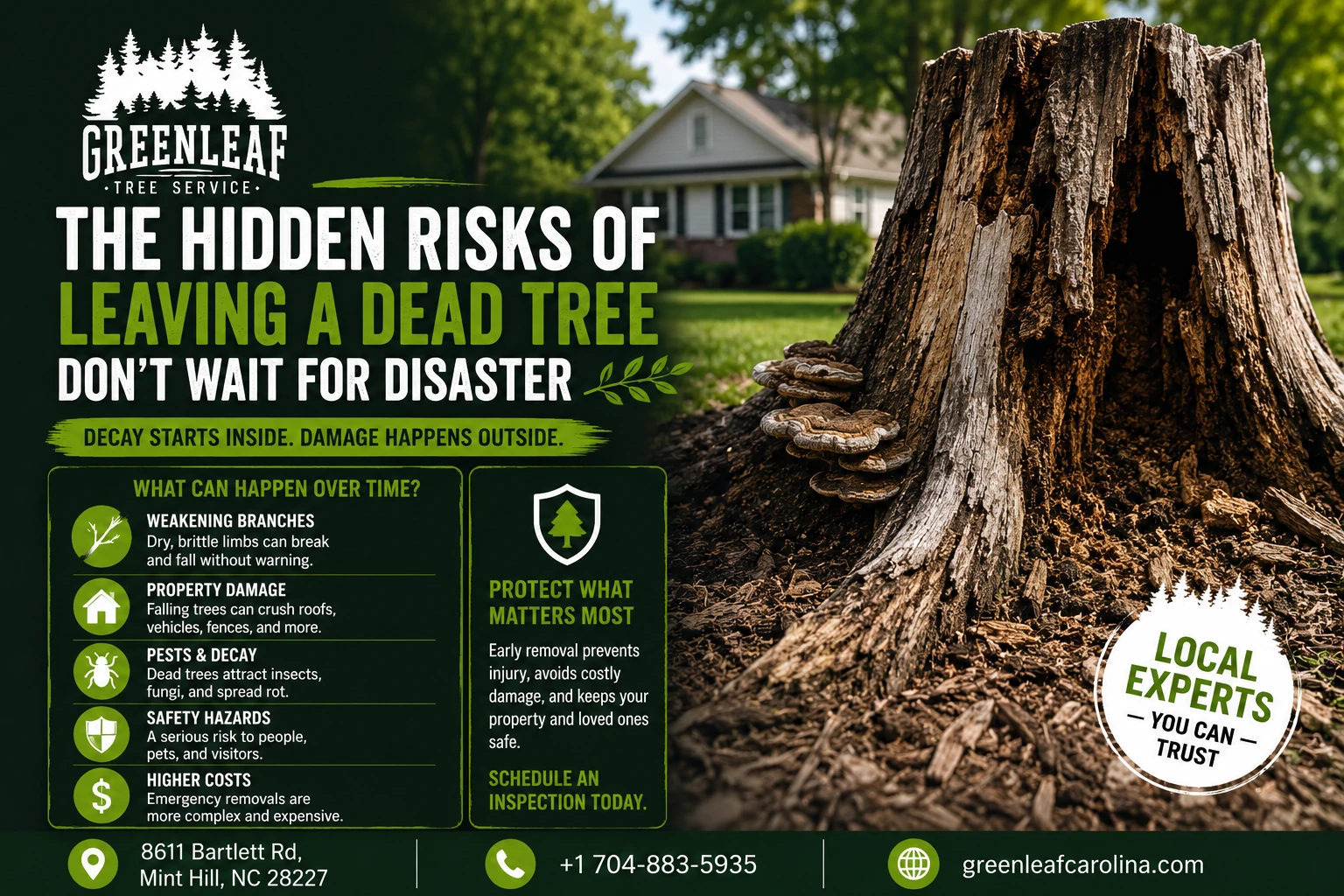
Mushrooms, conks, or shelf-like growth near the trunk may signal internal decay.
Root and Soil Changes
Watch for lifted soil, exposed roots, cracks near the base, or a new lean. These signs may indicate root failure.
Keep people away when the tree appears unstable.
How Dead Trees Attract Pests and Decay
Dead wood provides food, moisture, and shelter for insects, fungi, and wildlife. Some activity is part of natural decomposition, but it can create problems near a home.
Wood-Boring Insects
Beetles, carpenter ants, and other insects may move into weakened or dead wood. Their tunnels accelerate breakdown and make structural damage worse.
Termites
Termites may use dead roots, stumps, and decaying wood as food. A dead tree does not automatically cause a home infestation, but wood located near the building can support termite activity.
Fungi and Internal Rot
Fungi digest wood and weaken its fibers. Much of this decay can remain hidden inside the trunk or roots.
Visible mushrooms may appear only after decay is advanced.
When Should You Schedule Tree Removal?
Schedule removal promptly when a dead tree could strike a person, structure, vehicle, road, or utility line.
Waiting for the tree to fall can increase danger and make the work more difficult.
Immediate Removal Signs
Urgent professional attention is needed when:
- Large branches are already falling
- The trunk has deep cracks or splits
- The tree has developed a sudden lean
- Soil is lifting around the roots
- The trunk is hollow or heavily decayed
- The tree stands near power lines
- Storm damage has weakened the structure
- People regularly pass beneath the canopy
Removal Before Severe Weather
Removing a known hazard before storm season reduces the chance of emergency failure.
Planned removal also allows better scheduling, equipment access, and property protection than urgent cleanup after a tree falls.

What to Do With a Tree Stump: Creative Ideas and Removal Options
Cutting down a tree is sometimes necessary. Storm damage, disease, overcrowding, or safety concerns can all force the decision. But…
What Happens During Professional Removal?
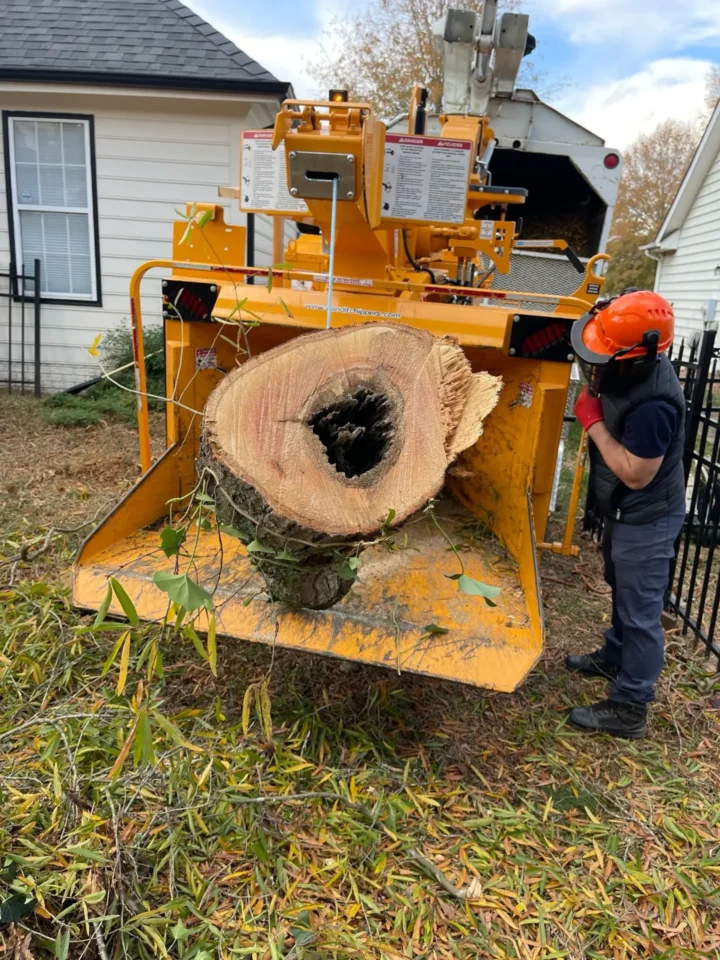
Professional tree removal begins with an assessment of the tree, surrounding property, access points, and possible hazards.
The removal plan depends on the tree’s height, lean, condition, location, and available working space.
Site Preparation
The crew identifies drop zones, structures, landscaping, utility lines, and traffic concerns. Equipment is positioned to protect workers and property.
People and pets should remain outside the work area.
Sectional Removal
When space is limited, the tree is usually removed in sections. Workers lower branches and trunk pieces using ropes, rigging, lifts, or cranes.
This controlled method reduces the chance of impact damage.
Cleanup and Stump Options
After removal, branches and trunk sections are processed or hauled away based on the service agreement.
Stump grinding may be recommended to improve appearance, reduce trip hazards, and remove decaying wood near the surface.
How Green Leaf Carolina Can Help
Green Leaf Tree Service can inspect a dead or declining tree and determine how urgently it should be removed. The team evaluates trunk condition, branch stability, root damage, decay, nearby structures, and access requirements.
Professional planning helps reduce risk during removal, especially when the tree is large, brittle, leaning, or close to a home. Green Leaf Tree Service can remove hazardous sections carefully, protect surrounding property, and discuss stump grinding when needed.
Early scheduling often provides more options than waiting for emergency failure after severe weather.
FAQ
Can a dead tree come back to life?
No. A fully dead tree cannot recover because its living tissues no longer function. A severely declining tree may still have living sections, so professional assessment can confirm its condition.
How long can a dead tree remain standing?
There is no reliable timeline. Some dead trees stand for years, while others fail within weeks or months.
Species, size, decay, root condition, soil, and weather all affect stability.
Should every dead tree be removed?
Dead trees in remote natural areas may provide wildlife habitat. Removal is generally recommended when the tree can hit people, buildings, vehicles, roads, or utility lines.
Is dead tree removal more expensive?
It can be. Brittle wood, limited access, advanced decay, and emergency conditions often require more equipment and careful rigging.
Can I remove a dead tree myself?
Small trees in open areas may appear manageable, but dead wood behaves unpredictably. Large, leaning, decayed, or confined trees should be handled by trained professionals.
Does the stump need to be removed?
Stump grinding is optional in some cases. It may be useful when the stump creates a trip hazard, attracts pests, interferes with landscaping, or sits near construction.
Remove Hazardous Trees Before They Become Emergencies
A dead tree will continue losing strength, even when it appears unchanged from the ground. Removing it before branches fall or the trunk collapses protects people, buildings, vehicles, and neighboring property.
Green Leaf Tree Service helps homeowners assess hazardous trees and plan safe removal based on the tree’s condition and location. Professional equipment and controlled techniques reduce avoidable damage during the process. Schedule an evaluation when a tree stops producing leaves, develops major cracks, sheds large branches, or begins leaning. Early action is safer and often more cost-effective.
Key Takeaways
Dead trees become more dangerous as branches, trunks, and roots weaken through decay. Leaving one near a home, road, vehicle, utility line, or active yard can lead to injury, property damage, pest activity, and liability concerns. Warning signs include missing leaves, brittle branches, peeling bark, cracks, cavities, mushrooms, root movement, and leaning. Professional removal uses planning, controlled cutting, and proper equipment to reduce risk. Scheduling removal before storms or structural failure gives homeowners safer options and helps prevent expensive emergency cleanup later while protecting surrounding structures and long-term property value.
Don’t Let a Dead Tree Become a Hazard
Dead trees can fall without warning and put your home and property at risk. Call today for safe, professional tree removal.