
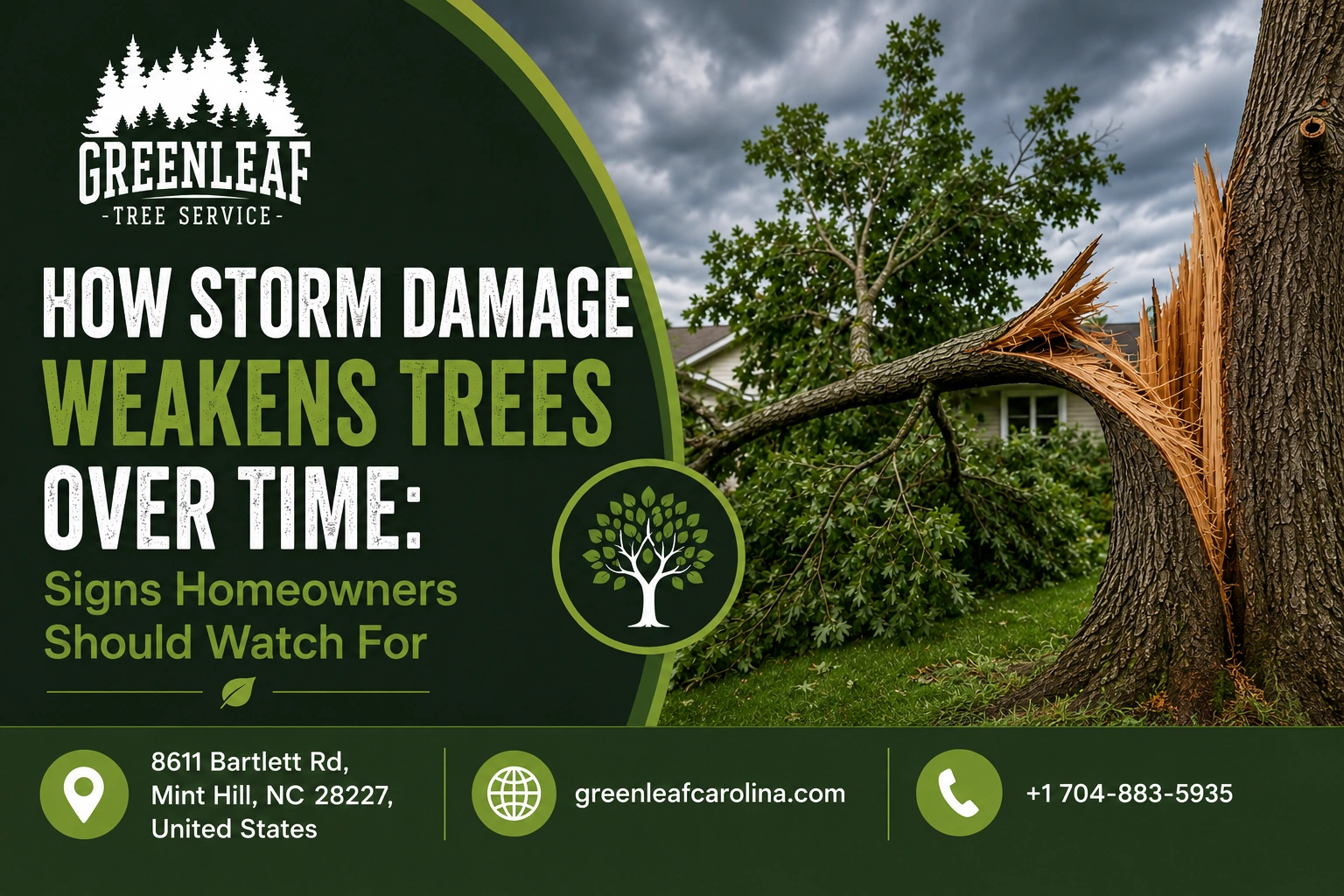
After a major storm passes, many homeowners check for obvious problems like fallen branches, damaged fences, or debris across the yard. But when it comes to trees, storm damage is not always easy to see right away. A tree may look mostly normal from the ground while hidden structural problems continue developing inside the trunk, limbs, canopy, or root system.
Storm-damaged trees can continue declining long after the weather clears. Strong winds, heavy rain, lightning, and falling debris can weaken trees in ways that may not become obvious for weeks, months, or even years. Understanding how delayed damage works can help homeowners recognize warning signs earlier and make better decisions about tree safety.
Could That Damaged Tree Fall Next?
Don't wait until weak branches become a safety hazard. Schedule a professional tree inspection and protect your home today.
Fast Answer: How Storm Damage Weakens Trees Over Time
Storm damage is not always immediate or visible. While broken limbs and fallen trees are easy to identify, other types of damage may be hidden within the tree’s structure.
Strong winds can twist trunks, strain branch attachments, and loosen roots. Heavy rain can saturate soil, making it harder for roots to anchor the tree properly. Lightning can damage internal tissues and create openings that allow decay to develop. Falling limbs from nearby trees can also strike branches or trunks, creating cracks that worsen over time.
A tree may survive the storm but continue declining afterward. Damaged wood does not heal the same way human skin does. Instead, trees attempt to seal off injured areas. If the damage is severe or decay enters the tree, the weakened area may expand.
This is why delayed structural failure can occur. A tree that remains standing after a storm may later lose a large limb or begin leaning as internal damage, root stress, or decay progresses.
Why Storm Damage Is Not Always Visible Right Away
One of the biggest challenges with storm-damaged trees is that some problems develop internally.
Storms can damage roots, branch unions, and internal wood fibers without creating obvious external symptoms. In some cases, bark remains intact even though cracks have formed beneath the surface.
Trees often continue producing leaves and maintaining a normal appearance despite structural damage. Because symptoms may take time to develop, homeowners sometimes assume a tree is healthy simply because it survived the storm.
Unfortunately, hidden damage can continue worsening long after severe weather has passed.
Is Hidden Tree Damage Dangerous?
Hidden tree damage can be dangerous because the tree may appear healthy while structural problems develop beneath the surface.
Some of the most concerning hidden issues include:
- Internal cracking
- Root damage
- Structural weakening
- Compromised branch attachments
- Decay inside the trunk or major limbs
Internal cracks can reduce the tree’s strength even when bark remains intact. Root damage can affect stability, especially when soil becomes saturated during future storms. Weak branch attachments may look normal from a distance but fail under wind, rain, or added weight.
Because hidden damage is not always visible from the ground, homeowners may underestimate the risk. A tree that looks green and full can still have internal weaknesses that increase the chance of future limb failure or whole-tree instability.
What Homeowners Should Check After Severe Weather
After severe weather, homeowners should perform a careful visual inspection from the ground.
You should never climb a damaged tree or attempt to remove heavy limbs yourself, especially if branches are broken, hanging, or located near power lines.
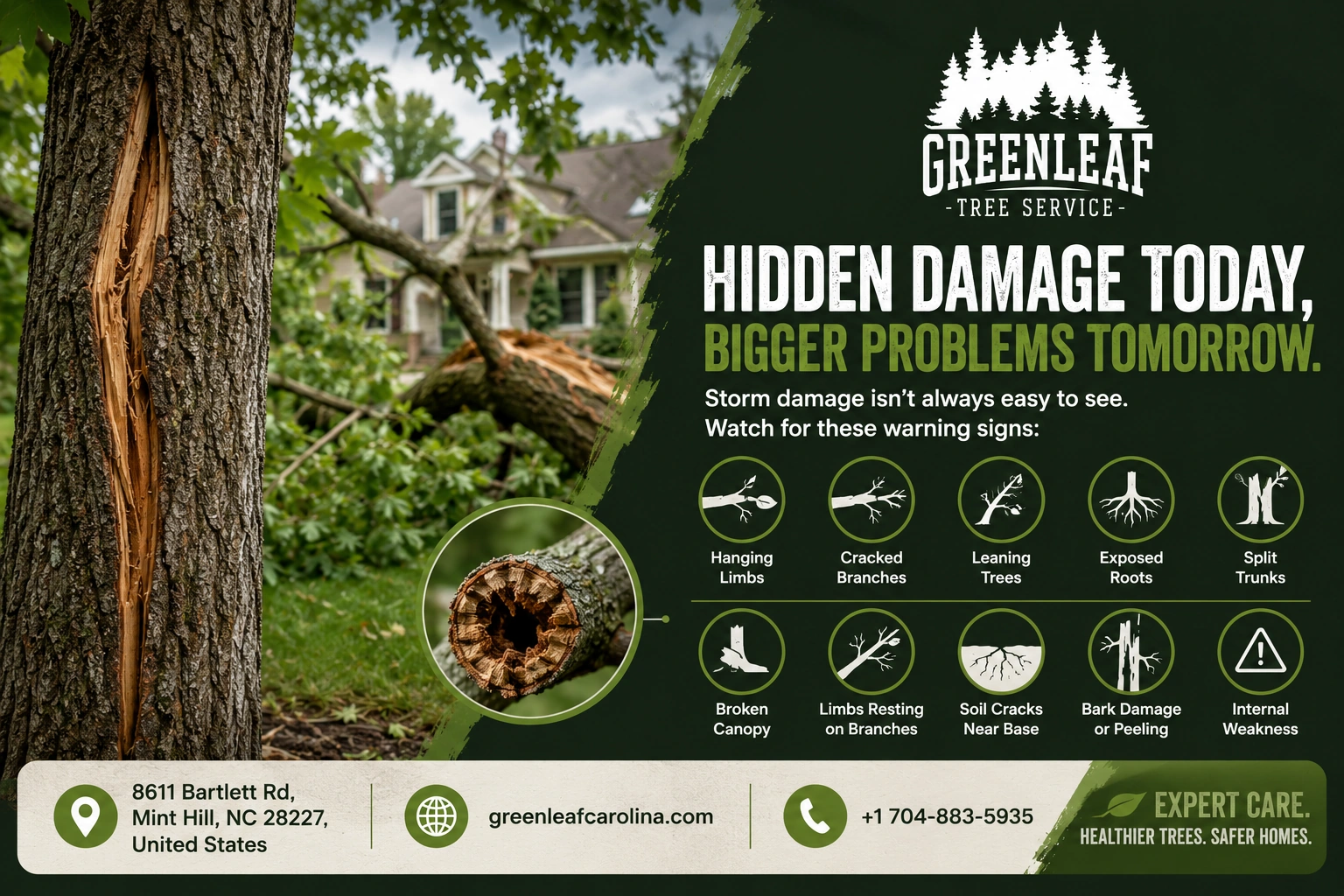
Look for warning signs such as:
- Hanging limbs
- Cracked branches
- Leaning trees
- Exposed roots
- Split trunks
- Broken canopy sections
- Large limbs resting on other branches
- Fresh cracks in the soil near the base
- Bark peeling or missing after impact damage
Some storm damage is easy to spot, but not all of it will be visible from the ground. Cracks in upper limbs, weakened branch unions, and internal trunk damage may require closer evaluation.
If something looks different after a storm, even if the tree is still standing, it is worth monitoring closely.
Why Healthy-Looking Trees Can Still Be Damaged
One of the most common misconceptions after a storm is that a tree is safe simply because it remains standing and has green leaves.
In reality, storm damage often affects internal structures that are not immediately visible. A tree may continue producing leaves while hidden cracks, weakened branch attachments, damaged roots, or internal decay develop beneath the surface.
Because these issues are not always visible from the ground, homeowners may not realize a problem exists until a branch fails or the tree begins leaning during a future storm.
This is why professional evaluation can be valuable after significant weather events, especially for large trees located near homes, driveways, vehicles, or outdoor living spaces.
Why Cracks and Splits Get Worse Over Time
Cracks and splits should not always be dismissed as minor cosmetic damage. Once wood is opened, the damaged area can continue weakening.
Moisture can enter cracks and create conditions for decay. Insects may also move into weakened areas, especially when the tree is already stressed. Repeated wind exposure can widen existing splits as branches move back and forth.
A small split in a limb or trunk may become more serious as the tree continues carrying weight. Over time, the damaged area may lose strength, making future failure more likely.
This is especially important for large limbs over homes, driveways, sidewalks, fences, or outdoor living areas. Even if the tree does not need immediate removal, damaged areas should be monitored and evaluated before they worsen.

Why Is My Tree Losing Leaves Early?
A tree may lose leaves early because of drought stress, extreme heat, too much water, pests, disease, root damage, soil…
When Should You Schedule a Tree Inspection?
A professional tree inspection may be recommended after any major weather event, especially when trees are close to homes, vehicles, or high-use areas.
Homeowners should consider scheduling an inspection after:
- Major storms
- Visible cracks or splits
- Newly leaning trees
- Root disturbances
- Large broken limbs
- Repeated storm exposure
- Lightning strikes
- Soil movement near the tree base
- Sudden canopy thinning after a storm
Early assessment can help identify problems before they progress. In some cases, damaged limbs may be addressed before they fail. In other situations, a tree may need closer monitoring if the risk is significant.
What Will a Tree Company Evaluate?
A tree company will look beyond the obvious damage and evaluate the overall condition of the tree. The goal is to understand whether the tree remains stable, whether damage can be managed, and whether it poses a future risk.
A professional evaluation may include:
- Structural stability
- Branch attachment strength
- Root condition
- Trunk integrity
- Canopy health
- Signs of decay
- Storm-related cracks or splits
- Overall risk assessment
Because many storm-related issues are not immediately visible, a thorough assessment can help homeowners better understand the condition of affected trees and make informed decisions about future care.
How Green Leaf Carolina Can Help
Storm damage is not always limited to what homeowners see right after severe weather. A tree may remain upright while hidden cracks, weakened roots, or damaged limbs continue affecting its health and stability over time.
Green Leaf Carolina helps homeowners evaluate storm-affected trees and understand potential long-term risks. Professional inspections can identify concerns that may not be obvious from the ground, especially around large trees near homes, driveways, and outdoor living spaces.
For homeowners throughout Fort Mill and the surrounding area, local experience matters when assessing storm damage, tree structure, and property-specific risks. Understanding the condition of damaged trees can help homeowners make informed decisions before problems become more serious.
If a recent storm has affected trees on your property, Green Leaf Carolina can help evaluate their condition and identify potential risks before they become larger problems. Our team helps homeowners understand whether a damaged tree can be monitored, pruned, or may require further action to protect people and property.
FAQs About Storm-Damaged Trees
Can a tree survive storm damage?
Yes. Many trees can survive storm damage, especially when the damage is limited and the tree remains structurally stable. However, some damage may continue affecting the tree over time, so monitoring and evaluation are important.
How long after a storm can tree damage appear?
Tree damage may appear immediately, but some problems can develop weeks, months, or even years later. Cracks, decay, root instability, and canopy decline may become more noticeable over time.
What are the signs of hidden storm damage?
Signs may include leaning, cracked limbs, split trunks, exposed roots, hanging branches, thinning canopy, peeling bark, or unusual movement in the tree during wind.
Should I worry about a cracked tree trunk?
Yes. A cracked trunk can indicate structural weakness, especially if the crack is deep, spreading, or located near a major branch union. A professional inspection can help determine the level of risk.
Can damaged roots make a tree unsafe?
Yes. Roots anchor the tree and absorb water and nutrients. If storm conditions damage or loosen the root system, the tree may become less stable, especially during future storms.
When should I schedule a tree inspection after a storm?
You should schedule an inspection if you notice cracks, leaning, broken limbs, exposed roots, hanging branches, or any change in the tree’s structure after severe weather.
Early Action Can Help Prevent Bigger Problems
Storm damage does not always end when the weather clears. Hidden cracks, weakened roots, internal decay, and structural stress can continue affecting a tree long after the storm has passed.
By recognizing warning signs early and monitoring trees after severe weather, homeowners can reduce potential risks and make informed decisions about tree care. Addressing concerns before they worsen can help protect both property and the long-term health of the landscape.
Don't Let Storm Damage Get Worse
A quick tree assessment today can help prevent expensive repairs tomorrow. Contact a trusted tree expert for peace of mind.