
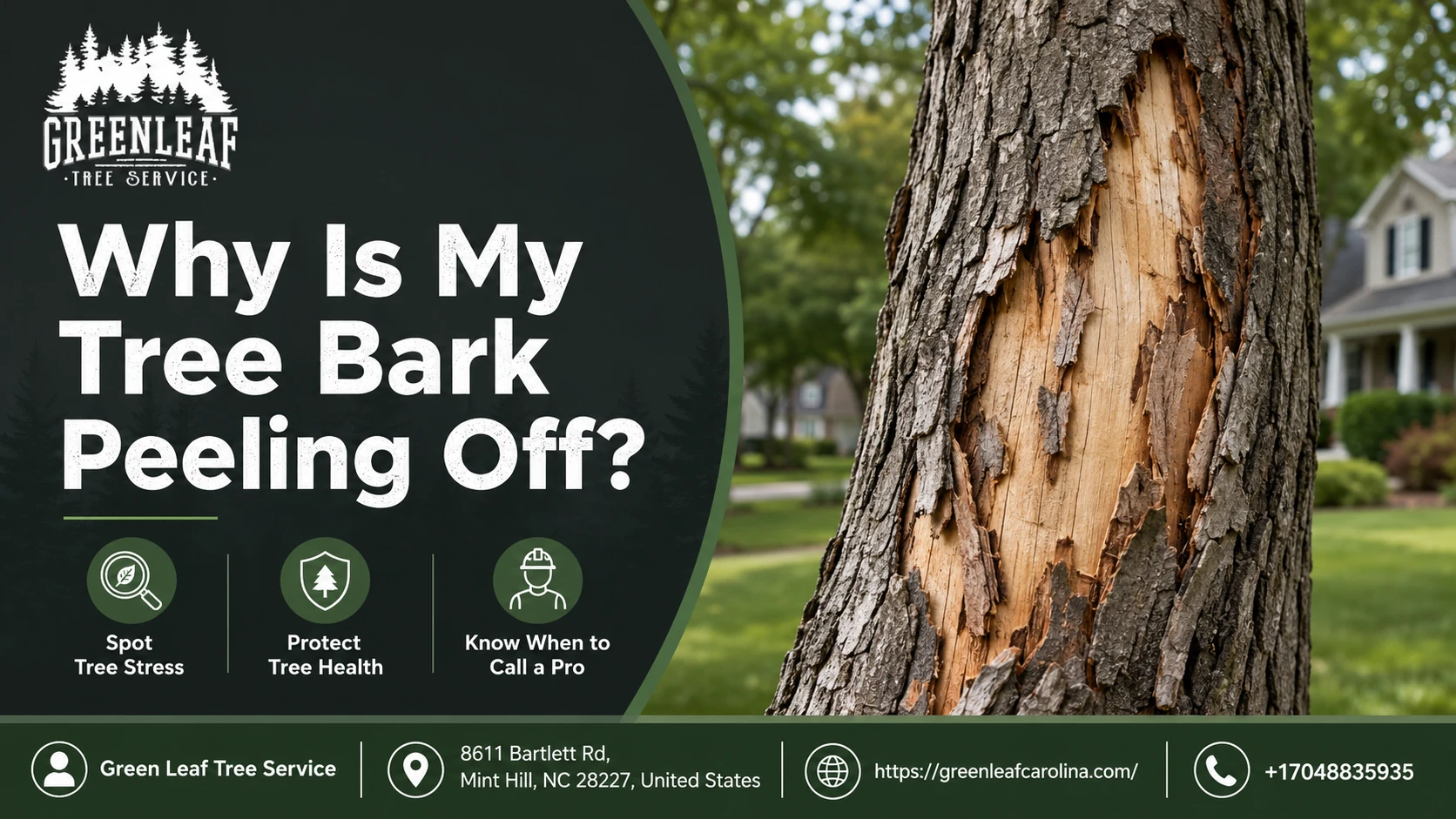
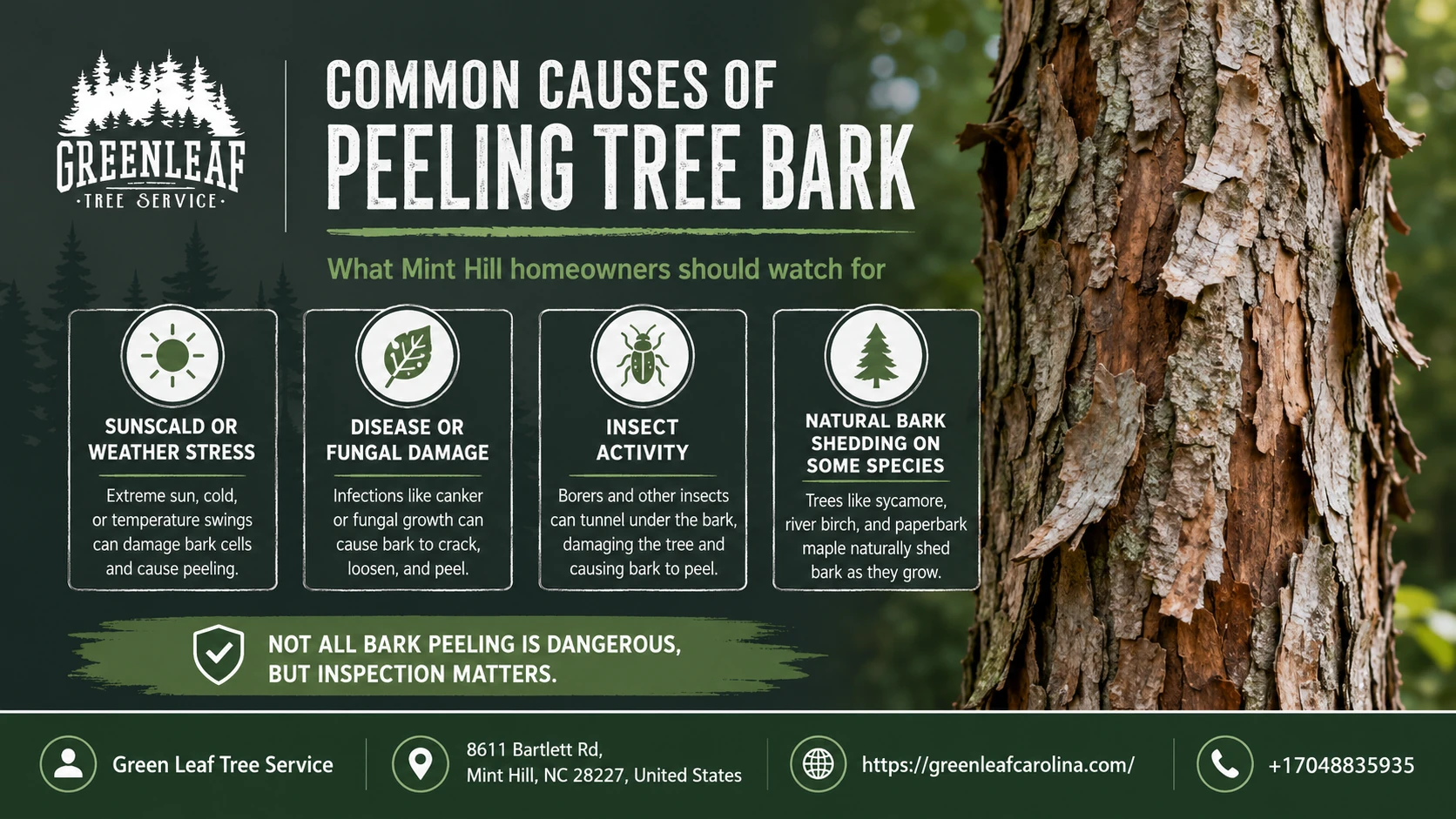
Common peeling tree bark causes include natural shedding, drought stress, sunscald, frost damage, fungal or bacterial disease, insect activity, mechanical injury, and internal decay. Some trees naturally lose outer bark as they grow, while others peel because the tissue beneath the bark has been damaged.
The most important step is to look at the entire tree. Peeling bark may be harmless when the canopy is full and the exposed surface appears healthy. It becomes more concerning when accompanied by deep cracks, sap leakage, fungal growth, dead branches, insect holes, or early leaf discoloration. Identifying the cause early may give homeowners more options for protecting the tree.
Is Your Tree Bark Peeling?
Peeling bark can signal stress, disease, or damage. Call Green Leaf Tree Service today for a professional tree inspection.
Why Tree Bark Starts Peeling
Bark is the tree’s protective outer layer. It shields the living tissue beneath the surface from insects, weather, moisture loss, and physical injury. As a tree grows, its trunk expands and the outer bark must adjust.
In some species, this growth naturally causes bark to flake, curl, or separate. In other cases, peeling indicates that the bark or the living tissue underneath has been injured.
Natural Bark Shedding
Several tree species naturally shed bark as part of their normal appearance. Examples include:
- River birch
- Sycamore
- Crape myrtle
- Shagbark hickory
- Paperbark maple
- Lacebark elm
- Bald cypress
River birch often develops thin, papery strips of peeling bark. Sycamore bark flakes away in irregular patches, revealing cream, gray, or green areas beneath. Crape myrtles may shed thin sheets and expose smooth, colorful trunks.
Natural shedding is usually consistent with the species and occurs without other signs of decline. The leaves remain healthy, the branches continue growing, and the wood beneath the loose outer layer feels firm.
Normal Trunk Growth
As young trees increase in diameter, the bark may stretch, crack slightly, or separate in small areas. This is not always harmful.
Normal growth-related changes tend to be shallow and evenly distributed. Deep splits, large bare areas, or wounds that continue expanding are less likely to be part of ordinary growth.
Drought and Root Stress
Drought can reduce the tree’s ability to maintain healthy tissue and defend itself from insects and disease. Fine roots may die back, leaves may become smaller, and the bark may crack or loosen over time.
Root stress can also result from:
- Soil compaction
- Construction activity
- Excessive mulch
- Poor drainage
- Root cutting
- Changes in soil level
- Improper planting depth
Bark problems sometimes appear months after the original stress occurred, making the connection difficult for homeowners to recognize.
Physical Damage
Mechanical injuries are common causes of bark loss, particularly near the bottom of the trunk.
Damage may come from:
- Lawnmowers
- String trimmers
- Vehicles
- Construction equipment
- Animal activity
- Improper pruning
- Stakes or ties rubbing the trunk
- Storm-broken branches
- Nails, screws, or hanging objects
Even a small repeated injury can damage the cambium, the living layer that produces new wood and bark. Larger injuries may expose the trunk to decay organisms and insects.
Is Peeling Bark a Sign of Disease?
Peeling bark can indicate disease, but it should not be diagnosed by appearance alone. Tree diseases often produce several symptoms at the same time.
The location, shape, and progression of the damaged area can help distinguish disease from natural shedding.
Cankers
A canker is an area of dead bark and underlying tissue. It may appear sunken, cracked, darkened, swollen around the edges, or stripped of bark.
Cankers may be caused by fungi, bacteria, weather damage, or injury. They commonly develop on trees that have already been weakened by drought, poor soil, root damage, or incorrect pruning.
Possible signs include:
- Peeling around the edge of a wound
- Sunken bark
- Dark or reddish discoloration
- Sap or fluid leakage
- Raised ridges of new tissue
- Dead branches above the damaged area
- Fungal growth around the wound
If a canker grows around most of a branch or trunk, it can interrupt the movement of water and nutrients.
Fungal Infections
Some fungi attack bark and cambium, while others decay the wood inside the trunk. Bark may loosen and fall away as the affected tissue dies.
Fungal problems may be associated with:
- Mushrooms near the base
- Shelf-like conks on the trunk
- Soft or crumbly wood
- Hollow areas
- Cracks
- Branch dieback
- A thinning canopy
Fungal growth does not always mean a tree must be removed, but it can indicate internal decay that deserves closer evaluation.
Bacterial Disease
Bacterial diseases may create wet-looking lesions, discolored bark, foul odors, or oozing fluid. Some infections cause bark to separate from the underlying wood.
Sap leakage alone does not confirm a bacterial problem. Insects, frost damage, pruning wounds, and physical injuries may also cause fluid to appear.
Internal Decay
Peeling bark sometimes reveals a larger problem inside the trunk. Internal decay can begin after a storm wound, improper pruning, lightning strike, trunk injury, or root damage.
The tree may remain standing and continue producing leaves even while structural wood is weakening. That is why bark loss combined with cavities, cracks, or fungal growth should not be ignored.
What Should Homeowners Check First?
Before assuming the tree is diseased, homeowners should gather a few basic clues.
Identify the Tree Species
The first question is whether the species naturally sheds bark. A peeling river birch may be completely healthy, while large sections of bark falling from a maple or oak may be more concerning.
Tree identification can be based on:
- Leaf shape
- Branch arrangement
- Flowers
- Fruit or seeds
- Bark texture
- Overall form
Knowing the species also helps determine which pests and diseases are most likely.
Inspect the Wood Beneath the Bark
Do not pull off bark that is still attached. Instead, look at the visible area underneath.
Healthy-looking exposed tissue may be firm and relatively dry. Warning signs include:
- Soft wood
- Black or dark streaks
- Crumbling material
- Insect tunnels
- Moist, foul-smelling tissue
- Large cavities
- Deep discoloration
Homeowners should avoid cutting into the trunk because this can enlarge the wound and make diagnosis harder.
Check the Canopy
The canopy often reveals whether the bark problem is isolated or part of broader decline.
Look for:
- Thinning leaves
- Small leaves
- Early fall color
- Wilting
- Dead branches
- Uneven growth
- Delayed leaf emergence
- Excessive sprouts along the trunk
- Bare branch tips
A healthy canopy is reassuring, although it does not completely rule out internal decay.
Examine the Bark Pattern
Natural bark shedding tends to follow a predictable pattern. Disease or injury is more likely when the peeling is concentrated in one damaged area.
Pay attention to:
- Long vertical cracks
- Sunken sections
- Blackened areas
- Sap leakage
- Raised wound edges
- Bark loss near pruning cuts
- Damage on one side of the trunk
- Bark separating near the soil line
Inspect the Base of the Tree
Problems near the root flare can affect the entire tree.
Check for:
- Mulch touching the trunk
- Soil piled over the base
- Girdling roots
- Mushrooms near the roots
- Standing water
- Soft or discolored bark
- Mower injuries
- Root damage
- Sudden leaning
The trunk should widen where it meets the ground. A trunk that enters the soil like a straight pole may have been planted too deeply.
How Weather, Pests, and Decay Affect Bark
Bark loss often develops from more than one cause. Environmental stress may weaken the tree first, followed by insect activity or disease.
Sunscald
Sunscald often affects young trees with thin bark. It commonly appears on the south or southwest side of the trunk.
During winter, sunlight warms the bark during the day. Temperatures may then drop quickly, damaging the living tissue.
Sunscald may produce:
- Elongated sunken areas
- Dry bark
- Cracks
- Discoloration
- Peeling
- Exposed wood
The damaged section may slowly expand as the bark dies and separates.
Frost Damage
Rapid temperature changes can cause the outer and inner trunk tissues to expand and contract at different rates. This may create a vertical split known as a frost crack.
The crack may close during warm weather and reopen during future cold periods. Raised ridges of wound tissue may eventually form along the sides.
Drought Stress
Drought weakens trees by reducing water availability to the leaves, roots, and cambium. It can also make them more vulnerable to borers, bark beetles, and canker diseases.
Signs of drought stress may include:
- Wilting
- Leaf scorch
- Premature leaf drop
- Dead branches
- Bark cracking
- Reduced growth
- Increased insect activity
Trees may continue showing drought-related damage after rainfall returns.
Excess Moisture
Too much water can also create problems. Saturated soil reduces oxygen around the roots and may contribute to root disease.
Bark near the base may become soft, dark, cracked, or loose when root collar problems develop.
Boring Insects
Wood-boring insects often target stressed or declining trees. Their larvae tunnel beneath the bark and through the wood.
Possible warning signs include:
- Round or oval holes
- D-shaped holes
- Sawdust-like material
- Sap or resin flow
- Galleries under the bark
- Bark splitting
- Woodpecker activity
- Dead branches
Some insects attack healthy trees, while others arrive after the tree has already begun declining. Identification is important before deciding on treatment.
Bark Beetles
Bark beetles create tunnels beneath the bark. When the bark falls away, branching or winding galleries may be visible.
Heavy infestations can interrupt the movement of water and nutrients through the tree. Bark beetles may also spread fungal organisms.
Wood Decay
Decay fungi gradually weaken the trunk, roots, or branches. The outer bark may remain in place until the underlying wood becomes too damaged to support it.
Warning signs of decay include:
- Hollow sounds
- Cavities
- Mushrooms
- Conks
- Soft wood
- Repeated branch failure
- Large cracks
- Canopy thinning
Decay cannot usually be reversed. Management focuses on determining how much structural strength remains and whether the tree can be safely retained.
When Should You Schedule Tree Healthcare?
Minor peeling on a naturally exfoliating species may require no treatment. Professional evaluation is recommended when bark loss appears abnormal, spreads over time, or occurs with other symptoms.
Homeowners should schedule tree healthcare when they notice:
- A large area of exposed wood
- A deep trunk crack
- An expanding canker
- Dark or foul-smelling fluid
- Mushrooms or conks
- Numerous insect holes
- Sawdust-like material
- Dead branches
- Premature leaf color
- A thinning canopy
- Bark loss near the base
- Soft or hollow wood
- Root damage
- A new lean
Early diagnosis can make a significant difference. Correcting irrigation, mulch, drainage, or soil compaction may help a stressed tree recover. Confirmed pest or disease problems may be easier to manage before extensive damage occurs.
Homeowners should avoid applying paint, wound sealant, fungicide, or insecticide without knowing the cause. A product that helps one condition may be ineffective or inappropriate for another.
The tree’s location should also influence urgency. Bark loss on a tree beside a house, driveway, road, utility line, or play area deserves faster attention because structural decline could affect people or property.

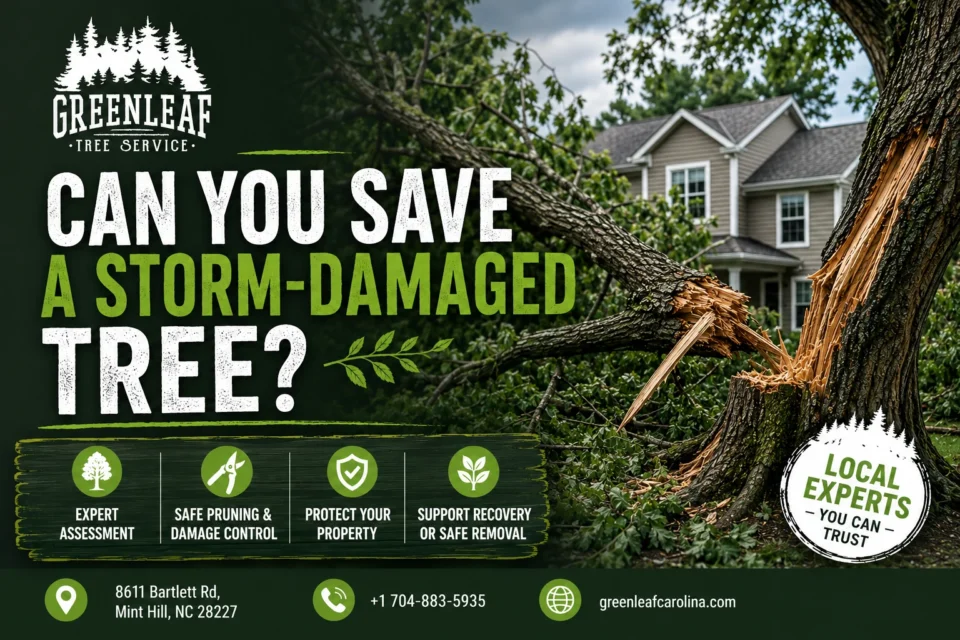
Can You Save a Storm-Damaged Tree?
A storm-damaged tree can often be saved when its trunk, roots, and main structure remain stable. Recovery depends on the…
What Will an Arborist Evaluate?
An arborist will examine the bark problem as one part of the tree’s overall condition.
Species and Normal Bark Characteristics
The arborist will determine whether the tree naturally sheds bark and whether the observed pattern is normal for its age and species.
Site History
The homeowner may be asked about:
- Recent drought
- Flooding
- Construction
- Root cutting
- Storm damage
- Lightning
- Pruning
- Herbicide use
- Irrigation changes
- Mechanical injury
- When symptoms first appeared
This background can help connect bark loss to an earlier stress event.
Trunk and Bark Condition
The arborist may inspect:
- Cankers
- Wounds
- Cracks
- Loose bark
- Discoloration
- Sap leakage
- Insect galleries
- Fungal structures
- Wound closure
- Girdling damage
Canopy Health
Leaf size, color, density, branch growth, and dieback help show how much of the tree is affected.
A localized bark injury with a healthy canopy may have a better outlook than similar bark loss combined with widespread decline.
Root Zone
The inspection may include:
- Root flare visibility
- Soil compaction
- Moisture levels
- Drainage
- Girdling roots
- Root damage
- Construction disturbance
- Mulch depth
- Changes in soil grade
Many trunk and canopy symptoms begin with root stress.
Pest Evidence
Exit holes, frass, larvae, adult insects, bark galleries, and woodpecker activity may help identify a pest.
The arborist will also consider whether the insects caused the decline or simply moved into tissue that was already dead.
Structural Stability
If peeling bark reveals decay, the arborist may evaluate:
- Remaining sound wood
- Trunk cracks
- Cavities
- Branch attachments
- Root stability
- Tree lean
- Nearby structures
- Previous branch failures
Additional testing may be recommended when internal decay cannot be measured visually.
Appropriate Next Steps
Recommendations may include:
- Monitoring
- Adjusting watering
- Correcting mulch
- Improving drainage
- Reducing soil compaction
- Pruning dead branches
- Managing a confirmed pest
- Treating a specific disease
- Protecting roots
- Reducing structural risk
- Removing a severely compromised tree
The right recommendation depends on the underlying cause, not simply the appearance of the bark.
How Green Leaf Carolina Can Help
Green Leaf Carolina helps homeowners understand whether peeling bark is a normal species characteristic or a sign of stress, injury, disease, insects, or internal decay.
A tree health evaluation can include the canopy, trunk, root zone, soil conditions, drainage, pest evidence, and recent changes around the property. Looking at the complete picture helps avoid treating the wrong problem or overlooking a more serious condition.
When the tree can be preserved, care may involve improving root-zone conditions, correcting mulch or watering practices, pruning damaged branches, monitoring cankers, or managing a confirmed health issue.
When peeling bark reveals extensive decay or structural weakness, an evaluation can help homeowners understand the level of risk and the available options. The goal is to diagnose problems early, preserve valuable trees when possible, and address hazards before they become more difficult to manage.
FAQs
Is peeling bark always bad?
No. Some species naturally shed bark as they mature. Peeling is more concerning when it occurs with cracks, dead branches, sap leakage, fungal growth, or canopy decline.
Which trees naturally peel their bark?
River birch, sycamore, crape myrtle, shagbark hickory, paperbark maple, lacebark elm, and bald cypress are examples of trees that may naturally shed bark.
How can I tell if bark shedding is normal?
Normal shedding usually follows a pattern typical of the species and reveals firm bark or wood underneath. The leaves and branches should otherwise appear healthy.
Should I pull loose bark from the tree?
No. Bark that is still attached may protect living tissue. Pulling it away can enlarge the wound and expose more of the trunk.
Can drought cause peeling bark?
Yes. Drought can weaken the tree, damage tissue, and increase vulnerability to cankers and boring insects.
Can too much water damage bark?
Yes. Saturated soil can reduce oxygen around the roots and contribute to root or crown disease. Bark near the base may become dark, soft, cracked, or loose.
What does sunscald look like?
Sunscald commonly appears as an elongated, sunken, cracked, or dry area on the south or southwest side of the trunk.
Can cold weather split tree bark?
Yes. Sudden temperature changes can create vertical frost cracks that may reopen during future winters.
What is a canker?
A canker is a localized area of dead bark and underlying tissue. It may appear sunken, cracked, discolored, or swollen around the edges.
Does sap leakage mean the tree is diseased?
Not necessarily. Sap may leak because of insect activity, injury, frost cracks, bacterial disease, or natural pressure inside the tree.
What do borer holes look like?
Borer holes may be round, oval, or D-shaped. They are often accompanied by sawdust-like material, sap, loose bark, or canopy dieback.
Why are woodpeckers removing bark?
Woodpeckers may be feeding on ants, beetle larvae, or other insects beneath the bark. Frequent activity can indicate an insect problem.
Do mushrooms mean the tree is rotting?
Mushrooms or conks may indicate internal or root decay. The location and type of fungus should be evaluated before determining the tree’s condition.
Can a tree recover after losing bark?
A tree may close a limited wound by growing new tissue from the edges. Recovery depends on the size, depth, location, and cause of the damage.
What happens if bark is removed around the entire trunk?
Complete bark loss around the trunk can girdle the tree and interrupt the movement of water and nutrients. This damage is often fatal.
Can lawn equipment cause peeling bark?
Yes. Mowers and string trimmers commonly injure bark near the base. Repeated damage can lead to decay and long-term decline.
Is peeling bark near the ground serious?
It may be. Bark loss near the base can involve root collar disease, mower injury, excessive mulch, drainage problems, or decay affecting structural roots.
Should I put wound paint on exposed wood?
Wound paint is usually not recommended unless an arborist advises it for a specific condition. It does not replace proper diagnosis or care.
When is peeling bark an emergency?
Prompt evaluation is recommended when peeling bark occurs with major cracks, sudden leaning, root movement, extensive decay, or large dead branches over occupied areas.
Can peeling bark spread to nearby trees?
The peeling itself does not spread, but some insects and diseases can move between susceptible trees. The cause must be identified first.
What information should I give an arborist?
Share when the problem started, whether it is spreading, recent weather, watering habits, construction history, pruning, and any changes in the canopy.
Will an arborist remove bark during the inspection?
Usually only limited examination is necessary. Additional sampling may be recommended when the cause cannot be identified visually.
Can healthy bark grow back?
Trees do not replace missing bark exactly. They form wound tissue from the edges of the damaged area, which may gradually cover smaller wounds.
How often should the tree be monitored?
The schedule depends on the cause and severity. A stable, naturally peeling tree may need no special monitoring, while a canker or decay area may require periodic inspection.
Don’t Ignore Peeling Tree Bark
Exposed wood may leave your tree vulnerable to pests and decay. Call now and let our tree experts check the problem.