
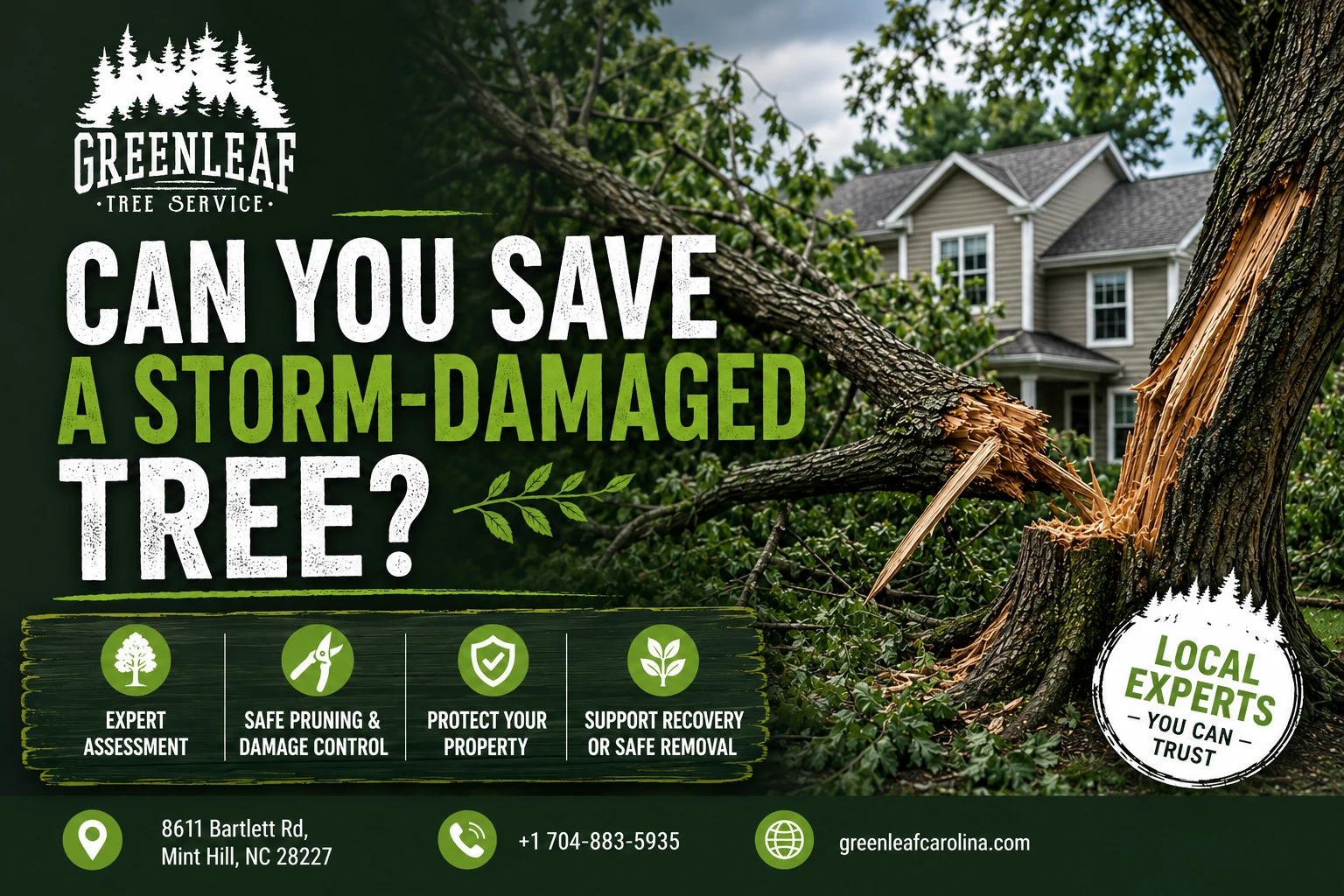
A storm-damaged tree can often be saved when its trunk, roots, and main structure remain stable. Recovery depends on the severity of the damage, the tree’s health before the storm, and whether broken limbs or splits have created an immediate safety risk.
Some trees recover well after professional pruning and careful monitoring. Others become hazardous because of cracked trunks, uprooted roots, or unstable branches. Homeowners should avoid making a quick decision based only on appearance. A qualified arborist can determine whether treatment, support, or removal is the safest long-term solution.
Can Your Damaged Tree Be Saved?
Get expert guidance after severe weather. Call today for prompt inspection, treatment, and dependable tree care.
Can Storm-Damaged Trees Recover?
Many storm-damaged trees recover when injuries are limited and the remaining structure is sound.
Recovery is more likely when canopy loss is limited, the trunk is intact, and the roots remain stable.
Minor Damage Often Heals
Small broken branches and limited canopy loss usually require proper pruning rather than removal.
The tree may look uneven for a season, but healthy growth can gradually restore its shape.
Young Trees May Recover Quickly
Young trees often rebuild their canopy faster, but damaged leaders and weak roots still need evaluation.
Improper pruning can permanently affect form, so corrective work should be planned rather than rushed.
Is Structural Damage Dangerous?
Storms can create hidden cracks, loosen roots, and weaken branches that still appear attached.
Failure may occur long after the storm, so appearance alone is not enough.
Cracked Trunks and Major Limbs
Deep trunk or scaffold-branch cracks reduce support, especially when decay or hollow areas are present.
If the split reaches deep into the wood, support systems may not provide a reliable long-term solution.
Root Damage
Leaning trees, lifted soil, exposed roots, and fresh gaps around the trunk may indicate root failure. Trees with compromised roots can fall without much warning.
Root damage is especially concerning when the tree is near a house, driveway, road, utility line, or play area.
What Should Homeowners Check First?
Keep people, pets, and vehicles away from damaged trees until inspection.
Do not stand under hanging limbs or attempt to cut branches that are under tension.
Look From a Safe Distance
Check whether the tree is leaning more than before, whether soil has lifted around the base, and whether large branches are hanging or cracked.
Also look for trunk splits, exposed wood, broken tops, and limbs resting on structures or power lines.
Check the Surrounding Area
Inspect neighboring trees, roofs, fences, sheds, and utility lines.
A damaged tree may also place pressure on another tree or structure, creating a secondary hazard.
Avoid Hazardous Cleanup
Homeowners can often remove small debris from the ground, but large limbs and suspended branches require professional equipment.
Never approach branches touching electrical lines. Contact the utility company or emergency services when power lines are involved.
How Arborists Decide Between Removal and Recovery
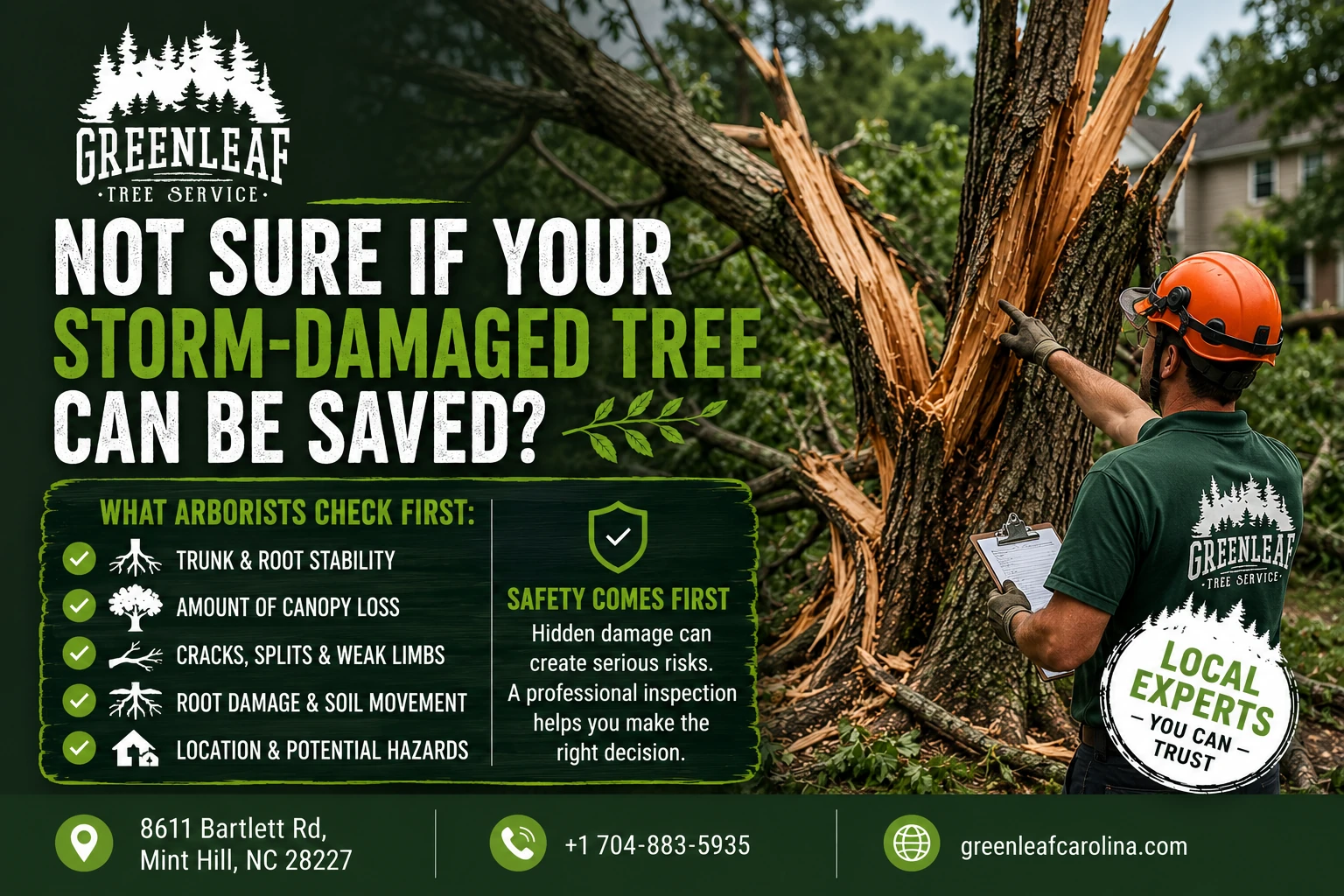
Arborists consider the whole tree, including structure, health, species, location, and failure consequences.
Amount of Canopy Loss
Limited branch loss may be manageable, while severe canopy loss can reduce energy production.
Severe, uneven canopy loss can also change how wind moves through the tree and increase future stress.
Trunk and Root Stability
Major cracks, uprooting, decay, or movement at the base make removal more likely.
A stable trunk with limited branch damage gives the tree a better chance of recovery.
Species and Growth Habit
Species with brittle wood, weak attachments, or existing decay may present greater risk.
Mature trees with extensive damage may recover less effectively than vigorous young trees.
Location and Targets
A damaged tree in an open field creates a different level of risk than one leaning toward a house. Arborists consider people, buildings, roads, vehicles, and utility lines that could be struck.

How to Get a Free Tree Removal Estimate (And What to Expect)
Tree problems can get stressful fast, and one of the first things most homeowners want to know is what it…
When Should You Call an Arborist?
Call an arborist as soon as possible when the tree has large broken limbs, a split trunk, exposed roots, a new lean, or branches over a structure.
Assessment is also important for mature or valuable trees near frequently used areas.
Urgent Warning Signs
Immediate help is needed when:
- A tree is touching or near power lines
- Large limbs are suspended above the ground
- The trunk has a deep crack
- The root plate has shifted
- The tree is leaning toward a building
- Heavy branches are resting on the roof
If the area is unsafe, keep everyone away and do not attempt temporary fixes.
What Will a Tree Expert Recommend?
Recommendations may include pruning, support, monitoring, or removal, depending on structural stability.
Corrective Pruning
Corrective pruning removes broken or hanging limbs and prevents additional tearing.
Over-pruning should be avoided. Removing too much live growth can weaken the tree and slow recovery.
Support Systems
Cables or braces may support certain weak unions or split branches. These systems do not restore the tree to its original condition.
They require proper installation and periodic inspection. Support is only suitable when the tree remains structurally viable.
Monitoring and Aftercare
Some trees need continued inspection, watering, mulching, and root-zone protection.
Fertilizer is not always necessary. The tree’s condition and soil should be evaluated before any treatment is applied.
Removal
Removal is usually recommended when the tree cannot be made reasonably safe. Severe root failure, major trunk splitting, extensive decay, or catastrophic canopy loss may leave no practical recovery option.
How Green Leaf Carolina Can Help
Green Leaf Tree Service can assess damage and identify hazards that are not visible from the ground.
This review can also document the tree’s condition, clarify urgent priorities, and help owners plan cleanup in the correct order without exposing workers, family members, tenants, neighbors, or valuable structures to avoidable danger after storms.
The team can safely remove broken branches, reduce unstable weight, and address trees near homes, driveways, fences, or other structures. When removal is necessary, the work can be planned to limit further property damage.
Prompt evaluation also helps homeowners avoid unnecessary removal. A tree that appears badly damaged may still have a strong trunk and healthy root system.
FAQs
Can a tree survive after losing large branches?
Yes, some trees survive significant branch loss when the trunk and roots remain healthy. Recovery depends on the percentage of canopy lost, the location of the break, and the tree’s overall condition.
Should broken branches be cut immediately?
Dangerous hanging branches should be addressed promptly by a professional. Smaller broken limbs should also be pruned correctly so torn edges do not continue splitting.
Can a leaning tree straighten itself?
A small young tree may gradually adjust after minor movement. A mature tree with lifted roots or a sudden new lean is unlikely to correct itself safely and requires assessment.
Can a split tree be bolted together?
Some limited splits can be supported with cables or braces. This is not suitable for every tree, and only a qualified professional should decide whether support is safe.
How long does recovery take?
Visible recovery may take several growing seasons. New shoots can appear quickly, but rebuilding a balanced canopy and sealing large wounds takes time.
Protect Your Property After the Storm
Storm damage does not always mean a tree must be removed. The safest decision starts with a careful inspection of the trunk, roots, canopy, and surrounding property.
Green Leaf Tree Service helps homeowners evaluate damaged trees and choose a practical response based on safety and long-term health. Whether the tree needs corrective pruning, structural support, monitoring, or removal, professional guidance can prevent further damage and protect nearby people and property. Schedule an assessment after severe weather to understand the tree’s condition before making permanent decisions.
Key Takeaways
Storm-damaged trees can often recover when their roots, trunk, and main structure remain stable. Broken branches and limited canopy loss may be managed through professional pruning and monitoring. Deep trunk cracks, uprooted roots, severe leaning, and hanging limbs create serious hazards and may require removal. Homeowners should inspect from a safe distance and avoid branches near power lines. A qualified arborist can compare recovery options, structural risks, and property exposure. Early assessment helps preserve healthy trees while protecting homes, vehicles, utilities, and outdoor spaces from delayed failure after storms.
Save Your Storm-Damaged Tree
Get expert tree care before the damage gets worse. Call today for a professional assessment and safe solutions.