
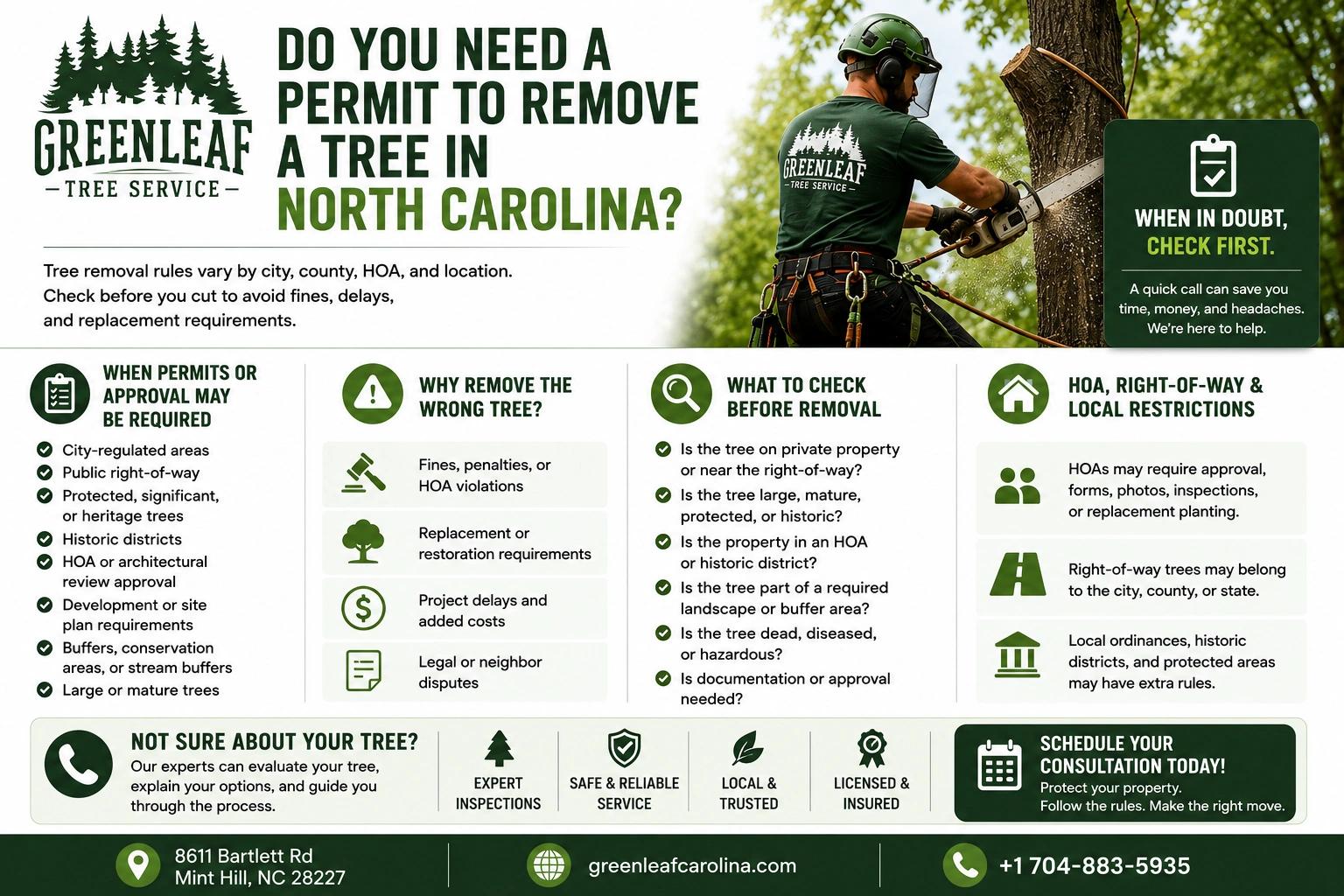
You may need a permit or approval to remove a tree in North Carolina, but it depends on where the property is located and what rules apply to the tree. There is no single statewide rule that covers every residential tree removal situation the same way.
Permit requirements are often handled by cities, towns, counties, HOAs, historic districts, neighborhood guidelines, or right-of-way rules. A small private-yard tree may not require approval, while a large, street-facing, protected, or development-related tree may need review before removal.
Tree permit rules can change, and this article is general information, not legal advice. Homeowners should confirm current requirements with their city, county, HOA, or other governing authority before removing a regulated or questionable tree.
For homeowners in Charlotte, NC and nearby areas, it is smart to check before removing a large, mature, public-facing, protected, or questionable tree. A professional tree inspection can also help document the tree’s condition before you contact the appropriate local office or HOA.
Not Sure If You Need a Tree Permit?
Call now for expert guidance before removing a tree from your property.
When Are Tree Removal Permits Required?
Tree removal permits in North Carolina are most often required because of local rules, not a universal statewide permit system. That means a tree that can be removed without a permit in one town may require review in another.
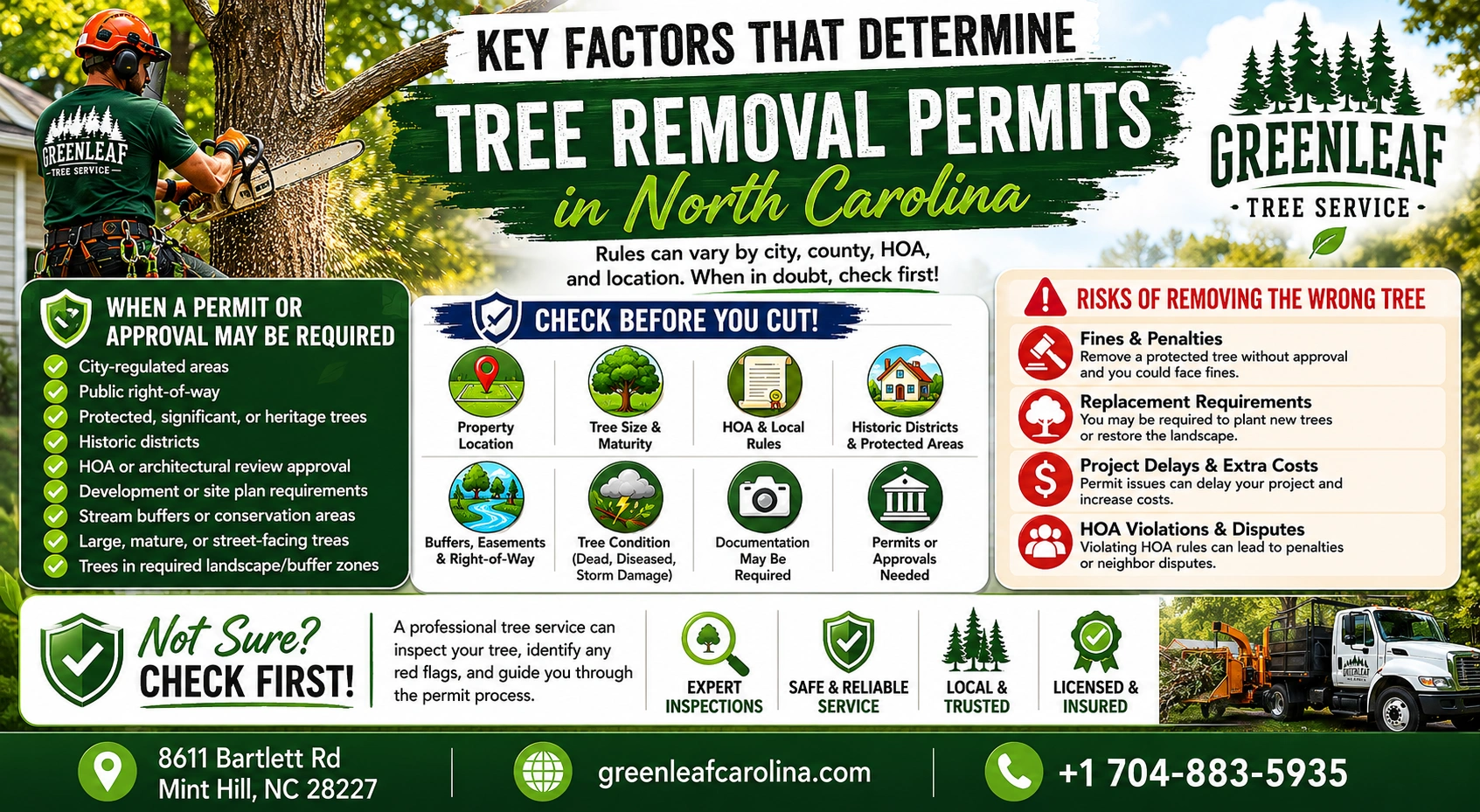
A permit, approval, or additional review may need to be checked when:
- The tree is located in a city-regulated area
- The tree is in a public right-of-way
- The tree is considered protected, significant, specimen, or heritage
- The property is part of a development or recently approved site plan
- The tree is located in a historic district
- The tree is within a protected buffer, stream buffer, or conservation area
- The property is governed by an HOA or architectural review board
- The tree is near a public sidewalk, road, utility easement, or shared space
- The tree is very large or mature
- The tree was required as part of a landscape or tree preservation plan
- The tree is part of a required tree-save, landscape, or buffer area
In many ordinary residential cases, a homeowner may not need a permit to remove a small tree located fully on private property. However, because local rules can vary, checking first is the safest approach.
This is especially important in Charlotte and other growing communities where tree preservation, development rules, neighborhood guidelines, and right-of-way requirements may affect whether a tree can be removed without additional approval.
Why Removing the Wrong Tree Can Cause Problems
Removing the wrong tree can become a problem if the tree is protected by local rules, HOA guidelines, neighborhood restrictions, or development-related requirements. Depending on the rule involved, a property owner may be responsible for replacement, fines, restoration, HOA penalties, or additional approvals, even if the removal was accidental.
This is especially important for large mature trees, trees near roads or sidewalks, and trees in neighborhoods with tree preservation standards. A tree that appears to be part of a private yard may still be affected by local rules if it is near a public right-of-way, utility easement, protected area, or required landscape zone.
Removing a tree without checking can also create practical problems. For example, a tree may be shared along a property line, located partly in a utility easement, or connected to drainage and erosion control around the property. If the tree is near a neighbor’s fence, driveway, or structure, removal planning becomes even more important.
A professional tree company cannot replace legal guidance from the city, county, HOA, or other governing authority, but it can help identify red flags that may require further checking.
What Property Owners Should Check Before Tree Removal
Before removing a tree, property owners should gather basic information about the tree and the property. This helps determine whether a permit, HOA approval, or further evaluation may be needed.
Start by checking:
- Whether the tree is on private property, public property, or near the right-of-way
- Whether the tree is near a sidewalk, street, utility line, or public easement
- Whether the tree is very large or mature
- Whether the tree is native, historic, or potentially protected
- Whether the property is inside city limits
- Whether the property is in an HOA community
- Whether the property is in a historic district or protected neighborhood
- Whether the tree is part of a required landscape plan
- Whether the tree is part of a tree-save, buffer, or conservation area
- Whether the tree is dead, diseased, storm-damaged, or hazardous
- Whether documentation is needed before removal
If the tree is clearly dead, split, leaning dangerously, or damaged by a storm, the situation may be treated differently than removing a healthy tree for convenience. Still, homeowners should document the condition with photos and contact the appropriate local office or HOA when required.
When in doubt, check before scheduling removal. A short call or review can help prevent delays, fines, replacement requirements, or conflicts with an HOA or local authority.
HOA Rules, Right-of-Way Trees, and Local Restrictions
Even when a city or county permit is not required, HOA approval may still be necessary. Many North Carolina neighborhoods have architectural or landscape guidelines that regulate tree removal, front-yard trees, street-facing trees, common-area trees, or replacement planting.
An HOA may require:
- A tree removal request form
- Photos of the tree
- A professional inspection or written recommendation
- Board or architectural review approval
- Replacement planting
- Specific species or size for replacement trees
- Restrictions on removing healthy front-yard trees
Historic districts and protected neighborhoods may also have additional requirements. Some communities regulate trees because they contribute to neighborhood character, shade, stormwater control, or streetscape appearance.
Public right-of-way trees are another common source of confusion. A tree may appear to be part of your yard but actually fall within a city-maintained area, road buffer, sidewalk zone, or public easement. Removing or heavily trimming these trees without approval can create problems.
The safest approach is to check city or town rules, county requirements when applicable, HOA documents, and any neighborhood-specific guidelines before scheduling removal.

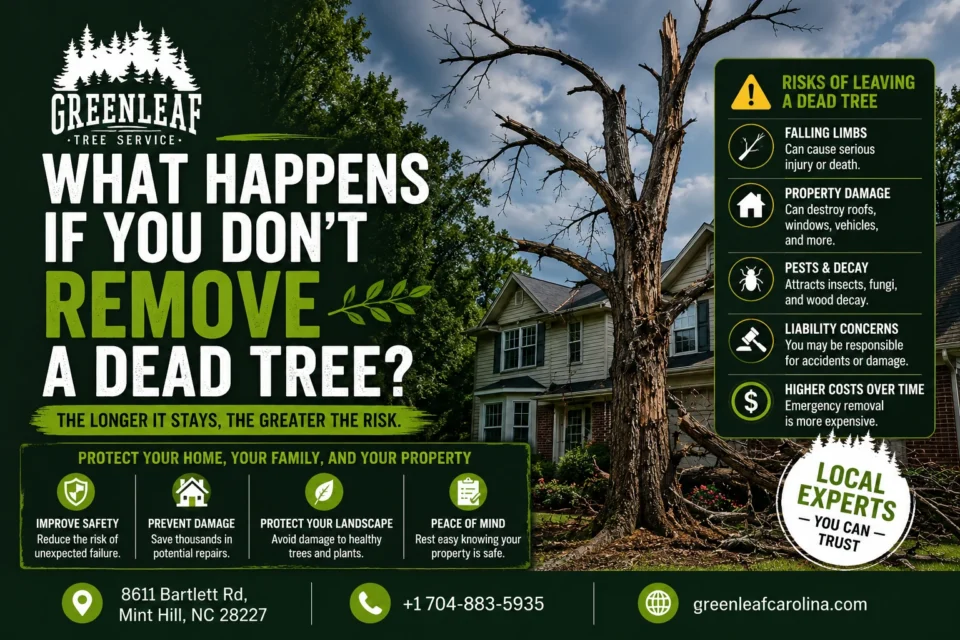
What Happens if You Don’t Remove a Dead Tree?
A dead tree becomes more dangerous the longer it remains standing because its wood, roots, and branches continue to weaken.…
When to Talk to a Tree Company Before Removing a Tree
You should talk to a professional when you are unsure whether a tree is safe, protected, diseased, dead, or likely to require special consideration before removal. This is especially helpful when the tree is large, close to a structure, near utility lines, or located in a regulated area.
A professional evaluation is a good idea when:
- The tree is leaning or cracked
- Large limbs are dead or falling
- The tree is close to the home, driveway, fence, or sidewalk
- Roots are affecting hardscapes or drainage
- The tree may be diseased or decayed
- The tree is very large or mature
- The tree is near a public street or right-of-way
- The tree is in an HOA community
- You need documentation before contacting your HOA or local office
- You are not sure whether removal is necessary
A tree inspection does not automatically mean the tree must be removed. In some cases, trimming, monitoring, cabling, or improved maintenance may be appropriate. In other cases, removal may be the safest option, especially if the tree is dead, unstable, severely damaged, or too close to structures.
The tree company can help evaluate the tree itself, but the homeowner should still confirm permit or approval requirements with the appropriate governing authority.
What a Tree Company Can and Cannot Help With
A tree company can help homeowners understand the practical side of removal before work begins. It can evaluate tree condition, identify obvious hazards, document visible concerns, explain access needs, and plan safe removal if the tree is approved for removal.
A professional tree company may help with:
- Evaluating the tree’s health and structure
- Identifying obvious hazards
- Determining whether the tree appears dead, diseased, or unstable
- Reviewing access and equipment needs
- Noting nearby structures, fences, driveways, and utility areas
- Explaining whether the tree’s size or location may require additional checking
- Providing photos or observations for HOA review when appropriate
- Recommending whether trimming, inspection, or removal makes sense
- Planning safe removal if the tree is approved for removal
A tree company should not be treated as the final authority on local ordinances, HOA rules, permit requirements, or legal requirements. For regulated trees, protected areas, unclear property boundaries, or HOA-controlled properties, homeowners should confirm requirements directly with the appropriate local authority or HOA before work begins.
Tree Removal in Charlotte, NC: How Green Leaf Tree Service Can Help
Green Leaf Tree Service helps homeowners make informed decisions before removing trees. If you are unsure whether a tree should be removed, whether it may be hazardous, or whether it needs a closer look first, our team can evaluate the tree and explain what we see.
For homeowners in Charlotte, NC and surrounding areas, we can help assess tree condition, safety concerns, access, and removal complexity. If the tree appears healthy but concerning, a tree inspection can help clarify the next step. If removal is the best option, our team can provide professional tree removal with safety and property protection in mind.
Before removing a tree, especially a large or mature one, it is always wise to check local rules, HOA requirements, and any permit considerations. A little preparation can help avoid delays, confusion, and preventable problems.
FAQs
Do I always need a permit to remove a tree in North Carolina?
No. Many private residential tree removals may not require a permit, especially for smaller trees located fully on private property. However, requirements vary by city, county, HOA, neighborhood, tree size, and tree location.
Who decides if a tree removal permit is required?
Permit requirements are usually determined by the local city, town, county, or other governing authority. HOA communities may also have separate approval requirements.
Do Charlotte homeowners need a permit to remove a tree?
It depends on the tree, property, and location. Charlotte has tree ordinance and tree work permit resources, so homeowners should confirm current requirements before removing a large, protected, right-of-way, or potentially regulated tree.
Can an HOA stop me from removing a tree?
An HOA may require approval before tree removal, especially for front-yard trees, street-facing trees, common-area trees, or trees included in neighborhood landscape guidelines. Always check your HOA documents before scheduling removal.
What if the tree is dead or dangerous?
Dead or hazardous trees may be treated differently, but it is still smart to document the condition and verify any local or HOA requirements. Photos and a professional evaluation may help support the need for removal.
Can I remove a tree near the street?
Be careful. Trees near streets, sidewalks, and public rights-of-way may be subject to city rules or public maintenance requirements. Check with your local authority before removing or heavily trimming these trees.
What happens if I remove a protected tree without approval?
Possible consequences may include fines, replacement requirements, restoration obligations, additional approvals, or HOA penalties, depending on the local rule or neighborhood guideline involved.
Should I get a tree inspection before applying for approval?
A tree inspection can be helpful, especially if the tree is dead, diseased, leaning, storm-damaged, or structurally questionable. It can provide useful information before contacting your city, county, or HOA.
Planning to Cut Down a Tree?
Learn what North Carolina rules may apply and book reliable tree removal today.