
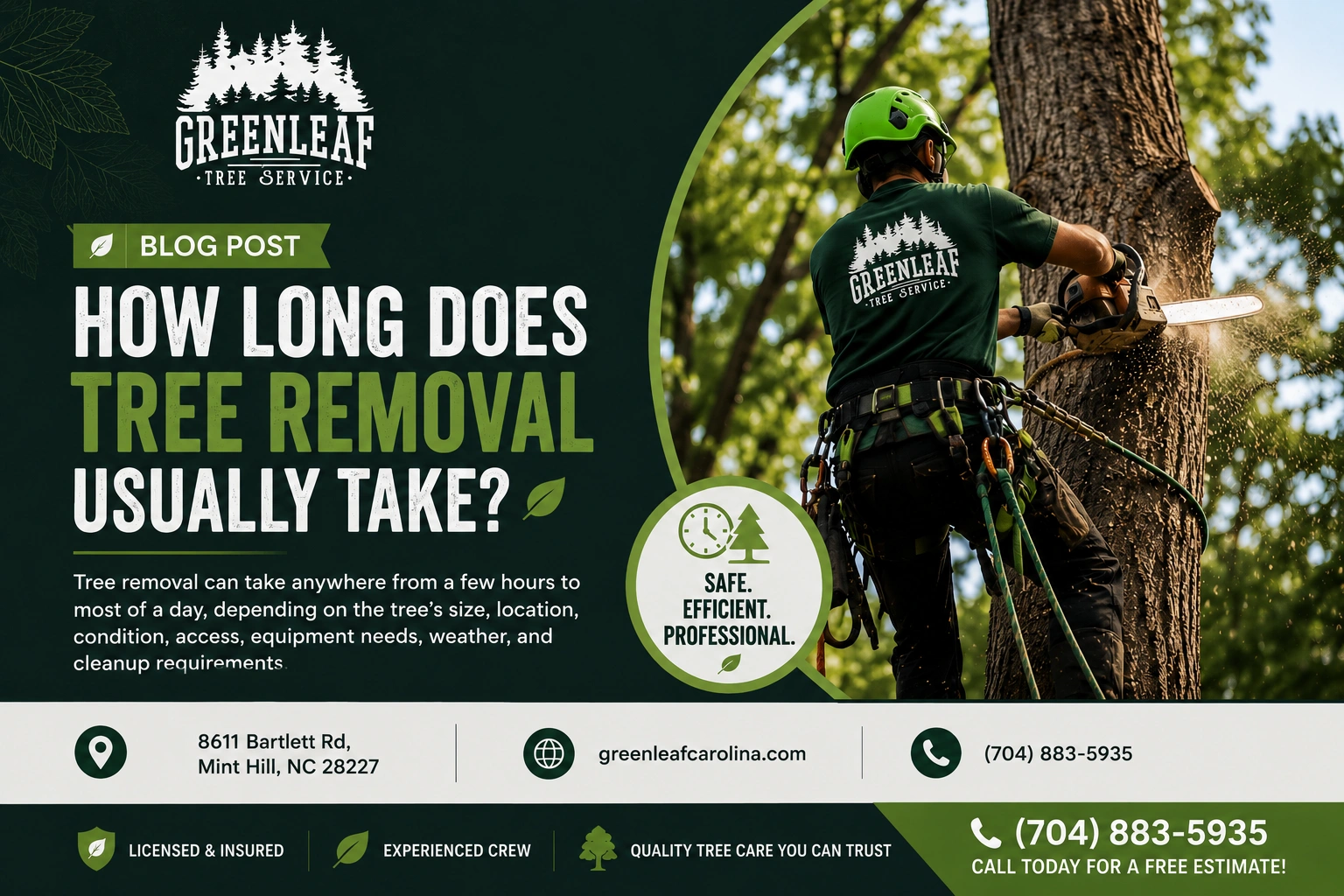
Tree removal can take anywhere from a few hours to most of a day, depending on the tree’s size, location, condition, access, equipment needs, weather, and cleanup requirements. A small tree in an open yard may be removed quickly, while a large, dead, leaning, or hard-to-access tree may require more planning and careful sectional removal.
For homeowners, understanding the basic tree removal timeline can make the process feel more predictable. It also helps you prepare your property, ask the right questions, and recognize when a removal should not be delayed.
For homeowners in and around Charlotte, NC, Green Leaf Tree Service can evaluate the tree and explain what to expect before, during, and after professional tree removal.
Need Tree Removal Done Fast?
Get safe, professional tree removal with clear timelines and quick service. Call now to schedule your estimate.
What Affects Tree Removal Time?
The time it takes to remove a tree depends on several practical factors. A small tree in an open yard is usually much faster to remove than a large tree hanging over a roof, fence, driveway, or utility area. The more complex the setting, the more carefully the crew must plan each cut and control each section of the tree.
Common factors that affect removal time include:
- Tree height and trunk diameter
- Tree species and wood density
- Whether the tree is healthy, dead, hollow, or decayed
- Distance from the home, garage, fence, shed, or driveway
- Whether branches extend over structures
- Access for trucks, chippers, cranes, or other equipment
- Ground conditions, slopes, or tight spaces
- Weather before and during the project
- Nearby power lines or utility areas
- Whether stump grinding or full debris hauling is included
- The amount of cleanup requested
- Crew size and project complexity
A straightforward removal may be completed in a few hours. A large tree in a tight area may take a full day or longer depending on the hazards involved. If specialized equipment is required, the project may need more coordination before the crew begins.
When Delaying Tree Removal Can Be Risky
Delaying tree removal can be risky when the tree is already showing signs of instability, decline, or structural weakness. Not every tree issue is an emergency, but waiting too long can allow the problem to become more dangerous or more expensive.
A tree may need prompt attention if it is:
- Dead or mostly dead
- Leaning suddenly or more than before
- Split at the trunk
- Hollow or severely decayed
- Dropping large limbs
- Damaged by a recent storm
- Cracked near the trunk or major branches
- Pressing against a structure
- Interfering with utility lines
- Uprooting or lifting soil around the base
The concern with delaying removal is that weakened trees are less predictable. A tree that seems stable during calm weather may fail during heavy rain, strong wind, or saturated soil conditions. Dead trees can also become more brittle over time, which may make removal more complicated later.
If a tree has fallen, is leaning into a structure, or creates an immediate safety concern, emergency tree removal may be necessary. In those cases, the timeline is based on safety, access, and the urgency of the hazard.
How Homeowners Can Prepare Before Tree Removal
Before a tree removal appointment, homeowners can help the process go more smoothly by preparing the surrounding area. The tree crew will handle the removal itself, but clearing access and identifying potential obstacles can save time and reduce complications.
Homeowners should consider:
- Moving vehicles away from the work area
- Clearing patio furniture, grills, planters, toys, or lawn decorations
- Unlocking gates or access points
- Keeping pets and children indoors or away from the work zone
- Notifying neighbors if the tree is near a property line
- Identifying septic areas, irrigation systems, or underground utilities if known
- Pointing out fragile landscaping or hardscapes
- Confirming whether debris hauling, wood stacking, or stump grinding is included
You do not need to cut branches or try to prepare the tree yourself. In fact, attempting to remove limbs before the crew arrives can be dangerous, especially if the tree is already unstable. The best preparation is to make the area accessible and let the professionals handle the cutting, lowering, and cleanup.
It is also helpful to ask what will happen to the wood and debris. Some homeowners want all material hauled away, while others prefer to keep logs for firewood or mulch. Knowing this ahead of time helps set clear expectations.

Can Dead Trees Attract Pests or Termites?
Yes, dead trees attract termites, carpenter ants, wood-boring beetles, fungi, and other organisms that feed on or shelter inside decaying…

How Tree Size and Location Affect the Timeline
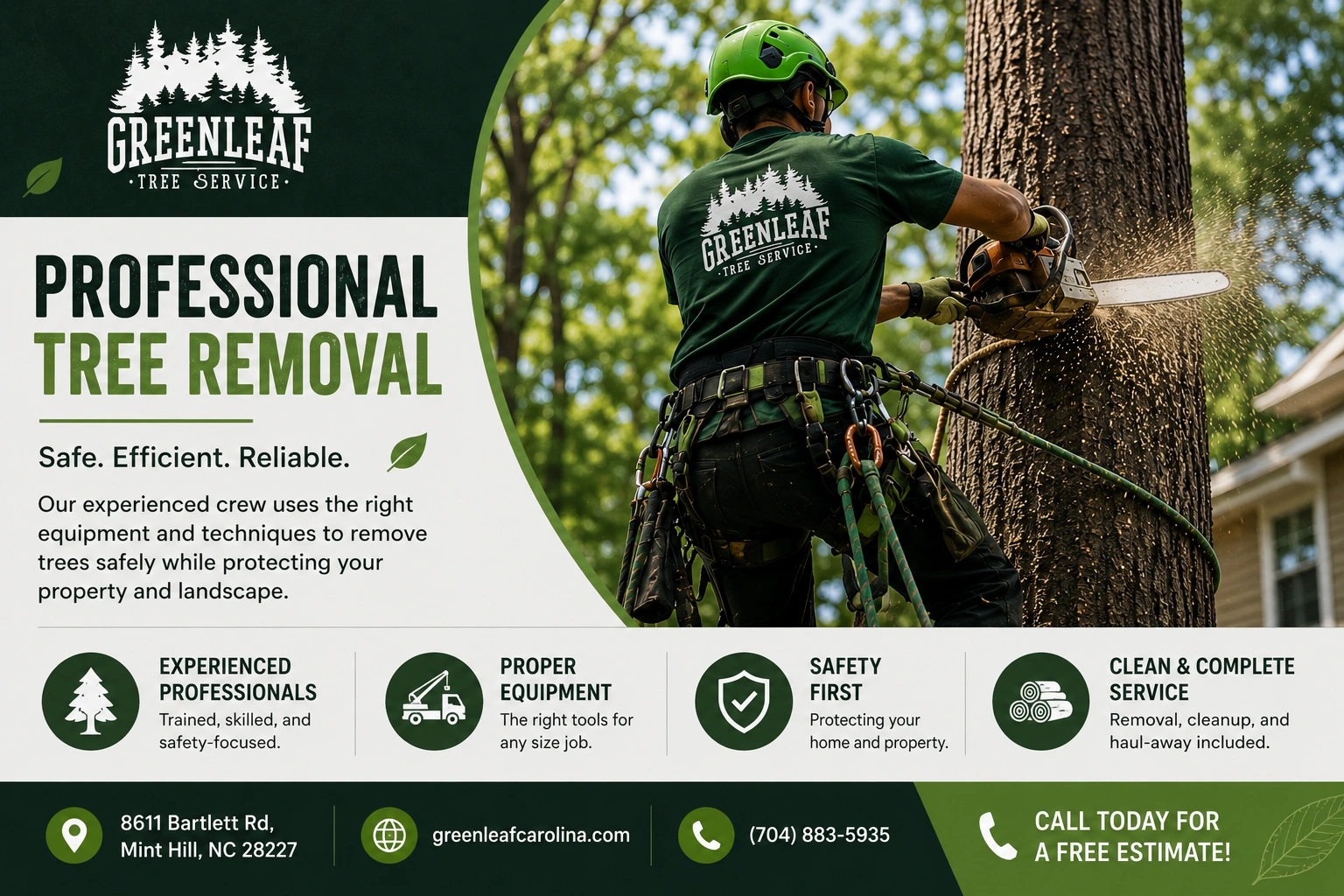
Tree size is one of the biggest factors in the removal timeline, but location can matter just as much. A small ornamental tree in an open area may be removed quickly with basic equipment. A large mature tree may require climbing, rigging, sectional cutting, heavy equipment, or careful lowering of limbs and trunk sections.
A tree in the middle of an open yard is usually easier to remove than a tree surrounded by fences, sheds, utility lines, pools, landscaping, or rooflines. When there is limited space for branches to fall safely, the crew may need to remove the tree piece by piece.
Here are a few examples:
- A small tree in an open yard may take a few hours.
- A medium tree near a driveway or fence may take several hours.
- A large tree close to a home may take most of the day.
- A hazardous, storm-damaged, or hard-to-access tree may require additional planning, special equipment, or more than one visit depending on the situation.
The condition of the tree also matters. Healthy wood may be easier to control during removal, while dead, brittle, hollow, or cracked wood may require extra caution. A tree that looks simple from a distance can become more complex if the trunk is decayed, the canopy is unstable, or the root system has shifted.
What Happens During Professional Tree Removal?
Professional tree removal usually follows a planned process designed to protect people, property, and the surrounding landscape. The exact steps may vary depending on the tree, but most removals include evaluation, work zone setup, controlled cutting, debris management, and cleanup.
A typical process may include:
- Site assessment: The crew reviews the tree, nearby structures, access points, hazards, and the safest removal approach.
- Work zone setup: Vehicles, equipment, ropes, cones, or barriers may be placed to create a safe working area.
- Branch removal: Limbs are often removed first, especially when the tree is near a home, fence, or driveway.
- Controlled lowering: Larger branches or trunk sections may be lowered with ropes or equipment instead of being dropped freely.
- Trunk sectioning: The trunk is cut into manageable pieces from top to bottom or from the ground when conditions allow.
- Debris handling: Branches may be chipped, hauled away, stacked, or processed according to the agreed scope of work.
- Final cleanup: The crew clears the work area and removes remaining debris included in the service.
Professional removal is not just about cutting a tree down. It is about controlling how each part of the tree comes down, especially when buildings, vehicles, people, utility areas, and landscaping are nearby.
What Cleanup Usually Includes After Tree Removal
Cleanup can be a major part of the tree removal timeline. Once the tree is down, the crew still needs to manage branches, logs, leaves, sawdust, and other debris. Depending on the size of the tree, cleanup may take a significant amount of time.
Cleanup may include:
- Chipping smaller branches
- Cutting larger limbs into manageable pieces
- Hauling away wood and debris
- Raking the work area
- Blowing off driveways or walkways
- Stacking logs if requested
- Leaving mulch or wood chips if agreed upon
- Preparing the area for stump grinding if included
Stump grinding is sometimes scheduled as part of the same project, but not always. It depends on the equipment, access, schedule, and what the homeowner requested. Removing the tree and grinding the stump are related, but they are separate parts of the overall process.
Homeowners should ask whether cleanup includes full debris removal or basic cleanup only. This prevents confusion after the tree is removed. Some companies include hauling by default, while others offer options depending on the homeowner’s preference.
Tree Removal in Charlotte, NC: How Green Leaf Tree Service Can Help
Green Leaf Tree Service helps homeowners understand what to expect from the tree removal process before work begins. We evaluate the tree’s size, location, condition, access, and safety concerns so you have a realistic idea of the timeline and scope.
Whether you are dealing with a dead tree, a tree growing too close to your home, storm damage, or a hazardous tree near your driveway, our team can recommend the right approach. Some removals are simple and can be completed quickly. Others require more planning, equipment, and careful sectional removal to protect nearby property.
For homeowners in Charlotte, NC and surrounding communities, Green Leaf Tree Service provides professional tree removal with a focus on safety, clear communication, and responsible cleanup. If a tree creates an urgent hazard, we can also help with emergency tree removal when fast action is needed.
If you are unsure how long your removal may take, the best first step is a professional evaluation.
FAQs
How long does tree removal usually take?
Many tree removals take a few hours, but larger or more complex removals may take most of a day or longer. The timeline depends on the tree’s size, location, condition, access, equipment needs, and cleanup requirements.
Can a tree be removed in one day?
Yes, many trees can be removed in one day. However, large trees, hazardous trees, storm-damaged trees, or trees in tight spaces may require additional time or planning.
What makes tree removal take longer?
Tree removal can take longer when the tree is large, close to a structure, near utility lines, difficult to access, decayed, leaning, storm-damaged, or surrounded by fences, landscaping, pools, or other obstacles.
Is emergency tree removal faster than regular removal?
Emergency tree removal is handled based on urgency and safety. The response may be faster, but the actual removal still depends on the tree’s condition, hazards, access, weather, and whether structures or utility areas are involved.
Do I need to be home during tree removal?
It depends on the company and the project. Homeowners often need to provide access, confirm details, and secure pets or gates. Once the work area is accessible and the scope is clear, you may not need to be present for the entire process.
Does tree removal include hauling away the wood?
It depends on the agreed service. Many removals include debris hauling, but some homeowners choose to keep logs, wood chips, or firewood. Always confirm cleanup and hauling details before work begins.
Does stump grinding happen the same day?
Sometimes. Stump grinding may be completed the same day if it is included, equipment is available, and access allows it. In other cases, it may be scheduled separately.
Should I remove a tree before it falls?
If a tree is dead, unstable, severely leaning, cracked, or repeatedly dropping large limbs, removing it before failure may help prevent property damage or safety risks. A professional evaluation can help determine whether removal is necessary.
Ready to Remove That Tree?
Get reliable tree removal from experienced professionals who work safely and efficiently. Book your service now.