
After a tree is removed, many homeowners are left wondering what to do about the remaining stump. While the tree itself may be gone, the stump can continue to occupy valuable yard space, interfere with landscaping plans, and create maintenance challenges.
One of the most common solutions is stump grinding, a process that removes the visible portion of the stump without requiring excavation of the entire root system. Understanding how stump grinding works can help homeowners decide whether it is the right option for their property.
Remove That Stump the Right Way
Expert stump grinding helps improve safety, curb appeal, and usable yard space. Contact us today to get started.
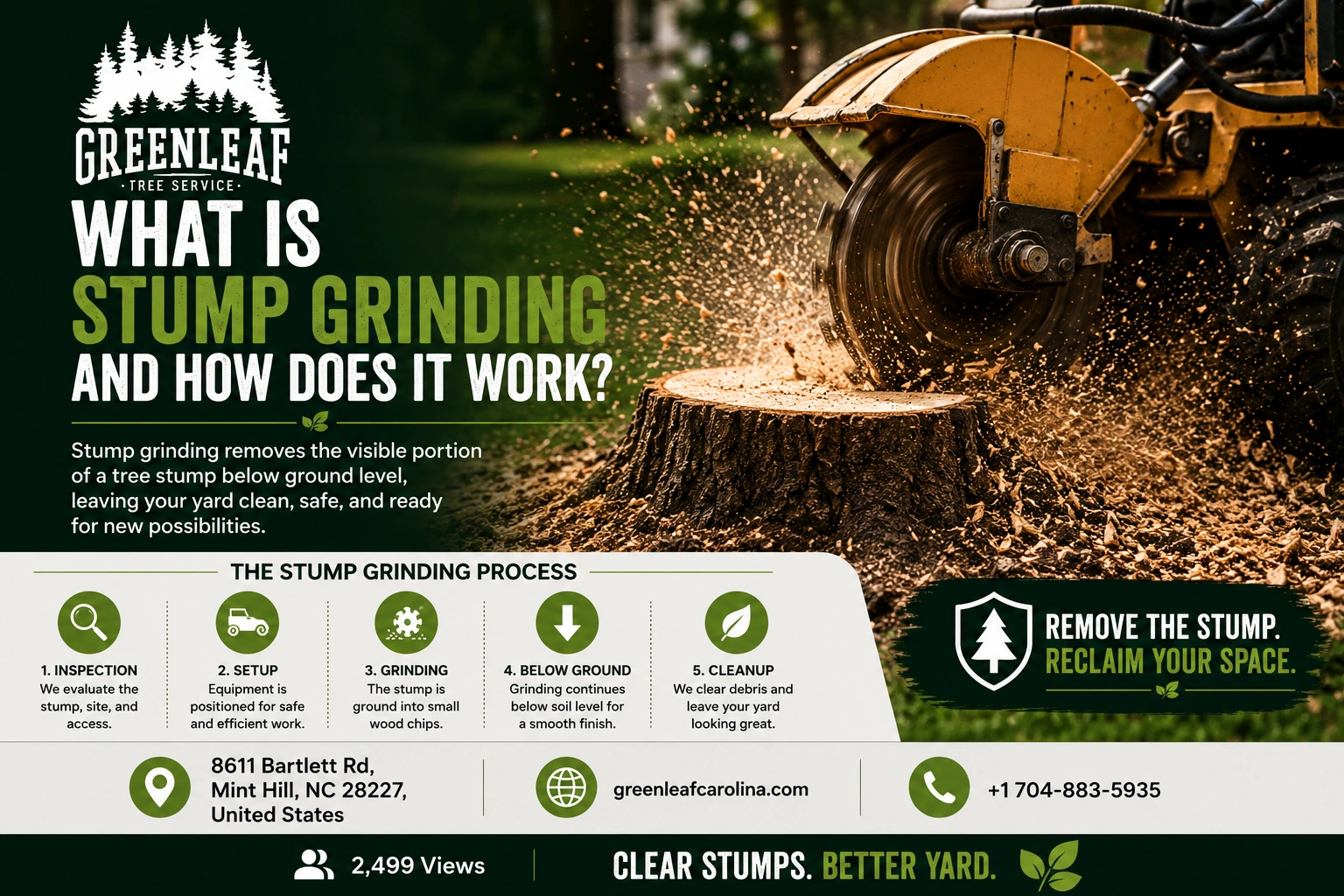
Fast Answer: What Is Stump Grinding?
Stump grinding is the process of mechanically reducing a tree stump into small wood chips using specialized equipment called a stump grinder.
Rather than digging out the entire stump and root system, the machine grinds the visible stump down below ground level. The result is a smoother, more usable area that can often be restored with grass, landscaping, or other outdoor improvements.
Because stump grinding is generally less disruptive than full stump removal, it has become one of the most common solutions for homeowners following tree removal.
Is Leaving a Stump in the Yard a Problem?
While some stumps may remain relatively stable for years, leaving a stump behind can create several practical concerns.
Safety Hazards
Tree stumps can become trip hazards for children, visitors, and anyone performing yard work. This concern is especially important when grass or vegetation partially conceals the stump.
Lawn Maintenance Challenges
Mowing around a stump requires extra care and often results in awkward patches of unmaintained grass.
Pest Activity
Decaying wood can attract insects such as termites, ants, beetles, and other wood-boring pests. While not every stump becomes infested, decomposing wood may create conditions that attract unwanted insects to the property.
Ground Settling
As stumps and roots decay naturally, the surrounding ground may settle unevenly, creating additional landscaping concerns.
Reduced Curb Appeal
Even in an otherwise well-maintained yard, a visible stump can detract from the overall appearance of the property.
What to Know Before Stump Grinding
Several factors can influence the stump grinding process and the time required to complete it.
Stump Size
Larger stumps generally require more grinding time than smaller stumps. Wide trunk diameters often produce more wood chips and may require additional passes with the equipment.
Tree Species
Different tree species have varying wood densities. Hardwoods can sometimes take longer to grind than softer wood varieties.
Root Structure
Some trees develop extensive surface roots that may require additional grinding if the homeowner wants a smoother final appearance.
Accessibility
The location of the stump plays a major role in equipment access. Narrow gates, fences, retaining walls, and landscaping features may affect how equipment reaches the work area.
Nearby Landscaping
Flower beds, irrigation systems, decorative hardscapes, and underground utilities may influence the grinding approach.
Before grinding begins, utility locations should be properly identified to help reduce the risk of accidental damage to underground lines.
Homeowners should also understand that stump grinding typically removes the stump below ground level but does not eliminate every root underground. The final depth may vary depending on project goals and future landscaping plans.
How the Stump Grinding Process Works
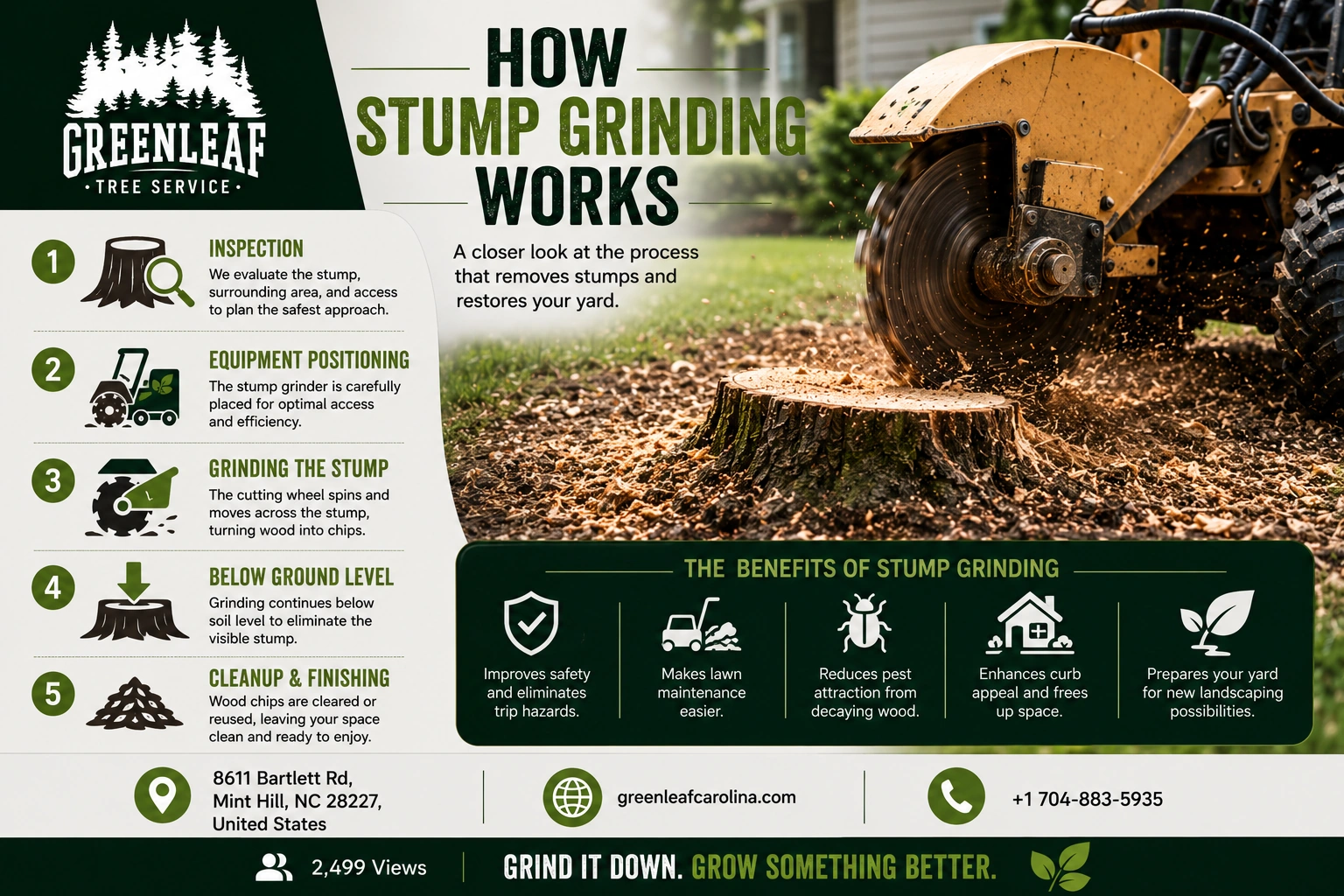
Many homeowners are curious about what actually happens during stump grinding. While the equipment is powerful, the overall process is relatively straightforward.
Site Inspection
The process typically begins with a site evaluation. The tree professional assesses the stump, surrounding conditions, accessibility, and any obstacles that may affect the work.
Equipment Positioning
The stump grinder is carefully positioned next to the stump. Depending on access conditions, operators may adjust their setup to safely perform the work.
Grinding the Stump Into Wood Chips
The grinder’s rotating cutting wheel moves back and forth across the stump surface. Each pass removes small amounts of wood, gradually reducing the stump into wood chips.
Grinding Below Soil Level
Once the visible portion of the stump is removed, grinding continues below the soil surface. This helps eliminate the stump’s appearance and creates space for future landscaping or lawn restoration.
Cleanup and Debris Management
After grinding is complete, wood chips and debris are collected or redistributed based on homeowner preferences. The site can then be prepared for grass, landscaping, or other improvements.
The process is generally efficient and causes less disruption to surrounding areas than full stump excavation.

What to Do With a Tree Stump: Creative Ideas and Removal Options
Cutting down a tree is sometimes necessary. Storm damage, disease, overcrowding, or safety concerns can all force the decision. But…
Stump Grinding vs. Stump Removal
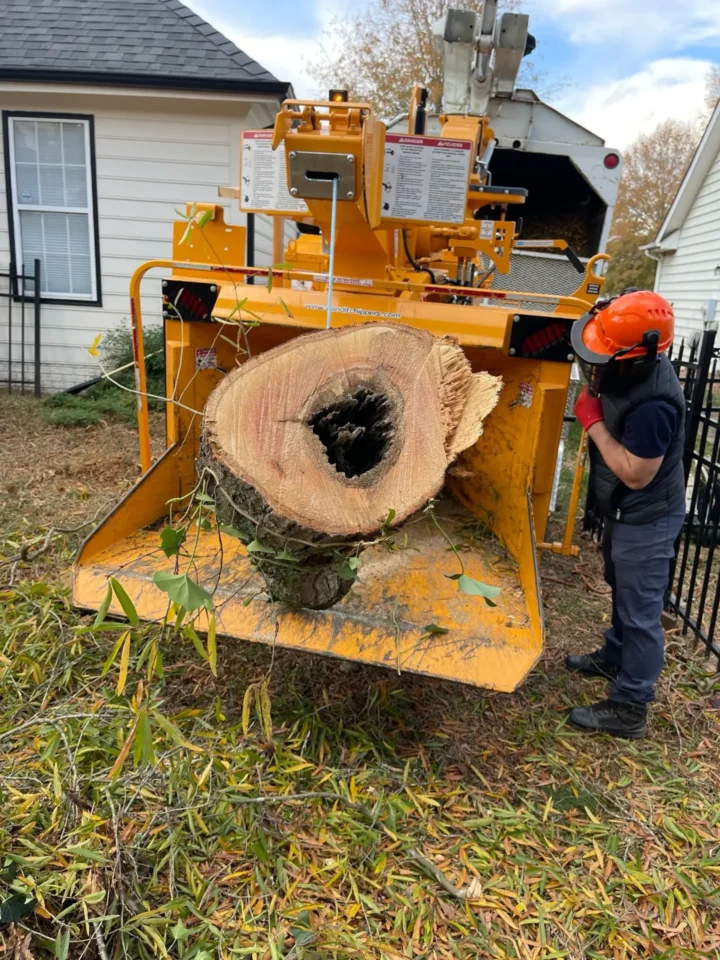
Stump grinding and stump removal both address leftover tree stumps, but they work differently.
Stump grinding removes the visible stump by grinding it below ground level. Most of the underground root system remains in place and decomposes naturally over time.
Stump removal is more extensive. It typically involves extracting the stump and major roots from the ground, which can disturb more soil and surrounding landscaping.
For many homeowners, stump grinding is the more practical option when the goal is to improve appearance, reduce trip hazards, and prepare the area for grass or landscaping.
However, complete stump removal may be preferred when future construction, major landscaping projects, or extensive excavation work is planned.
When Should You Remove a Tree Stump?
There are several situations where removing a leftover stump may be beneficial.
Lawn Renovations
Homeowners planning to reseed or renovate their lawn often prefer to eliminate stumps to create a smoother and more usable yard.
New Landscaping Projects
Installing flower beds, patios, pathways, irrigation systems, or other landscape features may be easier when stumps are no longer present.
Construction Plans
Future additions, fencing projects, sheds, or outdoor living spaces may require complete access to the area currently occupied by the stump.
Safety Concerns
Removing stumps can help reduce trip hazards and improve overall yard safety.
Pest Prevention
Addressing decaying stumps may help reduce the likelihood of certain insects establishing themselves in deteriorating wood.
The best timing often depends on your future property goals and how you plan to use the space.
What Happens After Stump Grinding?
After stump grinding is complete, several things remain behind.
The most noticeable byproduct is a pile of wood chips. Many homeowners choose to reuse these chips as mulch around trees, shrubs, and garden beds.
Most underground roots remain in place after grinding. Over time, these roots gradually decompose naturally beneath the soil surface.
A shallow ground depression may also be visible where the stump once stood. This is normal and can be addressed in several ways.
Common post-grinding options include:
- Backfilling with topsoil
- Seeding the area
- Installing sod
- Adding landscaping features
- Reusing wood chips as mulch
The best option often depends on the homeowner’s long-term plans for the space.
How Green Leaf Carolina Can Help
Addressing leftover stumps is often an important final step after tree removal. Whether the goal is improving safety, enhancing curb appeal, preparing for landscaping, or creating a more functional yard, understanding available options helps homeowners make informed decisions.
Green Leaf Carolina assists property owners by evaluating stump conditions, site characteristics, and long-term property goals. Every property is different, and factors such as future landscaping plans, accessibility, and stump size can influence the most practical approach.
For homeowners throughout Rock Hill and the surrounding area, we provide local insight into the tree species, weather conditions, and seasonal challenges that commonly affect residential properties.
If a leftover stump is affecting your yard, Green Leaf Carolina can help you determine whether stump grinding or stump removal is the better fit. Our team evaluates the stump, access conditions, surrounding landscape, and your future plans for the space before recommending the most practical solution.
FAQs About Stump Grinding
How deep does stump grinding go?
Most stump grinding projects remove the stump several inches below ground level, though the exact depth depends on project goals and future landscaping plans.
Is stump grinding better than stump removal?
Neither option is universally better. Stump grinding is often less invasive, while stump removal extracts the entire stump and major root structure. The best choice depends on property needs and future plans.
Will roots continue growing after stump grinding?
In most cases, roots gradually die and decompose after the tree has been removed. Significant new growth is uncommon for many tree species once the stump is ground.
Can grass grow over a ground stump?
Yes. After proper backfilling and soil preparation, grass can often be successfully established over the area where the stump was ground.
How long does stump grinding take?
The timeframe varies depending on stump size, species, accessibility, and root structure. Smaller stumps may take less than an hour, while larger stumps can require additional time.
What happens to the wood chips after grinding?
Wood chips can be removed, left on-site, reused as mulch, or incorporated into landscaping projects depending on homeowner preferences.
Stump Still Taking Up Space?
Get fast, affordable stump grinding from experienced professionals. Call today for a free estimate and prompt service.