
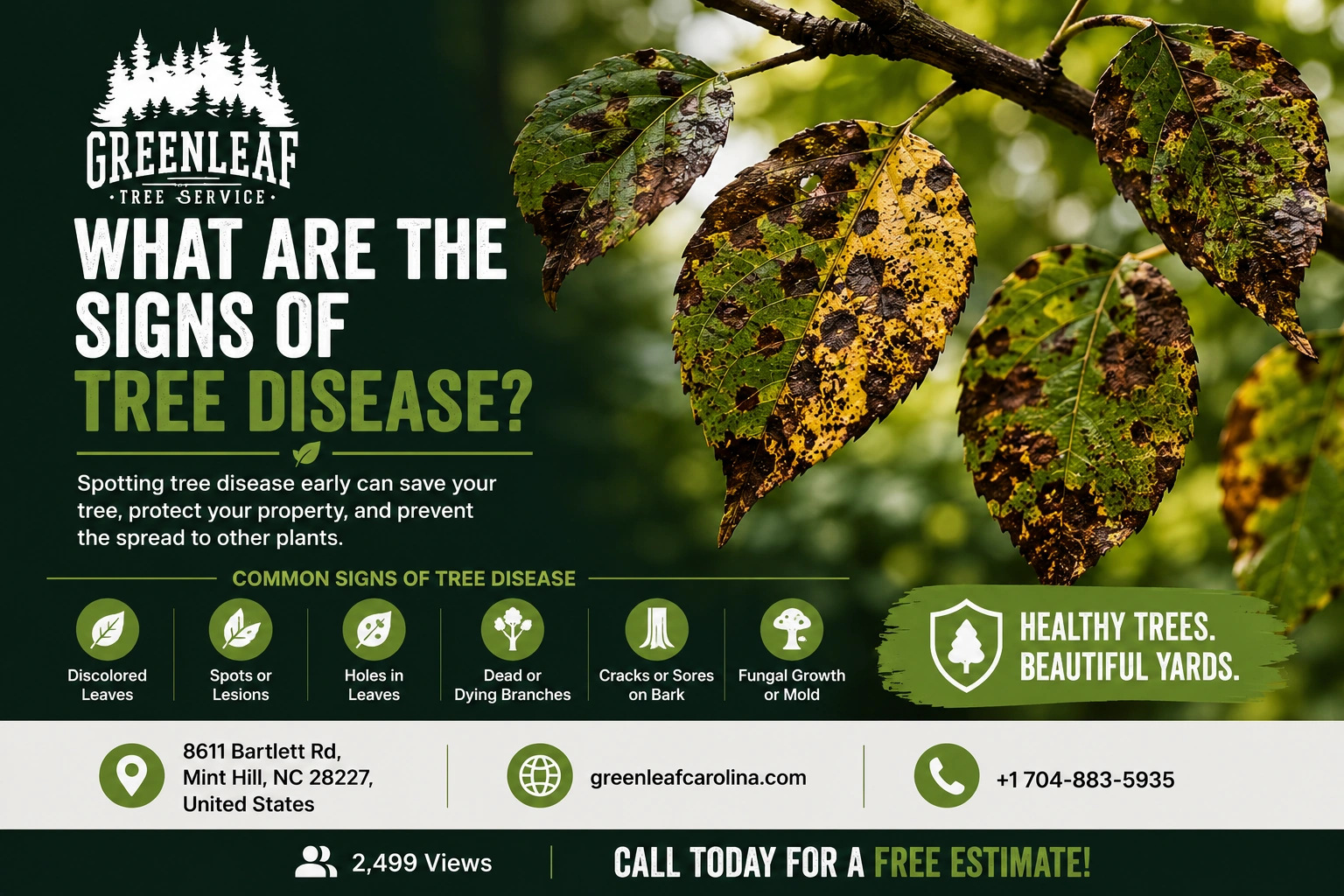
Common signs of tree disease include discolored leaves, early leaf drop, dead branches, thinning canopy, bark damage, fungal growth, trunk decay, oozing areas, insect activity, and unusual changes in the tree’s shape or structure. Some symptoms are easy to miss at first, especially when they begin as a few spotted leaves, a small patch of missing bark, or one declining branch.
Tree disease does not always mean a tree needs to be removed. In many cases, early evaluation, proper care, trimming, or treatment may help protect the tree and reduce the risk of further damage. Other times, symptoms may point to decay, root stress, pests, or structural concerns that need closer attention.
For homeowners in Charlotte, NC, knowing what to look for can make a big difference. If you notice unusual leaf changes, dead branches, fungal growth, bark damage, or thinning in the canopy, a professional tree inspection can help identify the next best step.
Don't Let Tree Disease Spread
A small problem can quickly become a hazardous one. Contact our team today for expert tree health assessment.
What Usually Causes Tree Disease?
Tree disease can develop for many reasons. Sometimes the issue starts with a fungal infection, bacterial problem, or pest activity. Other times, the tree becomes stressed first, making it more vulnerable to disease later.
A tree weakened by drought, compacted soil, poor drainage, root damage, storm injury, or improper pruning may have a harder time defending itself.
Common contributors to tree disease include:
- Fungal infections
- Bacterial infections
- Insect activity
- Root damage
- Poor soil conditions
- Drought stress
- Overwatering or poor drainage
- Trunk or bark wounds
- Storm damage
- Construction disturbance
- Soil compaction
- Nutrient deficiencies
- Improper pruning cuts
Disease often develops when several stress factors overlap. For example, a tree with damaged roots may struggle to absorb water and nutrients. That stress can lead to thinning leaves, branch dieback, and greater vulnerability to insects or fungal decay.
The earlier these issues are noticed, the easier it is to understand what may be happening and whether corrective care is possible.
Can Tree Disease Spread to Nearby Trees?
Tree disease can sometimes spread to nearby trees, depending on the type of disease, the tree species involved, and environmental conditions. Some fungal and bacterial problems may move through spores, insects, infected pruning tools, root contact, or contaminated plant material. Other issues may stay mostly limited to one stressed or damaged tree.
This is why it is important not to ignore visible disease symptoms. A single unhealthy tree may not always threaten the whole landscape, but some diseases can move through groups of similar trees, especially when they are planted close together.
Nearby trees may be more at risk if they are:
- The same species as the affected tree
- Already stressed by drought or poor soil
- Growing in compacted areas
- Crowded together with limited airflow
- Damaged by storms or equipment
- Sharing root zones
- Affected by the same pest activity
Homeowners should also be careful with fallen branches, infected leaves, and decayed wood. In some cases, removing diseased debris from the property can help reduce further spread. However, it is best to have the tree evaluated before making assumptions about the cause.
Common Symptoms of Tree Disease Homeowners Should Watch For
Tree disease can show up in the leaves, branches, bark, trunk, roots, and overall shape of the tree. Some symptoms are mild at first, while others may point to more serious decline.
Watch for these common signs of tree disease:
- Yellowing, browning, or spotted leaves
- Leaves dropping earlier than normal
- Thin or patchy canopy growth
- Dead branches in the upper canopy
- One side of the tree declining faster than the other
- Cracked, peeling, or missing bark
- Soft, hollow, or decayed areas in the trunk
- Fungal growth, mushrooms, or conks near the trunk or roots
- Dark streaking, oozing, or wet-looking bark
- Cankers or sunken areas on branches or the trunk
- Unusual swelling, bumps, or growths
- Small holes, sawdust-like material, or insect activity
- Weak or brittle branches
- Roots that appear damaged, decayed, or exposed
- Sudden leaning or structural changes
Leaf symptoms are often the first thing homeowners notice. Spots, curling, discoloration, or early leaf drop can be caused by disease, drought, insects, or soil problems. Bark and trunk symptoms may be more serious because they can indicate decay, infection, or structural weakness.
If symptoms appear on one branch, the issue may be localized. If symptoms spread through the canopy or appear across several trees, a professional evaluation is a smart next step.
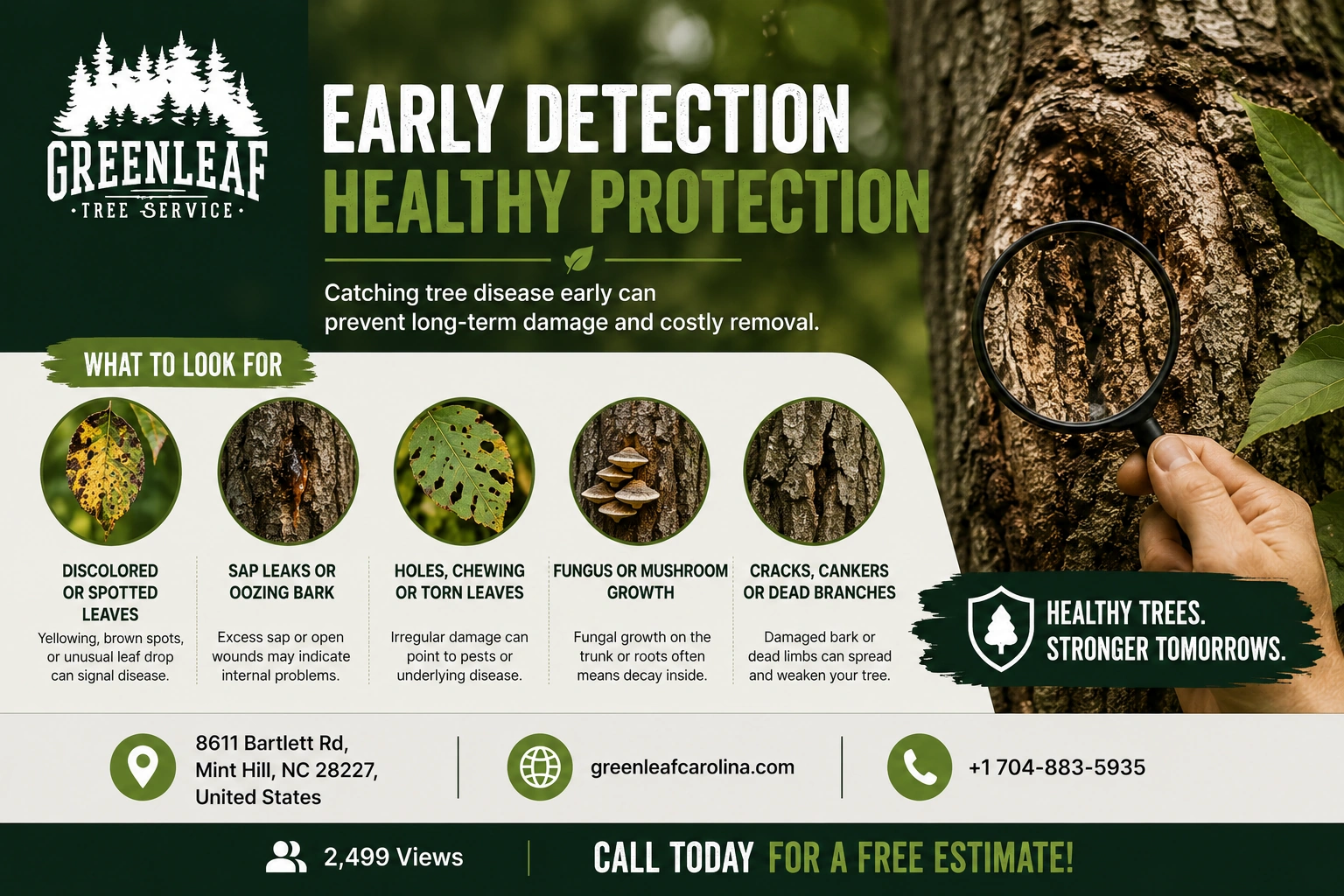
How Fungus, Decay, and Bark Damage Affect Tree Health
Fungus and decay often take advantage of weak points in a tree. Open wounds, broken branches, pruning cuts, storm damage, and bark injuries can create entry points for disease organisms. Once decay begins, it may spread inside the wood before obvious external signs appear.
Fungal growth on the outside of a tree can sometimes be a warning sign of internal decay. Mushrooms near the base of a tree, shelf-like conks on the trunk, or fungal growth around exposed roots may indicate that wood or roots are breaking down. Not all fungi mean immediate danger, but visible fungal growth should be taken seriously, especially on large trees near homes, driveways, or walkways.
Bark damage can also create problems. Bark protects the living tissue beneath it. When bark cracks, peels, or falls away, the tree may lose protection against insects, disease, sun injury, and moisture loss. Cankers, open wounds, and soft spots can become pathways for infection.
Decay can spread more quickly when a tree is already stressed by:
- Drought
- Poor drainage
- Soil compaction
- Root disturbance
- Storm damage
- Insect infestation
- Improper pruning
- Mechanical damage from mowers or equipment
Because decay can weaken branches, trunks, or roots, homeowners should not try to diagnose structural safety from the ground alone. A tree that looks mostly healthy may still have internal damage.

What Happens During a Professional Tree Removal Service?
A tree coming down is not as simple as grab a chainsaw and start cutting. A professional tree removal service…
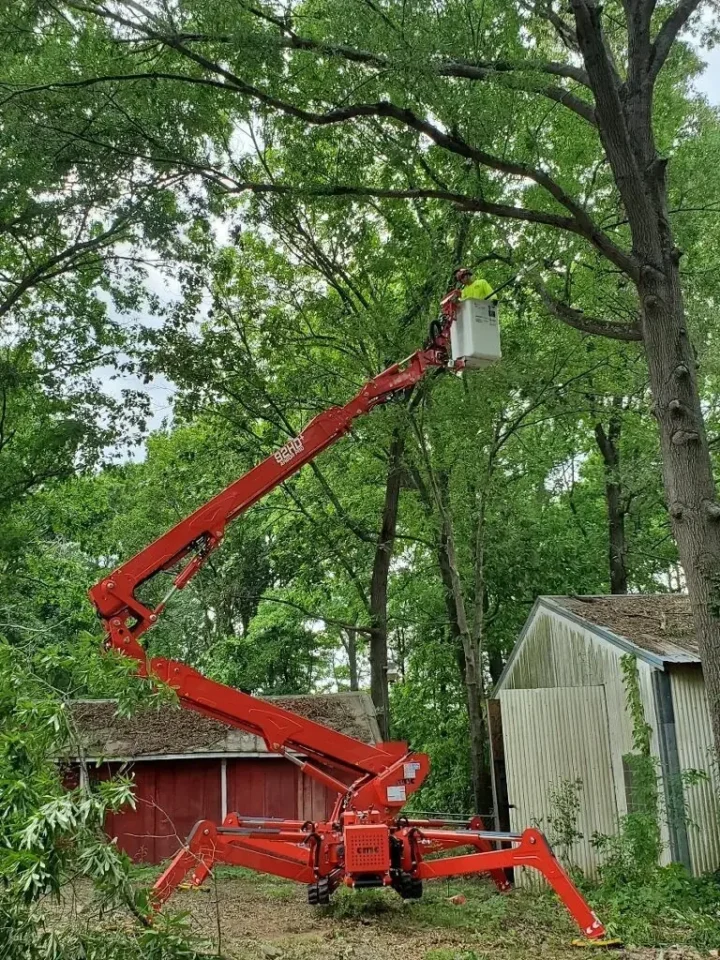
When to Schedule Tree Healthcare or a Tree Inspection
You should schedule tree healthcare or a professional tree inspection when symptoms are severe, spreading, recurring, or affecting a tree near your home or other important areas of the property. Early evaluation can help determine whether the tree is dealing with temporary stress, disease, pest activity, or structural decline.
Consider scheduling professional help if:
- Leaves are spotted, discolored, or dropping early
- Branches are dying back
- The canopy looks thin or uneven
- Fungus is growing on the trunk, roots, or nearby soil
- Bark is cracking, peeling, or missing
- The trunk has cavities, soft spots, or oozing areas
- The tree has visible insect damage
- Several trees show similar symptoms
- The tree has recently been damaged by storms
- Construction or digging occurred near the roots
- The tree is leaning or showing soil movement at the base
- Symptoms return year after year
Tree healthcare may include diagnosis, monitoring, pruning recommendations, soil improvements, pest management, disease care, or guidance on whether removal should be considered. The best option depends on the tree’s species, condition, location, and level of risk.
What an Arborist Looks for During a Tree Disease Inspection
An arborist or professional tree care provider will look beyond one symptom and evaluate the tree as a whole. Since many tree problems look similar at first, a proper inspection helps narrow down the likely cause.
A tree disease inspection may include:
- Leaf color, spots, curling, and drop patterns
- Canopy density and branch structure
- Deadwood or branch dieback
- Bark condition and trunk wounds
- Cankers, cracks, cavities, or soft areas
- Fungal growth near the trunk or root zone
- Root flare visibility
- Soil moisture and drainage
- Signs of pests or boring insects
- Recent storm, construction, or equipment damage
- Mulch placement and soil compaction
- Structural stability and potential hazards
- Nearby trees showing similar symptoms
The goal is not just to name the disease. It is to understand what is stressing the tree and what can realistically be done. Some trees respond well to care when problems are caught early. Others may be too decayed, unstable, or damaged to safely preserve.
A professional inspection can also help homeowners avoid unnecessary removal when a tree can be treated, pruned, or monitored.
Tree Disease in Charlotte, NC: How Green Leaf Tree Service Can Help
Green Leaf Tree Service helps homeowners recognize and respond to tree health concerns before they become more serious. If you are noticing leaf discoloration, early leaf drop, dead branches, fungal growth, bark damage, thinning canopy, or other signs of tree disease, our team can take a closer look and explain what may be happening.
For homeowners in Charlotte, NC and surrounding communities, our tree healthcare services can help identify visible symptoms, evaluate tree health, and recommend practical next steps. If you are unsure whether a tree is diseased, stressed, or becoming unsafe, a professional tree inspection can provide the clarity you need.
Tree disease is not always obvious, and it does not always mean removal is the only answer. Early evaluation gives you more options and helps protect your trees, landscape, and property.
FAQs
What are the most common signs of tree disease?
Common signs include discolored leaves, leaf spots, early leaf drop, dead branches, thinning canopy, bark cracking, fungal growth, trunk decay, oozing bark, insect holes, and unusual growths.
Does fungus on a tree mean it is dying?
Not always, but fungus can be a warning sign. Mushrooms, conks, or fungal growth on the trunk, roots, or base of the tree may indicate decay. A professional inspection can help determine how serious the issue is.
Can a diseased tree recover?
Some diseased or stressed trees can recover with the right care, especially when problems are caught early. Recovery depends on the disease, tree species, overall health, and severity of the damage.
Can tree disease spread to other trees?
Yes, some diseases can spread through spores, insects, root contact, infected debris, or contaminated tools. The risk depends on the disease and the surrounding trees.
Why are my tree’s leaves turning brown or yellow?
Brown or yellow leaves may be caused by drought, overwatering, disease, pests, nutrient deficiencies, root damage, or environmental stress. The pattern and timing of discoloration can help identify the likely cause.
Is bark peeling a sign of disease?
Peeling bark can be normal for some tree species, but sudden bark loss, deep cracks, soft spots, cankers, or exposed wood may point to disease, decay, or injury.
When should I call an arborist for tree disease?
Call an arborist or professional tree care provider when symptoms are severe, spreading, recurring, or affecting a tree near your home, driveway, walkway, or outdoor living area. Dead branches, fungus, trunk damage, or sudden decline should be checked promptly.
Should a diseased tree be removed?
Not always. Some diseased trees can be treated, pruned, or monitored. Removal may be necessary if the tree is severely decayed, unstable, dead, or creating a safety risk.
Keep Your Trees Healthy and Safe
If your trees look stressed or unhealthy, professional care can make all the difference. Call now to schedule an inspection.