
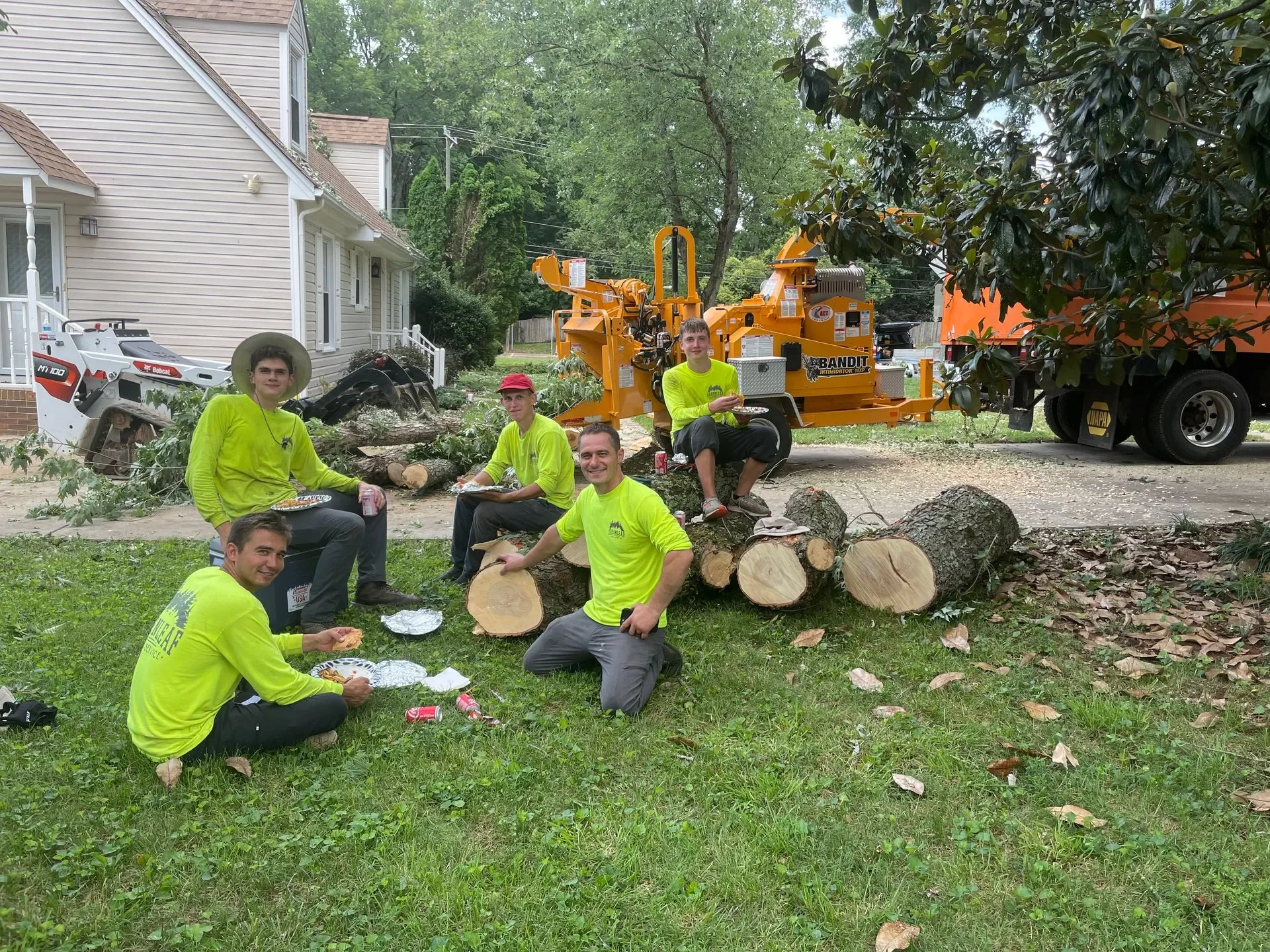
Something feel “off” about the trees in your yard? You’re not imagining it. Trees have a way of sending warning signals long before major problems show up, and catching those signs early can save you from expensive damage later.
Whether it’s a strange lean, brittle branches, or weird discoloration you can’t quite explain, these little red flags often point to bigger issues beneath the surface. The tricky part is that most homeowners don’t notice them until it’s too late. That’s where a professional inspection makes all the difference. Think of it as a quick health check for your trees that keeps your home, yard, and family safe.
If something about your trees feels unusual, trust that instinct. It might be time to get a pro involved before a small issue turns into a major headache.
Most Common Signs a Tree May Be Unsafe
Trees usually give clues when something is wrong. Some signs are obvious, while others are subtle and easy to overlook. Knowing what to watch for helps you respond early before the tree becomes unstable or hazardous.
1. Cracks or Splits in the Trunk
Long vertical cracks, deep splits, or chunks of missing bark can mean a tree’s structural integrity is compromised. These openings expose the interior wood to water, pests, and disease and often signal that the trunk is weakening.
Trees with multiple trunk cracks or splitting bark need immediate attention because these problems typically worsen over time.
2. Dead or Falling Branches
Branches that fall without warning even in calm weather, are one of the clearest indicators of an unsafe tree. Dead branches lose their strength and may break under their own weight. These limbs are known as “widowmakers” because they can fall suddenly and cause severe injury or damage.
If more than a few branches are dead or brittle, the tree may be experiencing widespread decline.
3. Mushrooms or Fungus Around the Base
Fungal growth around the trunk or roots suggests decay inside the tree. Mushrooms often appear when the internal wood is rotting, which means the tree may be losing its structural support. Even if the upper canopy looks green, the roots may be compromised.
4. Hollow or Soft Spots in the Trunk
A hollow trunk is one of the strongest signs that a tree is becoming unsafe. Soft or spongy wood around the base usually means decay is spreading. Trees with hollow sections are much more likely to fall during storms or strong winds.
5. Excessive Leaf Loss or Discoloration
Leaves that turn brown, yellow, or fall off at the wrong time of year often indicate stress. This may be caused by:
- Root damage
- Disease
- Poor soil conditions
- Pest infestations
A thinning canopy is a major red flag, especially when only part of the tree is affected.
6. Visible Root Problems
Exposed, cracked, or lifting roots suggest instability. If the soil around the base appears raised or disturbed, the roots may be pulling away from the earth. This greatly increases the risk of the tree falling during storms.
How Homeowners Can Tell When a Tree Needs a Professional Inspection
Some signs are obvious, but many problems hide beneath the surface. Homeowners can look for several indicators that suggest it’s time to call a professional tree expert for a closer evaluation.
1. The Tree Looks Different Than Before
A sudden change in posture, leaf coverage, or bark texture is often the first sign that something is wrong. Trust your instincts—if the tree doesn’t look the way it used to, something may be happening internally.
2. New Growth Appears Unusual or Weak
Weak new branches, stunted growth, or leaf clusters forming in odd places can indicate disease. When a tree shifts its energy into survival rather than healthy growth, the canopy often becomes uneven.
3. Storm Damage or High Winds Occurred Recently
After severe weather, trees may be cracked, split, or leaning without showing obvious symptoms. Even if the tree looks fine on the surface, storms can cause hidden internal damage that requires professional evaluation.
4. The Tree Has Multiple Dead Branches
One or two dead branches are common on older trees. But a series of dead limbs appearing in different parts of the canopy usually signals a serious problem with nutrients, water flow, or disease.
5. Sap Leakage or Oozing Wounds
Sticky, oozing sap, dark stains, or sunken bark can indicate infection or bacterial damage. These symptoms often appear before the tree shows visible decay.
6. Insect Activity Is Increasing
Carpenter ants, beetles, and termites are drawn to weakened or dying wood. Holes, sawdust piles, or chewed bark are signs of stress and possible internal rot.
Whenever these signs appear, it’s wise to schedule a professional tree inspection. Experts use tools and techniques that detect internal decay, weakened limbs, and structural problems that aren’t visible to homeowners.
Why Sudden Leaning Indicates a Tree May Be in Danger
A leaning tree doesn’t always mean danger, but sudden leaning is almost always a red flag. Trees naturally grow toward sunlight, which can create gradual leaning over the years. This type of lean is usually harmless unless the tree becomes unstable.
However, sudden or worsening leaning should never be ignored.
1. Indicates Root Failure or Soil Instability
Roots act as the foundation of the tree. When they weaken, break, or rot, the tree begins to tilt. Sudden leaning suggests:
- Root rot
- Washed-out soil
- Compacted ground
- Broken anchor roots
If the tree is depending on fewer healthy roots, it has a much higher chance of falling.
2. Soil Lifting on One Side
When a tree leans, it often pulls the soil up on the opposite side. This is a sign the tree is actively shifting. A tree that is uprooting is unstable and may fall during the next storm or even on a calm day.
3. A Change in Weight Distribution
Over time, branches can grow more heavily on one side of the tree. That imbalance may cause the trunk to lean suddenly. If the tree can’t support this imbalance, it becomes a hazard.
4. Increased Risk of Falling
A leaning tree places pressure on the trunk, roots, and soil. Once it begins tilting unexpectedly, it loses strength and stability. The risk of falling increases dramatically, especially if the leaning occurs quickly after a storm.
Any sudden lean is a sign to call a professional immediately. Waiting too long could result in property damage or injury.
Symptoms That Suggest a Tree Is Suffering From Internal Damage
Internal damage is dangerous because it often develops before any visible signs appear on the outside. A tree may look fine from a distance yet be hollowing or rotting inside.
Professionals are trained to identify the subtle clues that point to internal decay.
1. Hollow Sounds When Tapped
A tree with internal rot may produce a hollow sound when lightly tapped with a tool. This indicates empty space where solid wood should be.
2. Crumbling or Peeling Bark
Bark protects the interior of the tree. When bark begins peeling, cracking, or falling off in large sections, the inner layers may be dying. Dead bark can also indicate a complete loss of nutrient flow.
3. Sunken or Soft Spots
Soft or spongy areas around the trunk usually indicate rot. Moisture works its way inside the tree, slowly breaking down the core structure.
4. Large Cavities or Holes
Cavities formed by animals or decay show that the internal wood has weakened. These hollow pockets reduce the trunk’s ability to support the tree’s weight.
5. Discolored or Foul-Smelling Wood
If the wood has a dark color, appears wet inside, or smells sour, it may be rotting internally. This type of decay often goes unnoticed until the structural strength is already compromised.
6. Fungal Brackets or Conks
These shelf-like fungi form on the trunk when the wood inside is decaying. By the time these show up, internal damage is usually already advanced.
Internal decay is one of the most dangerous conditions for a tree because the damage can progress quietly until the tree becomes unstable.
Worried About Your Trees? Get a Safe and Professional Inspection Today
If you’ve noticed leaning, strange growth patterns, dead branches, or signs of decay, don’t wait. A professional inspection can help you catch problems early and prevent safety hazards. Green Leaf Tree Service provides careful, expert evaluations to help protect your home and your property.
Call now to schedule your tree inspection and get peace of mind knowing your trees are safe and healthy.