
After a tree has been removed, homeowners are often left with one important question: what should be done with the remaining stump? While some property owners choose to leave stumps in place temporarily, many eventually decide to address them for safety, appearance, or future landscaping purposes.
Two of the most common options are stump grinding and stump removal. Although these services are often mentioned together, they involve very different processes and outcomes. Understanding the differences can help homeowners choose the option that best aligns with their property’s needs, budget, and long-term plans.
Need Fast Stump Grinding or Removal?
Our experienced team provides safe, efficient stump services that leave your property clean and ready for your next landscaping project.
Fast Answer: Stump Grinding vs. Stump Removal
The primary difference between stump grinding and stump removal is how much of the stump and root system is eliminated.
Stump grinding removes the visible stump by grinding it below ground level while leaving most of the underground roots in place. The remaining roots gradually decompose over time.
Stump removal is a more extensive process that extracts both the stump and major root system from the ground. This creates a completely cleared area but often involves more excavation and site restoration.
For many homeowners, stump grinding is the preferred option when the goal is improving appearance, eliminating trip hazards, and restoring usable yard space. Stump removal may be a better choice when future construction, excavation, or replanting plans require complete root removal.
What Is the Difference Between Stump Grinding and Stump Removal?
Understanding how each process works is the first step toward choosing the right solution.
Stump Grinding
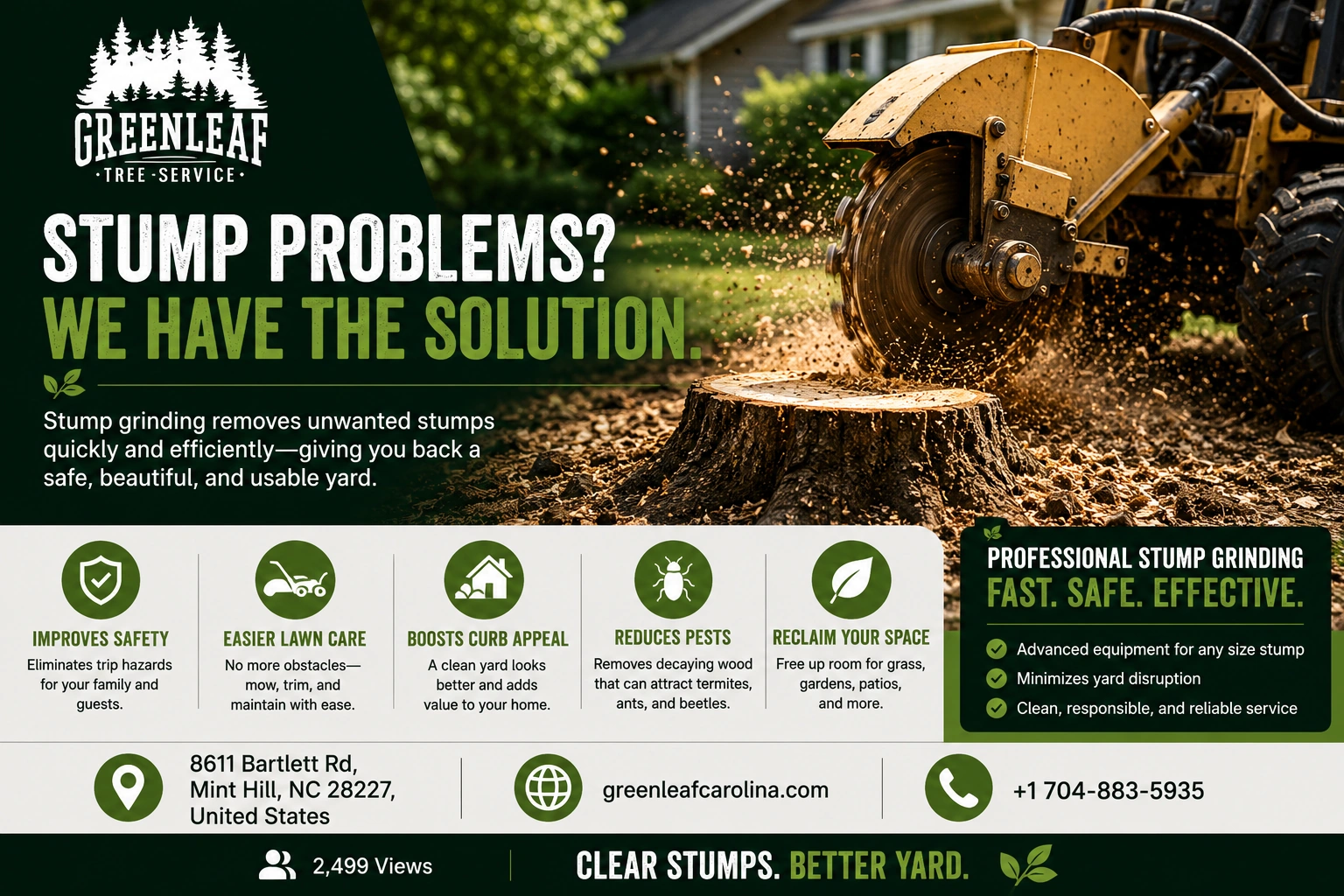
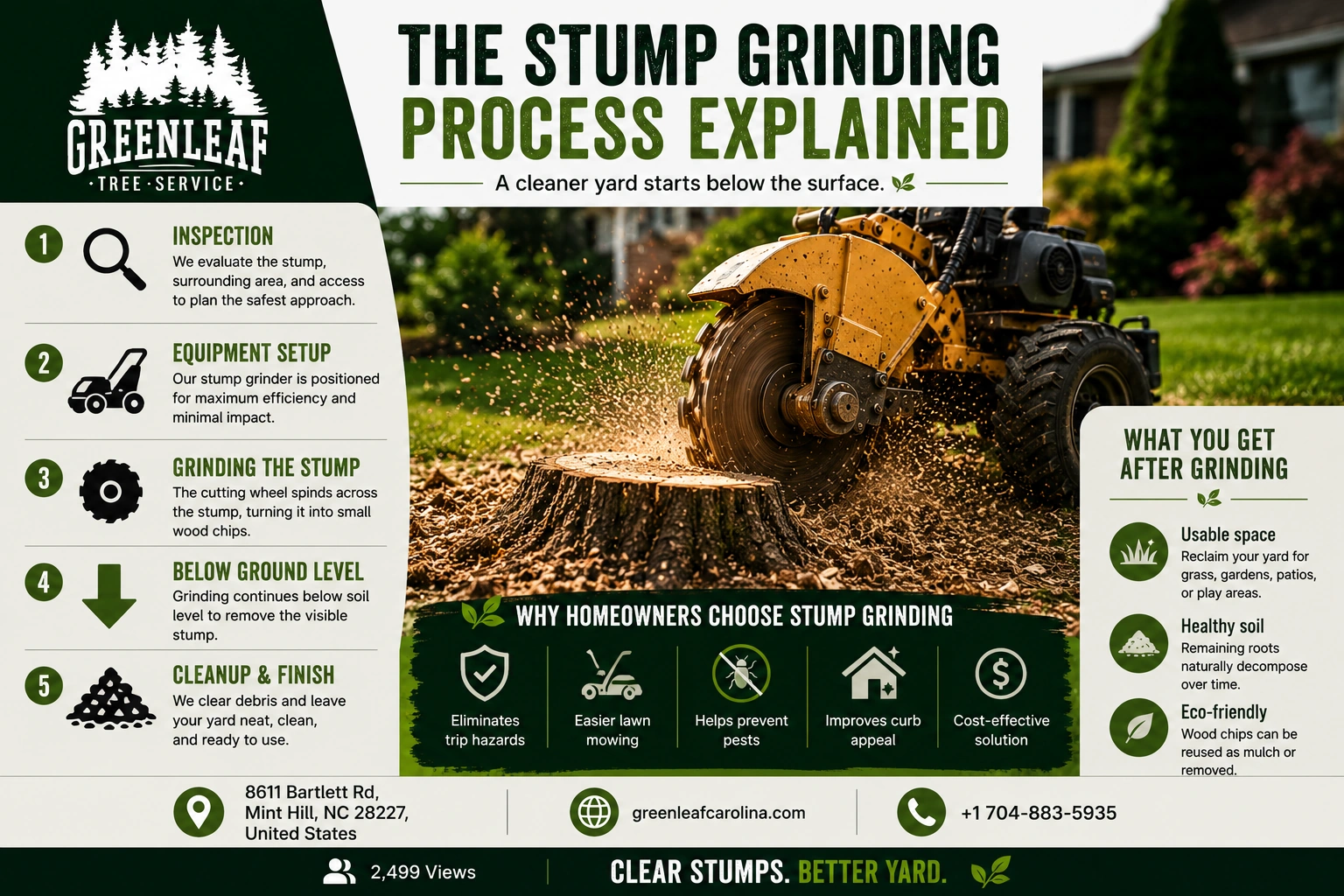
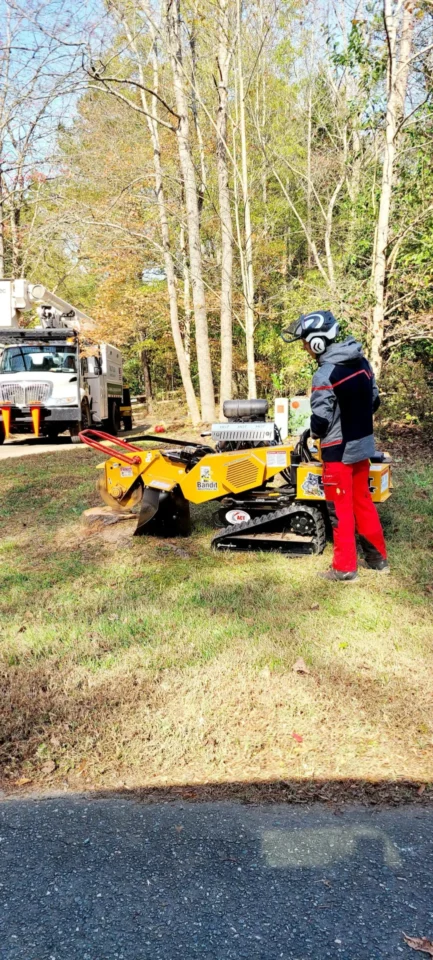
Stump grinding uses specialized equipment to grind the visible tree stump below ground level. The process converts the stump into wood chips while leaving most of the underground root system intact.
Once completed, the area can often be covered with soil, seeded, or incorporated into future landscaping projects. The remaining roots gradually decompose naturally over time.
Stump Removal
Stump removal is a more extensive process that involves extracting both the stump and a significant portion of the root system.
This typically requires excavation equipment and creates a larger opening in the yard. Because the root structure is physically removed, the site usually requires backfilling, grading, and restoration after the work is complete.
Comparing the Overall Scope
While stump grinding focuses on removing the visible portion of the stump, stump removal addresses both the stump and major roots.
As a result, stump removal generally requires more labor, equipment, excavation, and site restoration than grinding.
Neither method is automatically better. The right choice often depends on how the property will be used in the future.
Which Option Is Better for Your Yard?
Many homeowners want a simple answer, but the reality is that the best option depends on individual goals.
If your primary concern is improving appearance and reclaiming usable lawn space, stump grinding may provide an effective solution with minimal disruption.
If you plan to build, excavate, install utilities, or replant in the exact same location, complete stump removal may offer advantages because the root system is also removed.
Several factors can influence the decision, including:
- Desired appearance
- Lawn usability
- Future landscaping plans
- Project budget
- Long-term property goals
- Construction requirements
Rather than viewing one option as universally superior, it is helpful to consider how the area will be used over the coming years.
What Should Homeowners Consider Before Choosing?
Before deciding between stump grinding and stump removal, homeowners should evaluate several important factors.
Size of the Stump
Large stumps often require more time and equipment regardless of the chosen method. Diameter can influence both project complexity and overall cost.
Location of the Stump
A stump located in an open yard may be easier to access than one positioned near fences, patios, retaining walls, or structures.
Future Construction Plans
If future construction will occur directly over the stump location, complete removal may provide a more suitable foundation for the project.
Replanting Goals
Planting grass is usually possible after stump grinding. However, planting another tree in the exact same location may be easier after full stump removal.
Yard Accessibility
Narrow gates, steep slopes, landscaping features, and limited access points can influence equipment selection and project feasibility.
Desired Timeline
Some homeowners want the quickest path to restoring lawn appearance, while others prioritize complete root removal regardless of the additional time involved.
Evaluating these factors helps determine which solution aligns best with both short-term and long-term property goals.
When Should You Remove the Entire Root System?
Although stump grinding works well in many situations, there are cases where removing the entire root system may be beneficial.
Building Projects
Future structures such as sheds, garages, patios, decks, or additions may require complete stump and root removal to create a stable base.
Driveways and Hardscapes
Projects involving concrete, pavers, or asphalt often benefit from removing underground obstructions before installation.
Foundations
Construction projects near foundations may require complete root removal to prevent interference with excavation and site preparation.
Utility Installations
Installing drainage systems, irrigation lines, water lines, or other utilities may be easier when large roots have been removed.
Replanting in the Same Location
When homeowners want to plant a new tree exactly where the previous tree stood, removing the stump and major roots may provide additional space for healthy root development.
Stump Grinding Pros and Cons
Pros
- Less invasive
- Typically faster
- Often lower cost
- Minimal disruption to landscaping
- Suitable for many residential properties
- Leaves the yard largely intact
Cons
- Roots remain underground
- Not ideal for certain construction projects
- Replanting in the exact location may be more challenging
- Some ground settling may occur as roots decompose
Stump Removal Pros and Cons
Pros
- Removes the stump and major roots
- Better for future construction projects
- Creates a completely cleared area
- Makes replanting easier in the same location
Cons
- More invasive
- Typically higher cost
- Requires more site restoration
- Greater disruption to landscaping
- Creates a larger area that must be repaired afterward

How Stump Grinding Impacts Rainwater Flow on Your Property
That old tree stump in your yard is doing more than just ruining the view. It’s actually bossing your rainwater…
What Are the Cost Differences?
One of the most common questions homeowners ask involves cost.
Generally speaking, stump grinding is often less expensive than stump removal because it requires less excavation and causes less disruption to the surrounding landscape.
Stump removal typically involves additional labor, larger equipment, root extraction, hauling, and site restoration. These factors can increase overall project costs.
However, pricing varies significantly depending on property conditions and project requirements.
Factors that commonly affect costs include:
- Stump diameter
- Root system size
- Accessibility
- Equipment requirements
- Site conditions
- Number of stumps involved
Because every property is different, project costs should be evaluated individually rather than relying on broad pricing assumptions.
Which Option Works Best for Different Situations?
Stump Grinding May Be Best When:
- Improving yard appearance
- Eliminating trip hazards
- Restoring lawn space
- Minimizing landscape disruption
- Completing the project quickly
- Working within a limited budget
Stump Removal May Be Best When:
- Building over the area
- Installing foundations or hardscapes
- Replanting in the exact same location
- Removing major roots
- Preparing for excavation
- Installing utilities beneath the site
This comparison highlights why there is no single solution for every property. The most practical choice depends on how the area will be used after the project is completed.
How Green Leaf Carolina Can Help
Choosing between stump grinding and stump removal often starts with understanding your property’s long-term goals. Factors such as future landscaping projects, construction plans, yard accessibility, and desired outcomes can all influence the most appropriate approach.
Green Leaf Carolina helps homeowners evaluate these factors and understand the potential advantages and limitations of each option. By assessing the stump’s condition, location, and surrounding environment, property owners can make informed decisions that align with their plans for the space.
For homeowners throughout York County and the surrounding area, local knowledge and professional evaluation can provide valuable insight into the best way to address leftover stumps following tree removal.
If you’re unsure whether stump grinding or stump removal is the better choice, Green Leaf Carolina can evaluate your property and explain the advantages of each option. Our team considers your future landscaping plans, construction goals, budget, and site conditions to help you choose the most practical solution.
FAQs About Stump Grinding and Stump Removal
Is stump grinding cheaper than stump removal?
In many cases, yes. Stump grinding is often less expensive because it typically requires less excavation, labor, and site restoration than complete stump removal.
Will roots continue growing after stump grinding?
For most tree species, the remaining roots gradually die and decompose after the tree has been removed. Significant new growth is uncommon.
Can I plant a new tree where a stump was ground down?
It may be possible, but planting directly in the same location can sometimes be challenging because roots remain underground. Site conditions should be evaluated before replanting.
Does stump removal damage the yard?
Stump removal is generally more disruptive than stump grinding because it involves excavation and root extraction. However, proper restoration can help return the area to usable condition.
Which option is faster?
Stump grinding is often faster because it focuses on the visible stump rather than removing the entire root system.
How do I know which service is right for my property?
The best choice depends on your goals. If appearance and lawn usability are the primary concerns, grinding may be sufficient. If construction, utility work, or complete root removal is planned, stump removal may be the better option.
Ready to Get Rid of That Stubborn Stump?
Don't let an old stump become a safety hazard or attract pests. Schedule professional stump removal today before the problem gets worse.