
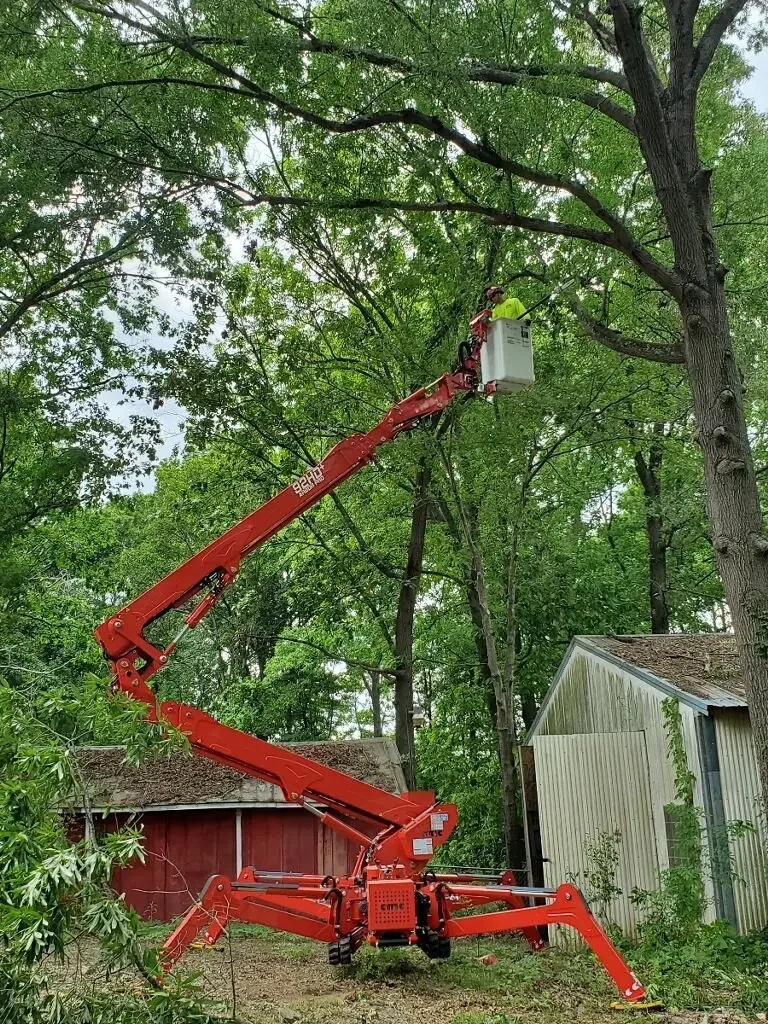
Tree removal sounds straightforward until neighbors, permits, and property lines get involved. What feels like a quick weekend decision can turn expensive fast if the rules aren’t clear.
A tree near a fence line raises questions most homeowners never think about until it’s too late. Who owns it? Who pays? And who needs to approve the work? These disputes often start small, but they don’t stay that way.
Knowing how tree laws and neighbor rights work can help you avoid costly mistakes and keep a simple yard project from becoming a long-term headache.
What permits are required before removing a tree near a property line?
Many homeowners are surprised to learn that removing a tree isn’t always as simple as hiring a crew and getting it done. Depending on your city, county, or homeowners association, permits may be required, especially near property lines.
Permits may be needed when:
- The tree is within a protected zone
- The tree is a certain size or species
- The property is in a historic or regulated district
- The tree provides shared boundary screening
- Local tree preservation ordinances apply
- The removal could affect drainage or erosion
Municipalities often protect larger or older trees because of their environmental value. In some areas, removing a tree without a permit can result in fines or mandatory replacement.
When a tree sits near a property line, officials may require confirmation of ownership before approving removal. That’s where things can get tricky. A professional tree service can help determine whether permits are necessary and guide you through the process. Taking this extra step upfront prevents surprises later.
Who is responsible for tree removal when branches cross into a neighbors yard?
Overhanging branches are one of the most common causes of neighbor disputes. The good news is that property law typically provides some guidance.
In general:
- The tree owner is responsible for the tree itself
- A neighbor may trim branches that cross into their property
- Trimming cannot damage or destabilize the tree
- Root intrusion may be handled similarly to branches
- Removal responsibility depends on trunk location
- Shared boundary trees may require mutual agreement
If the trunk of the tree sits entirely on your property, you are typically responsible for its care. However, your neighbor usually has the right to trim branches that extend onto their side, as long as they don’t harm the overall health of the tree.
If the trunk straddles the property line, it may legally be considered a shared tree. In that case, removal often requires both parties to agree.
Clear communication goes a long way. Many disputes escalate simply because expectations weren’t discussed before action was taken.
How do property line disputes affect tree removal and trimming decisions?
Property line disputes can complicate even routine trimming decisions. What seems obvious to one homeowner may be unclear legally.
Disputes often arise when:
- Property boundaries aren’t clearly marked
- Fences don’t match legal survey lines
- Previous owners made informal agreements
- One neighbor removes or trims without notice
- Survey information is outdated
Before removing a tree near a boundary, it’s smart to confirm exactly where the property line falls. Assumptions based on fences or landscaping can be misleading.
A formal survey can clarify ownership and prevent costly mistakes. Removing a tree that technically belongs to a neighbor can lead to financial liability, including replacement value claims.
Even trimming decisions can become sensitive. If trimming destabilizes a tree and it later falls, responsibility may become complicated. Taking time to verify boundaries and communicate intentions helps prevent minor disagreements from becoming major conflicts.
What legal issues can arise from removing a tree without neighbor agreement?
Tree removal without proper communication or agreement can lead to more than hard feelings. It can lead to legal action.
Potential legal issues include:
- Claims for property damage
- Lawsuits for unauthorized tree removal
- Fines for violating local tree ordinances
- Replacement cost disputes
- HOA penalties
- Civil disputes over boundary encroachment
In some states, courts assign significant value to mature trees. Removing one without proper authorization can result in triple damages, meaning the cost of replacement may be multiplied.
Even if no lawsuit occurs, neighbor relationships can suffer long-term damage. What started as a yard improvement can become a drawn-out conflict.
Professional documentation, proper permits, and open communication are your best protection. When handled carefully, tree removal can solve problems. When handled impulsively, it can create new ones.
Protect Your Property and Your Peace of Mind
Tree removal near property lines doesn’t have to become a dispute. With the right approach, it can be handled smoothly and professionally.
At Green Leaf Tree Service, we help homeowners navigate permits, clarify boundaries, and approach neighbor communication with care. We believe tree work should improve your property, not create tension or legal trouble.
From evaluating tree health to ensuring compliance with local regulations, we guide you every step of the way. If you’re considering tree removal near a boundary, let us help you do it right the first time.