
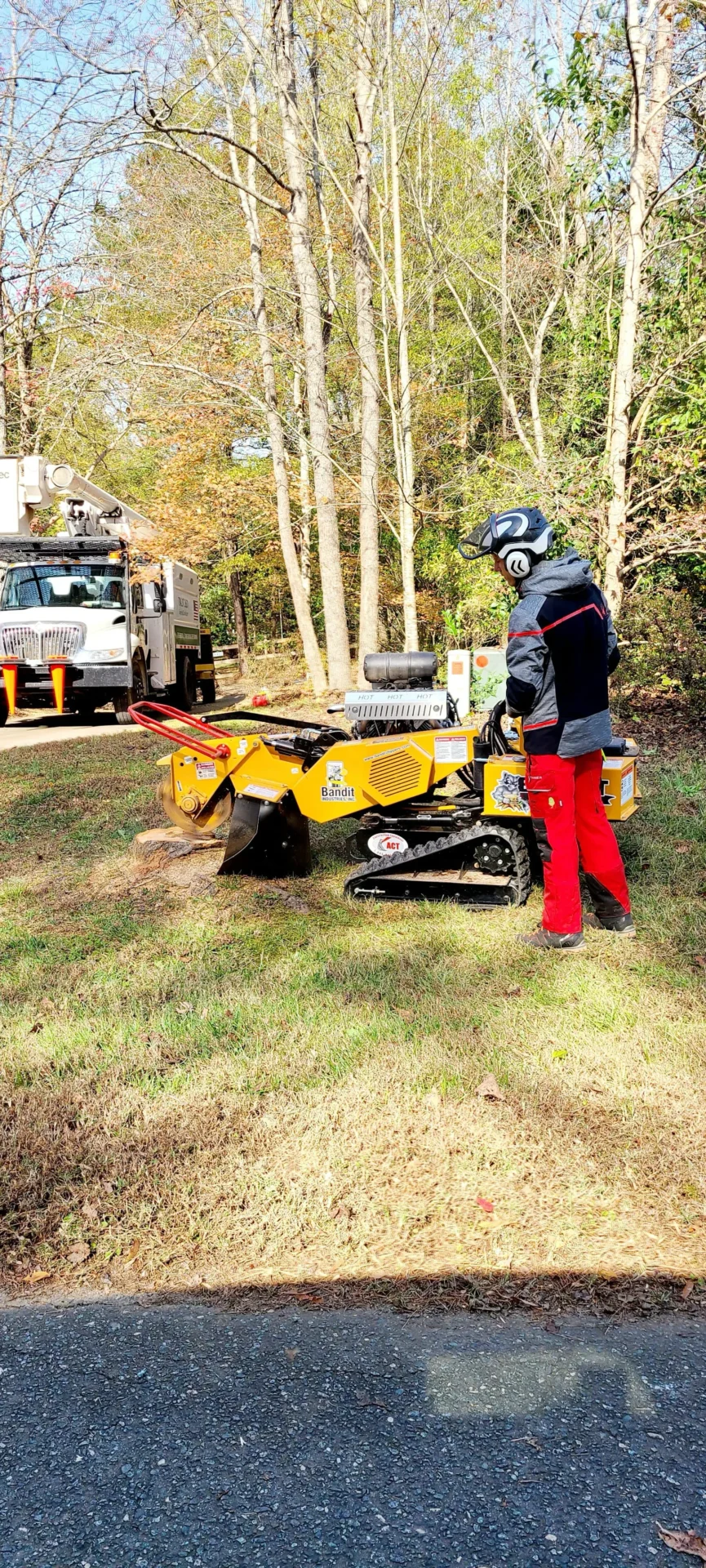
That old tree stump in your yard is doing more than just ruining the view. It’s actually bossing your rainwater around.
When a tree is cut down but the stump and roots are left behind, the ground around it doesn’t drain the same way. Roots slowly rot, soil settles unevenly, and water starts to collect in weird places. You might notice puddles that never used to be there, soft muddy spots, or water sneaking a little too close to your foundation.
Stump grinding doesn’t just clean up your lawn. By removing the stump below ground level and restoring the soil, it changes how rainwater flows, helping your yard drain better and look cleaner at the same time.
How Does Stump Grinding Affect the Flow of Rainwater on a Residential Property?
When a stump remains in the ground, its root system stays intact long after the tree is gone. These roots don’t simply disappear—they continue acting like underground walls, blocking and redirecting rainwater. The roots change the natural drainage pattern by creating obstacles that water must move around. This often causes pooling, uneven runoff, and pockets of soggy soil that take far too long to dry.
Once the stump is ground down, the situation changes dramatically. The underground structure begins to break apart over time, allowing water to flow more freely. Without those thick roots forcing rainwater to detour, the yard becomes more predictable. You may notice that water spreads more evenly, runs in a smoother direction, and no longer sits around the stump area.
Stump grinding also removes the raised mound or hump left behind after tree removal. That raised area often pushes water toward lower points in the yard, creating puddles. Leveling the ground by grinding the stump helps restore a smoother surface so water doesn’t collect in unwanted spots.
In many cases, homeowners who struggled with pooling water after a tree removal find that grinding the stump solves the issue almost immediately. The improvement in water flow happens because the soil is no longer fighting against a buried network of roots that refuses to break down quickly on its own.
Can Stump Grinding Help Reduce Drainage Problems Caused by Old Tree Roots?
Yes, stump grinding is one of the most effective ways to reduce drainage problems created by old roots. Even though a tree may not be standing anymore, its root system can continue causing issues underground. Large roots harden the soil around them and block the natural downward movement of water. These roots act as dividers that trap moisture, forcing water to travel sideways instead of soaking into the ground the way it should.
Many drainage issues tied to old trees come from this underground imbalance. When roots prevent water from sinking in, the soil becomes uneven in how it holds moisture. Some areas stay dry while others become waterlogged. This is especially common after storms or heavy rainfall.
Stump grinding helps reduce these problems by removing the core of the root system. Once the stump is gone, the remaining roots start decomposing more quickly. As they break down, the soil becomes softer, more open, and better able to absorb water. Water begins to drain normally again because the underground obstructions are no longer holding it back.
This process can help:
- Eliminate standing water near the stump
- Reduce soft, muddy areas that linger after rain
- Improve the speed at which water drains into the soil
- Restore a consistent moisture balance across the yard
For many properties, stump grinding is a practical, cost-effective solution before considering major drainage installations.
Why Does Removing a Stump Change How Soil Absorbs and Redirects Rainwater?
Soil is not just dirt; it’s a living material that responds to pressure, compaction, and the structures buried within it. A stump affects the soil long after the tree has been cut down because the root network beneath the surface is still shaping how the soil behaves.
Old roots create compacted zones that restrict downward water movement. These compacted areas act like a hardpan, making it difficult for water to naturally filter into the soil. Instead, rainwater tends to sit on top, runoff becomes unbalanced, and the yard may experience erosion in unexpected areas.
Once the stump is ground and the root system begins to decay, the soil begins to recover. It loosens, opens up, and regains its natural ability to hold moisture evenly. This shift improves both absorption and redirection of rainwater. The soil becomes more porous, which allows water to spread throughout the root zone instead of clustering in isolated pockets.
When the stump is removed, homeowners often see:
- Faster infiltration of water into the ground
- A more even distribution of moisture
- Less surface runoff moving across the yard
- Soil that supports healthier grass and plants
Without a stump interrupting the soil’s structure, rainwater moves more naturally. This change is a key reason why stump grinding supports long-term yard health and stability.
Does Stump Grinding Improve Yard Grading and Overall Water Management?
Yes, stump grinding plays a major role in creating smoother grading and better water management. A yard’s grading determines where rainwater flows, how soil settles, and whether water moves away from the home or toward problem areas. A tree stump disrupts these natural slopes by creating an uneven mound or low areas that interrupt proper drainage.
When the stump is ground down, the soil can be leveled more accurately. This allows the yard to regain a natural slope that directs water away from the house, sheds, walkways, and other structures. A smoother grade also helps prevent erosion and reduces the risk of foundation issues caused by poor drainage.
Grinding improves water management by:
- Eliminating raised areas that push water in the wrong direction
- Allowing soil to settle evenly across the yard
- Reducing dips and depressions that collect rainwater
- Supporting re-grading and landscaping
- Creating healthier soil conditions that enhance overall drainage
This is especially helpful in older yards where trees have been removed over decades but the stumps were never properly handled. Grinding those stumps restores the yard’s structure and prevents water from gathering in places where it shouldn’t.
For homeowners who are planning future landscaping projects, stump grinding is often one of the first steps. Without removing the stump, grading and drainage fixes may only be temporary. Grinding ensures the ground is stable, consistent, and ready for long-term improvement.
Improve Your Yard’s Drainage with Professional Stump Grinding from Green Leaf Tree Service
If you’ve been dealing with standing water, soggy patches, or uneven soil, stump grinding may be the solution your property needs.
Removing an old stump helps restore natural water flow, improves soil absorption, and supports better grading across your yard. Green Leaf Tree Service provides safe, efficient stump grinding that gives your property a cleaner look and healthier drainage system.
Don’t let hidden roots and leftover stumps disrupt your landscape any longer. Reach out to our team today and let us help you create a yard that drains properly, stays healthier, and performs better after every rainfall.