
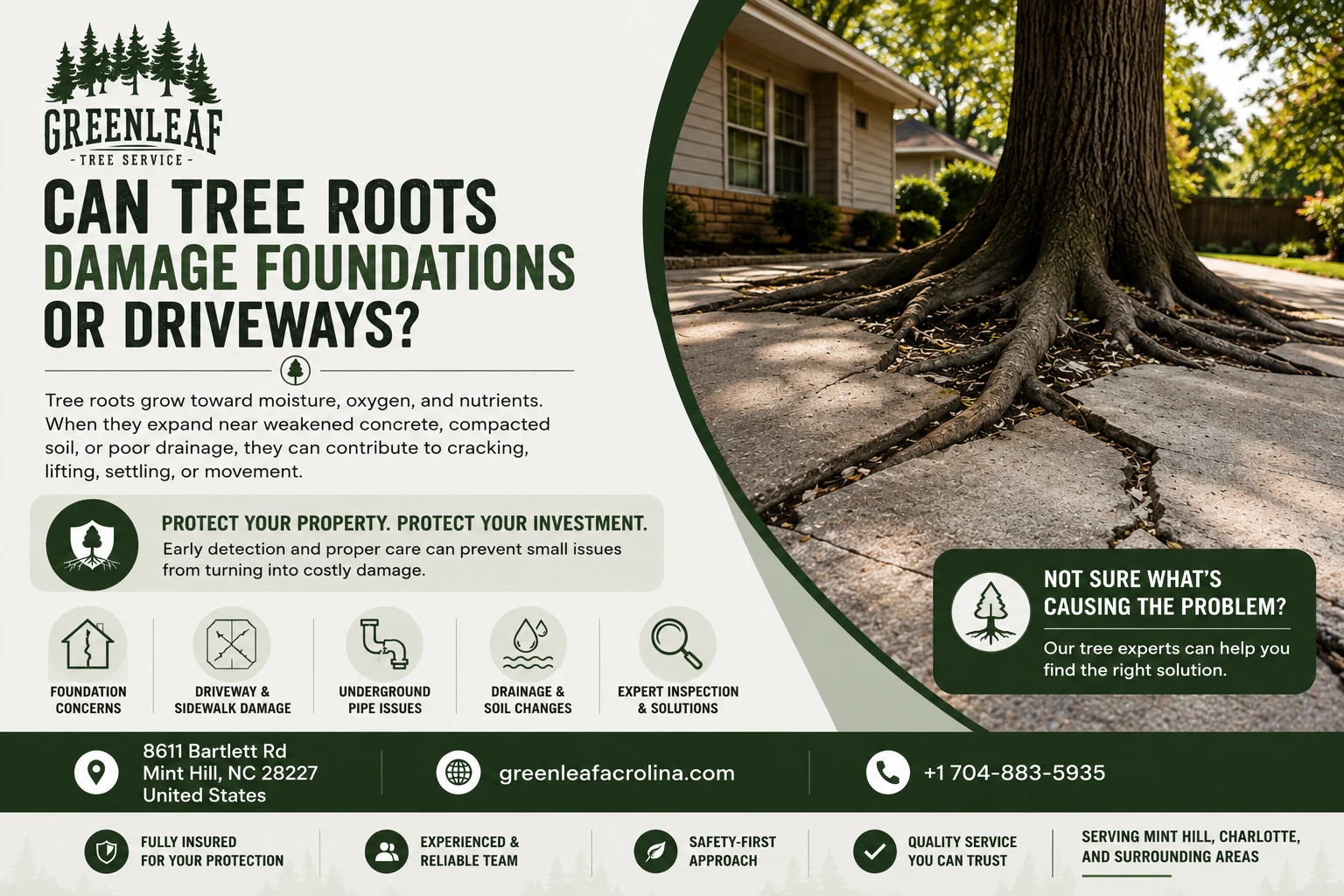
Yes, tree roots can damage driveways, sidewalks, patios, and sometimes contribute to foundation problems, but they usually do not “attack” concrete or foundations on their own. Roots grow toward moisture, oxygen, and nutrients. When they expand near weakened concrete, compacted soil, poor drainage, or shifting soil, they can contribute to cracking, lifting, settling, or movement.
Driveways and sidewalks are usually more vulnerable than home foundations because they are thinner and more exposed to soil movement. Foundation concerns are more complex and often involve drainage, soil type, moisture changes, existing cracks, or the condition of the structure.
For homeowners in Fort Mill, SC, early observation is important. A professional tree inspection can help determine whether a nearby tree is part of the problem or whether another issue, such as drainage, soil movement, erosion, or aging concrete, may be involved.
Worried Tree Roots Are Damaging Your Property?
Schedule an inspection today and get answers before costly damage takes over.
How Tree Roots Can Damage Driveways, Sidewalks, and Foundations
Tree roots grow where conditions are favorable. In most landscapes, roots spread outward near the surface instead of growing straight down. They search for water, oxygen, and nutrients, and as they mature, they become thicker and stronger.
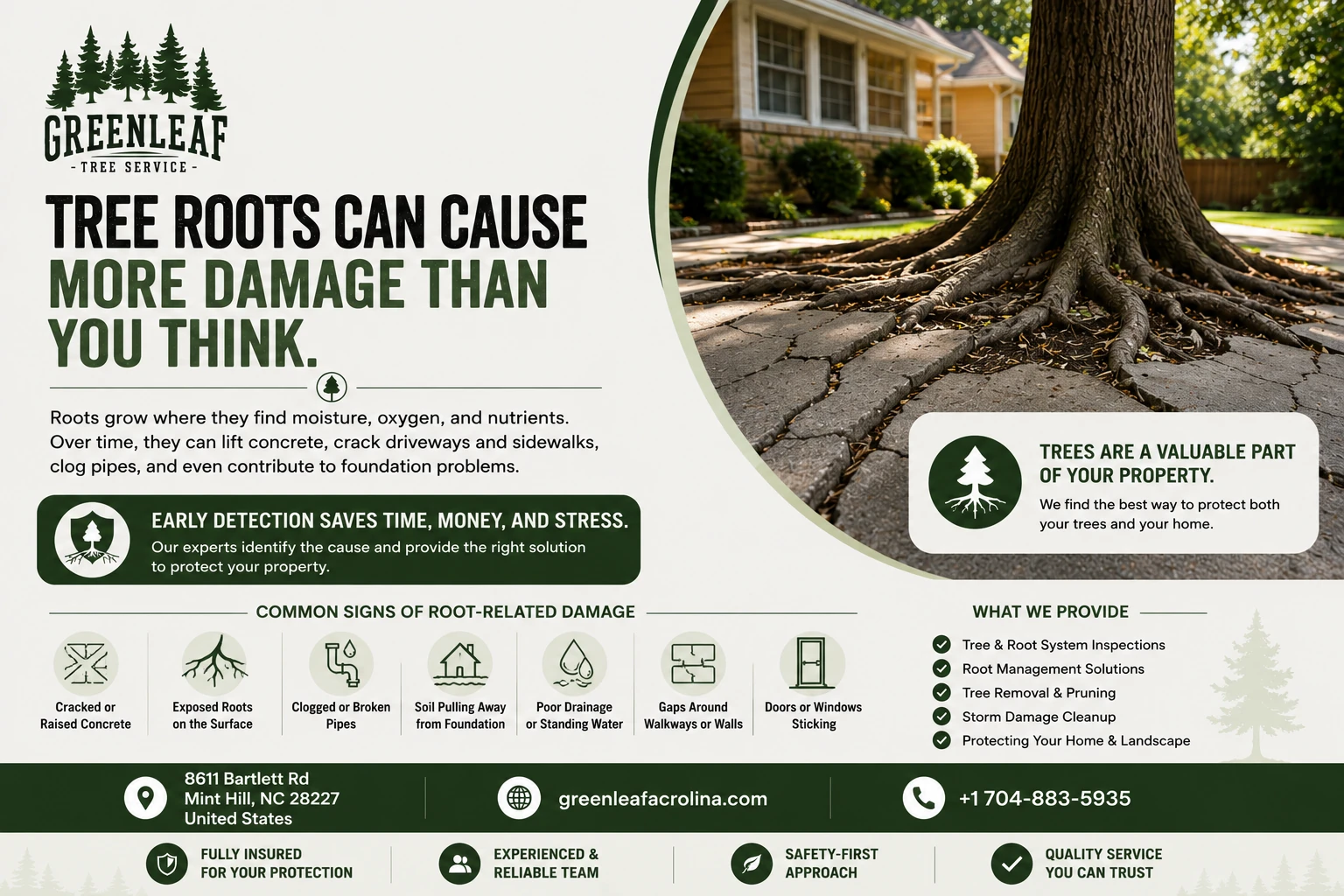
That growth can place pressure on nearby hard surfaces. Over time, expanding roots may contribute to buckling, lifting, cracking, or displacement of sidewalks, driveways, patios, and walkways.
Driveways, patios, walkways, and sidewalks are often more vulnerable to root-related problems than house foundations. Concrete slabs and pavers are usually thinner than foundations, and they may already be affected by settling, erosion, heavy vehicle traffic, poor installation, or changing moisture levels. When roots grow beneath these surfaces and expand, they can lift sections of pavement or create uneven pressure underneath.
Foundation concerns are usually more complicated. Roots may contribute to foundation movement when they affect the soil around the home. For example, a large tree close to a structure may draw moisture from the surrounding soil during dry periods. In certain soil types, especially soils that shrink and swell with moisture changes, this can contribute to uneven settling.
Roots can also enter existing cracks, gaps, or weak areas where moisture is available. However, they are less likely to break through a sound, well-built foundation on their own.
Tree roots can also affect underground structures such as drainage lines, sewer pipes, irrigation lines, retaining wall bases, and utility areas. If a pipe already has a small leak or opening, roots may grow toward the moisture and make the blockage worse over time.
Are Tree Roots a Serious Foundation Risk?
Foundation damage should always be taken seriously, but homeowners should avoid assuming that tree roots are the only cause. A crack in a driveway, sidewalk, or foundation can be related to many factors, including soil movement, age, water runoff, poor drainage, construction quality, erosion, seasonal moisture changes, or heavy loads.
Roots may be one contributing factor, but a proper inspection is needed before blaming the tree.
That said, root-related damage can become more expensive if ignored. A slightly raised walkway may become a trip hazard. A small driveway crack may widen as water enters and soil continues to shift. A drainage issue near a foundation may worsen if roots are disrupting water flow or contributing to uneven soil moisture.
The goal is not to remove every tree near a structure. It is to understand whether the tree, soil, drainage, and structure are interacting in a way that could lead to damage.
In many cases, a tree can be monitored or managed. In other cases, especially when a tree is too close to a structure, declining in health, or creating repeated damage, tree removal may need to be discussed as one possible solution.
Warning Signs of Tree Root Damage Around Your Property
Homeowners can often spot early warning signs before damage becomes severe. Walk around your property and look for changes near mature trees, especially trees close to the home, driveway, sidewalk, patio, retaining wall, or underground utility area.
Watch for signs such as:
- Cracks in driveways, patios, or sidewalks near the tree
- Raised or uneven concrete sections
- Exposed roots crossing lawn areas or hardscapes
- Soil pulling away from the foundation during dry weather
- Standing water or poor drainage near the home
- New gaps around walkways, steps, or retaining walls
- Cracks that seem to widen over time
- Roots growing near visible pipe, drain, or irrigation areas
- Doors or windows that begin sticking along the side of the home closest to the tree
Not every sign means the tree is the cause. However, these clues can help a professional understand what may be happening below the surface.
Homeowners should also pay attention after heavy rain, drought, or landscape changes. Removing large amounts of soil, changing drainage patterns, installing new hardscaping, or compacting soil with heavy equipment can all affect how roots behave and how water moves around the property.
Which Trees Are More Likely to Cause Root Problems?
Any large tree planted too close to a structure can create concerns over time, but some trees are more commonly associated with aggressive or wide-spreading root systems. Fast-growing trees and moisture-loving species tend to be more likely to create issues near pavement, pipes, or foundations.
Trees often associated with root problems include:
- Willows
- Poplars
- Silver maples
- Cottonwoods
- Some large maple varieties
- Some oak species when planted too close to structures
- Sweetgums
- Elms
- Bradford pears in certain landscape settings
This does not mean these trees are bad. Many of them are valuable in the right location. The problem usually comes down to placement, available soil space, moisture conditions, and how close the tree is to structures.
The same species may be low-risk in one yard and a concern in another, depending on spacing, soil, drainage, and nearby hardscapes. A large tree with plenty of room to grow is very different from a large tree planted a few feet from a driveway or foundation.
For existing trees, identification matters. A professional can evaluate the species, age, size, growth habits, and nearby structures before recommending next steps.

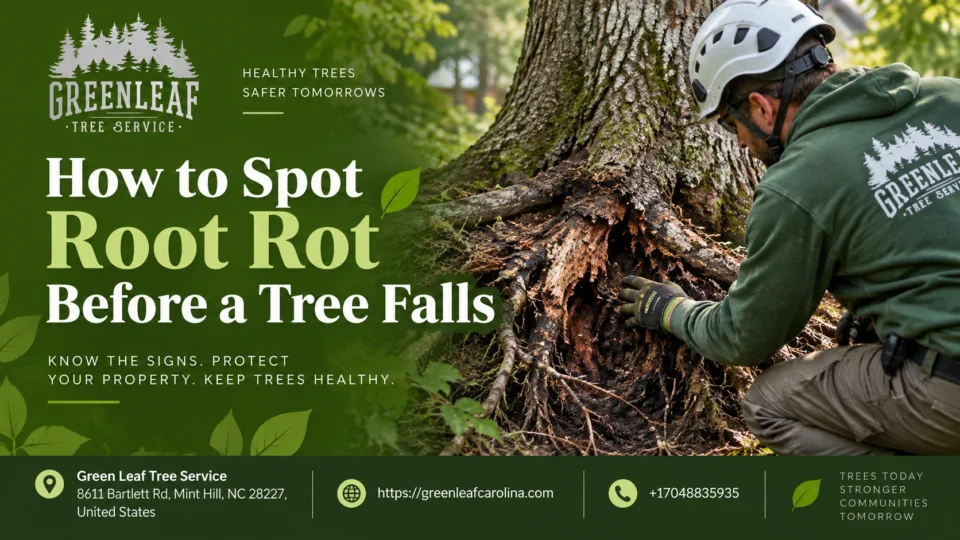
How to Spot Root Rot Before a Tree Falls
Common root rot tree signs include thinning foliage, yellow or undersized leaves, branch dieback, fungal growth near the trunk, soft…
When to Schedule a Tree Inspection Near Your Foundation or Driveway
A tree inspection is a smart step when you notice possible root-related changes around your property. You do not need to wait until damage is severe. Early inspections are often more useful because they can help determine whether the issue can be monitored, corrected, or managed before major repairs are needed.
Schedule a professional inspection if you notice:
- A mature tree growing close to the foundation
- Driveway or sidewalk sections lifting near tree roots
- Cracks appearing near the tree side of the property
- Roots entering or growing near drainage areas
- Recurring plumbing or drainage problems near large trees
- Soil erosion around roots or hardscapes
- Leaning trees near structures
- A tree that looks stressed, diseased, or unstable
- Plans to install a new driveway, patio, walkway, or retaining wall near existing trees
Tree inspections are also helpful before buying a home with large mature trees near the structure. A tree may look healthy and beautiful above ground, but root proximity, soil disturbance, or structural conflicts may need a closer look.
For homeowners in and around Fort Mill, SC, Green Leaf Tree Service provides tree inspections to help identify tree-related concerns before they become more complicated.
What a Tree Service Company Looks for During a Root Inspection
A professional tree service company will look at more than just the visible roots. Root-related damage is rarely about one factor. A proper evaluation should consider the tree, the structure, the soil, and the surrounding property conditions.
During an inspection, a tree professional may evaluate:
- Tree species and growth habits
- Tree size, age, and overall health
- Distance between the tree and nearby structures
- Visible root flare and surface root activity
- Cracks, lifting, or uneven hardscapes
- Soil condition and compaction
- Drainage patterns around the property
- Signs of erosion or water pooling
- Potential conflicts with pipes, utilities, or retaining walls
- Whether pruning, monitoring, root management, or removal may be appropriate
The inspection may also help determine whether another professional should be involved, such as a foundation contractor, plumber, drainage specialist, or concrete repair professional. This is especially important when the damage may have multiple causes.
A tree service company should not automatically recommend removal just because roots are present. Healthy trees can often coexist with structures when they have enough space and the surrounding conditions are managed properly. The best recommendation depends on the actual risk.
Tree Root Concerns in Fort Mill, SC: How Green Leaf Tree Service Can Help
At Green Leaf Tree Service, we help homeowners understand what is happening around their trees before small concerns turn into larger property problems. If you are noticing cracked concrete, uneven sidewalks, driveway lifting, drainage concerns, or mature trees growing close to your home, a professional inspection can give you clearer answers.
Our team can evaluate the tree, surrounding structures, visible root patterns, and potential risk factors so you can make an informed decision. In some cases, monitoring or maintenance may be enough. In other cases, especially when a tree is causing repeated damage, declining in health, or growing too close to critical structures, removal may be worth considering.
The goal is simple: protect your property while making responsible decisions about your trees.
To get started, schedule a tree inspection with Green Leaf Tree Service. If removal becomes the safest or most practical option, we can also help you understand your tree removal options.
FAQs
Can tree roots really damage a home foundation?
Tree roots can contribute to foundation problems, but they are rarely the only factor. Roots may affect soil moisture, grow into existing cracks, or worsen movement in areas with poor drainage or unstable soil. A professional inspection can help determine whether the tree is involved.
Do tree roots break concrete?
Tree roots can lift, shift, or crack concrete over time, especially thinner slabs such as sidewalks, patios, and driveways. As roots expand beneath pavement, they may create pressure that causes sections to rise or crack.
Should I remove a tree if roots are near my driveway?
Not always. Roots near a driveway do not automatically mean the tree needs to be removed. The decision depends on the severity of the damage, the tree species, the tree’s health, the root location, and whether the driveway can be repaired without destabilizing the tree.
What trees should not be planted near foundations?
Large, fast-growing, moisture-seeking trees should generally be planted far enough away from foundations, driveways, sidewalks, and underground lines. Willows, poplars, silver maples, cottonwoods, and similar species can create problems when planted in tight spaces.
Can cutting roots fix the problem?
Cutting roots can be risky. Removing major roots may weaken the tree, affect stability, or create long-term health problems. Root cutting should only be considered after a professional evaluation.
Who should inspect tree roots near a foundation?
Start with a professional tree service or qualified tree care professional to evaluate the tree and root concerns. If structural damage is suspected, a foundation specialist may also need to inspect the property.
Noticed Cracks Near Trees Around Your Home?
Tree roots may be causing hidden damage. Speak with an expert today and protect your property.