
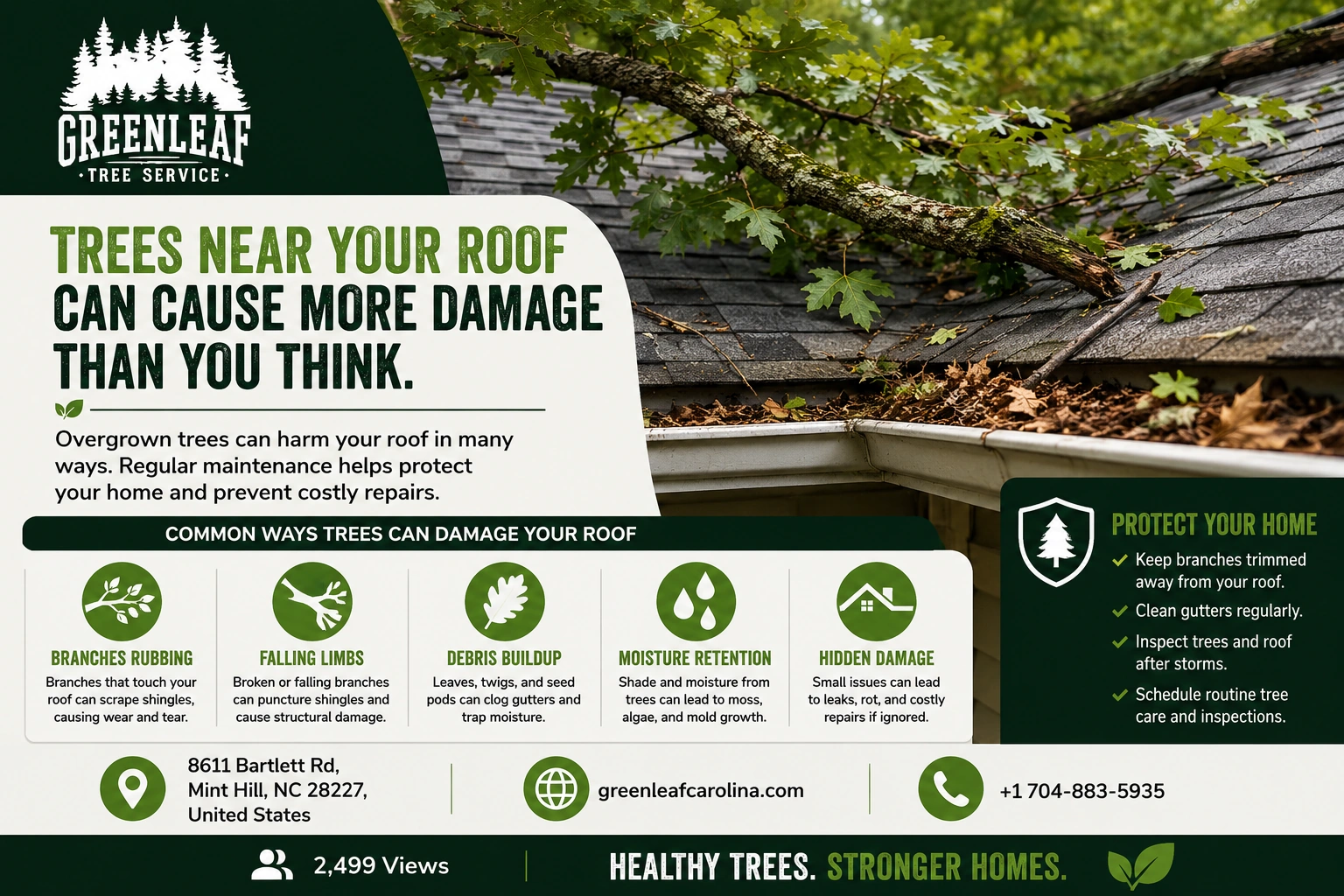
Yes, overgrown trees can damage your roof. Branches can scrape shingles, falling limbs can puncture roofing materials, and leaves or debris can clog gutters and trap moisture against the roof.
Healthy trees add shade, beauty, and value to a property, but unmanaged growth near the home can create roofing risks, especially during storms or periods of heavy seasonal growth.
Understanding how trees interact with your roofing system can help you identify potential hazards before they become expensive problems. Whether you live in a heavily wooded neighborhood or have a few mature trees near your home, knowing what to watch for is an important part of protecting your property.
Stop roof damage before it starts.
Our experienced team removes hazardous limbs and overgrown trees before they become a serious problem.
Can Overgrown Trees Damage Your Roof?
Overgrown trees can affect roofing systems in several ways, ranging from minor wear and tear to significant structural damage.
One of the most common issues occurs when branches rub against roofing materials. During windy conditions, limbs can scrape shingles repeatedly, gradually wearing away protective granules and shortening the lifespan of the roof. Over time, this constant friction may leave roofing materials vulnerable to leaks and deterioration.
Falling limbs and broken branches present another major concern. Even relatively small branches can damage shingles, flashing, gutters, or roof vents when they fall. Larger limbs may cause extensive structural damage that requires immediate repairs.
Leaves, twigs, seed pods, and other debris can also accumulate on rooftops and inside gutters. When debris collects, it may trap moisture against roofing materials and restrict proper drainage. Clogged gutters often allow water to back up beneath shingles or overflow near the home’s foundation.
Overhanging limbs can also create shaded areas that retain moisture longer after rainfall. Excessive moisture may contribute to algae growth, moss development, and mold issues that can gradually impact roofing materials and reduce curb appeal.
How Overgrown Trees Damage Roofing Materials
Trees can affect multiple parts of a roofing system, sometimes without homeowners noticing until damage becomes more significant.
Branches Rubbing Against Shingles
Branches that touch the roof can scrape shingles during windy conditions, gradually wearing away protective surfaces and exposing roofing materials to the elements.
Falling Limbs and Branches
Broken branches can strike the roof and damage shingles, flashing, gutters, vents, and other roofing components.
Debris Accumulation
Leaves, twigs, pine needles, and seed pods can collect on rooftops and inside gutters, restricting water flow and increasing moisture retention.
Moisture Retention
Shaded areas created by overhanging limbs often stay damp longer after rain, creating conditions that may encourage algae, moss, and mold growth.
Why Tree-Related Roof Damage Can Become Serious
Tree-related roof damage can become much more serious than many homeowners initially expect.
A missing shingle or small puncture may seem insignificant at first, but even minor damage can create pathways for water intrusion. Once moisture enters the roofing system, it can affect underlayment materials, roof decking, attic insulation, and interior ceilings.
Persistent moisture exposure may also encourage mold growth within attics or wall cavities. Mold can spread when left unchecked, potentially affecting indoor air quality and increasing repair costs.
Damaged insulation is another concern. Wet insulation often loses its effectiveness, reducing energy efficiency and increasing heating and cooling expenses.
In some cases, weakened limbs hanging above a home can pose safety hazards to occupants and visitors. Trees that show signs of decay, disease, or structural weakness may become more likely to shed branches unexpectedly.
What Homeowners Should Check Around the Roofline
Routine visual inspections can help homeowners identify potential tree-related roof hazards before they worsen.
You do not need to climb onto the roof to perform a basic inspection. Instead, conduct a careful visual assessment from the ground using binoculars if necessary.
Some warning signs to watch for include:
- Branches touching the roof
- Missing, curled, or damaged shingles
- Excessive leaf or debris accumulation
- Overflowing or clogged gutters
- Cracked, split, or damaged tree limbs
- Dead branches hanging above the home
- Moss, algae, or moisture buildup on roofing materials
Pay particular attention after storms, heavy winds, or periods of rapid seasonal growth. Early detection often allows homeowners to address small issues before they lead to expensive repairs.
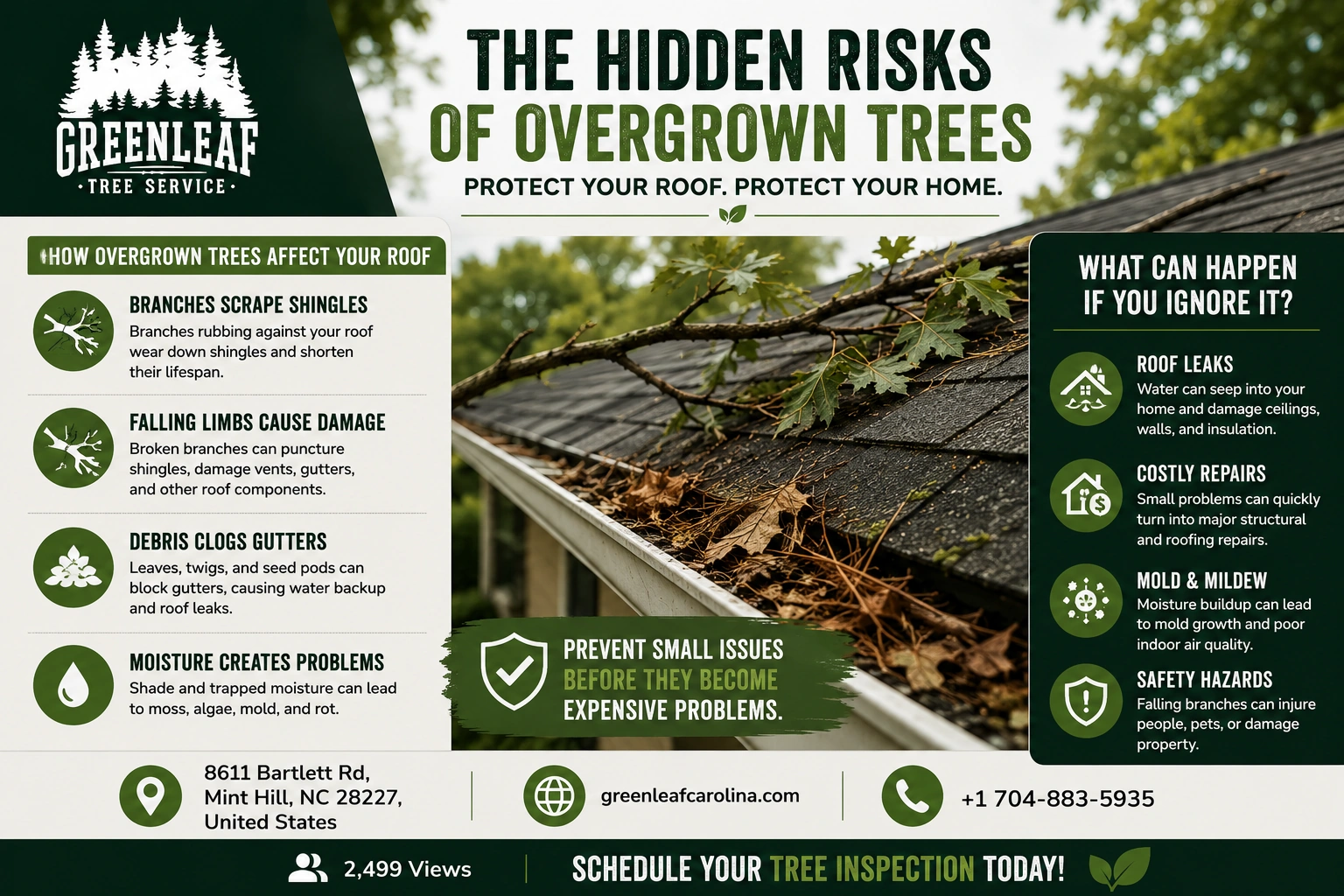
How Storms Increase Roof Damage Risks
Storms significantly increase the likelihood of tree-related roof damage.
Strong winds can force branches against roofing materials repeatedly, causing scratches, punctures, or shingle damage. During severe storms, even healthy limbs may break due to excessive wind loads.
Heavy rain can saturate branches and increase their weight, making them more susceptible to failure. This added stress may cause limbs to crack or fall unexpectedly.
Trees that already contain dead, diseased, or structurally weakened branches become especially vulnerable during storms. What might seem like a stable limb during normal weather can quickly become a hazard when exposed to high winds or lightning.
Storm-related tree failures often occur without warning, which is why preventive maintenance plays such an important role in reducing property risks.

What Happens After Emergency Tree Cutting
When a tree comes down unexpectedly, it’s rarely a calm situation. Maybe it was a late-night storm. Maybe high winds…
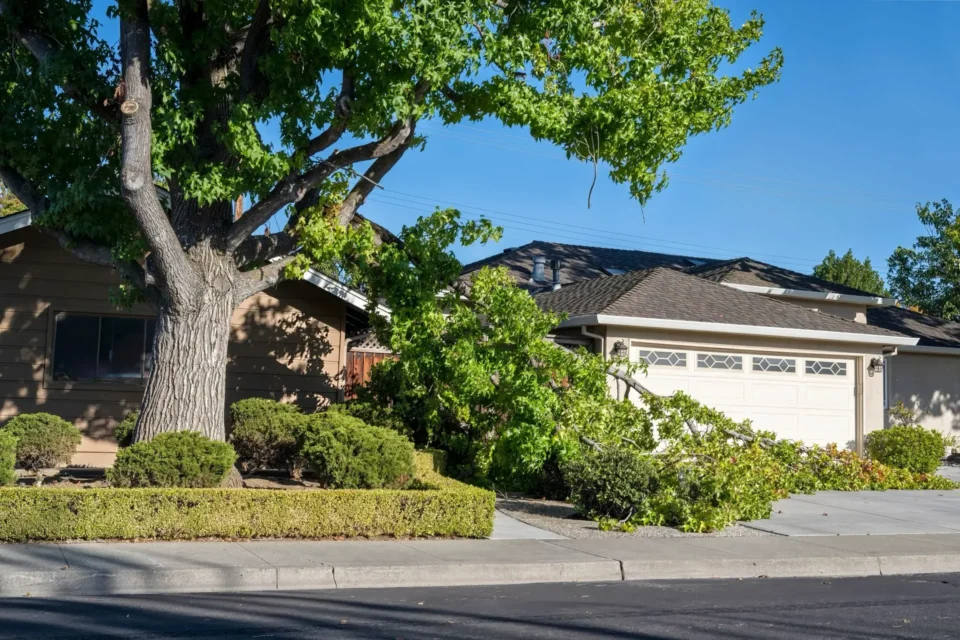
When to Trim Trees Near Your Roof
Regular tree maintenance helps reduce the likelihood of branches interfering with roofing systems.
The ideal trimming schedule varies depending on tree species, growth rate, age, and proximity to the home. Fast-growing trees may require more frequent attention than slower-growing varieties.
Homeowners should consider scheduling inspections when:
- Branches begin approaching the roofline
- Trees exhibit rapid seasonal growth
- Dead or damaged limbs become visible
- Storm season is approaching
- Trees have not been evaluated for several years
Maintaining appropriate clearance between trees and roofs can help reduce branch contact, improve airflow, and limit debris accumulation.
Professional tree trimming can help address overgrowth while preserving the health and structure of mature trees.
When Tree Removal May Be Necessary
Professional tree maintenance often focuses on reducing risks associated with nearby trees.
Depending on the condition of the tree and its location, a tree service company may remove:
- Overhanging branches
- Dead limbs
- Hazardous limbs
- Storm-damaged branches
- Structurally compromised sections
In some situations, trimming alone may not be enough. Trees that are severely diseased, extensively damaged, leaning dangerously, or growing too close to structures may require complete removal.
When a tree presents ongoing safety concerns or significant roof-related risks, professional tree removal may be recommended after a thorough evaluation.
How to Help Prevent Tree-Related Roof Damage
Homeowners can reduce roof risks by:
- Keeping branches from touching the roof
- Removing dead or weakened limbs
- Cleaning gutters regularly
- Checking for debris after storms
- Watching for moss, algae, or moisture buildup
- Scheduling routine tree inspections
- Addressing leaning or damaged trees early
Preventive maintenance is often easier and less expensive than repairing roof damage after a limb falls or moisture problems develop.
How Green Leaf Carolina Can Help
Proactive tree maintenance is one of the most effective ways to reduce the likelihood of tree-related roof damage. Regular evaluations can help identify overgrown branches, weakened limbs, and other conditions that may increase risks around your home.
At Green Leaf Carolina, our team helps homeowners assess trees growing near roofs, structures, and other valuable property features. By identifying potential hazards early, homeowners can make informed decisions about maintenance before problems escalate.
For homeowners throughout Fort Mill and the surrounding area, we provide local insight into the tree species, weather conditions, and seasonal challenges that commonly affect residential properties.
If overgrown trees are getting too close to your roof, Green Leaf Carolina can help you assess the risk and recommend the right maintenance plan. From trimming overhanging limbs to removing hazardous trees, our team helps homeowners protect their homes, roofs, and outdoor spaces.
FAQs About Trees and Roof Damage
Can tree branches damage shingles?
Yes. Branches that repeatedly rub against shingles can wear away protective materials and increase the likelihood of roof deterioration over time.
How close should tree branches be to a roof?
The ideal clearance depends on the tree species and growth habits. In general, branches should not make contact with roofing materials and should be monitored regularly as trees grow.
Can clogged gutters caused by trees damage my roof?
Yes. Leaves and debris can block water flow, causing moisture buildup and increasing the risk of roof leaks, water intrusion, and gutter damage.
Are overhanging branches dangerous during storms?
They can be. High winds, heavy rain, and severe weather may cause branches to break and strike the roof, potentially resulting in significant property damage.
When should a tree be removed instead of trimmed?
Removal may be considered when a tree is severely diseased, structurally compromised, dying, or creating ongoing safety risks that trimming cannot adequately address.
How often should trees near a home be inspected?
Most homeowners benefit from annual inspections, with additional evaluations after major storms or periods of rapid growth.
Don't let overgrown trees risk your home.
Call today for professional tree trimming and removal to help protect your roof from unnecessary damage.