
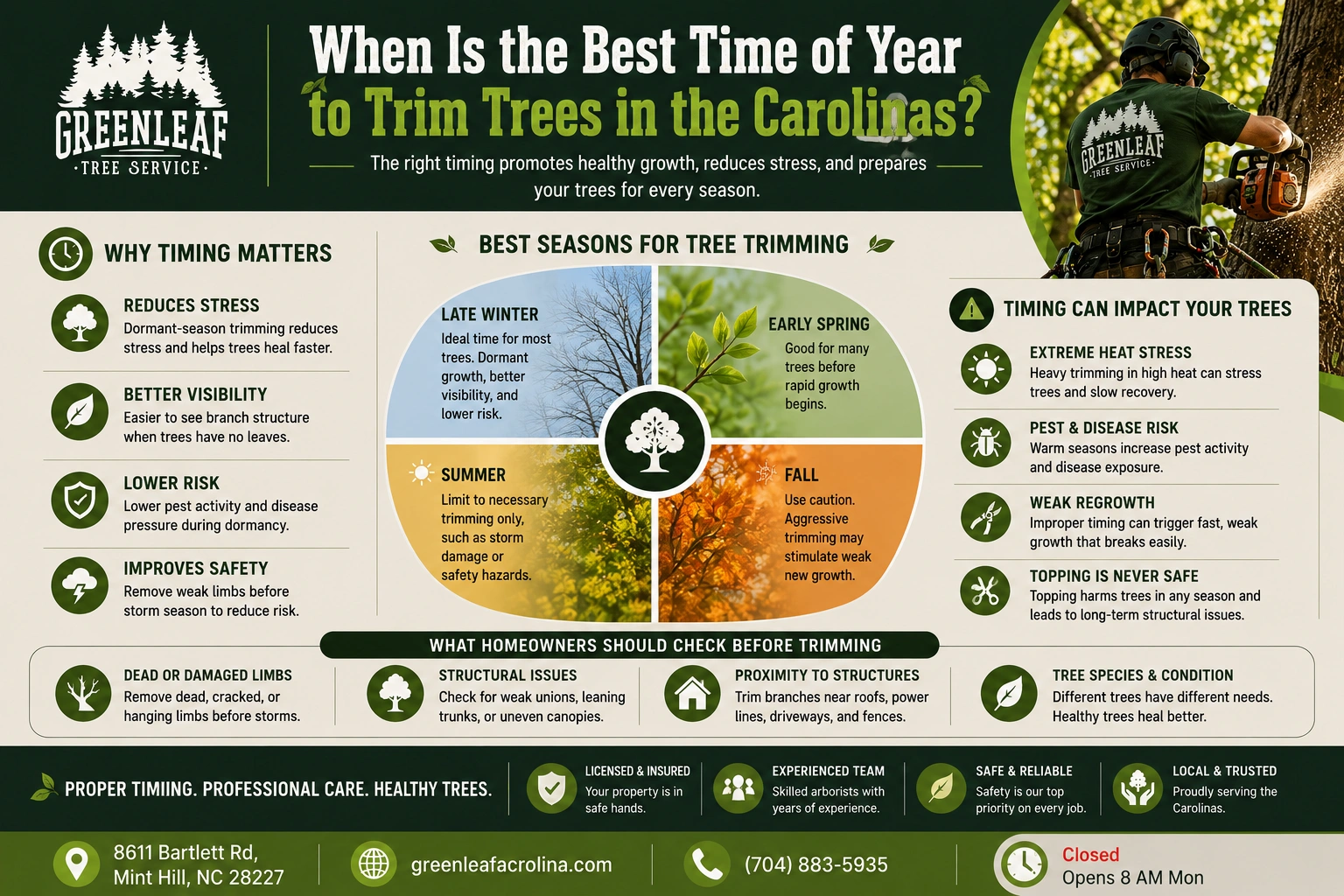
The best time to trim trees in North Carolina is usually late winter or early spring before heavy seasonal growth begins. In the Carolinas, trimming during the dormant season often reduces stress, improves visibility of branch structure, and helps prepare trees for spring storms and summer growth.
However, timing depends on the tree species, condition, weather patterns, and reason for trimming. Some trees need seasonal maintenance for safety, while others should only be trimmed during specific periods to reduce disease risk or storm damage potential.
Is It Time to Trim Your Trees?
Find out the best season for tree trimming in the Carolinas and schedule service before overgrowth becomes a problem.
Why Timing Matters for Tree Trimming
Tree trimming is not only about appearance or overgrowth. Timing affects how a tree heals, grows, responds to stress, and handles seasonal weather.
Trees respond differently depending on when cuts are made. Some recover well during dormant periods, while others become more vulnerable to insects, disease, heat stress, or storm damage if trimmed at the wrong time.
Dormant Season Reduces Stress
Many trees in North Carolina and South Carolina benefit from trimming during dormancy, usually between late fall and early spring.
During dormancy:
- Trees use less energy
- Growth slows down
- Insect activity decreases
- Disease spread is often lower
- Branch structure is easier to see
This makes it easier to remove weak, crowded, or damaged branches while minimizing stress on the tree.
Timing Affects Recovery
Fresh cuts create wounds. Trees naturally seal and recover from those wounds over time.
If trimming happens during periods of active stress, such as drought, extreme heat, or disease season, recovery may slow down.
The wrong timing can also encourage weak regrowth or expose the tree to unnecessary environmental pressure.
Safety Timing Matters Too
Timing also affects safety.
Waiting too long to remove weak limbs before storm season increases the chance of branch failure during high winds, heavy rain, or saturated soil conditions.
That is one reason homeowners often schedule professional tree trimming services before spring and summer storm activity begins.
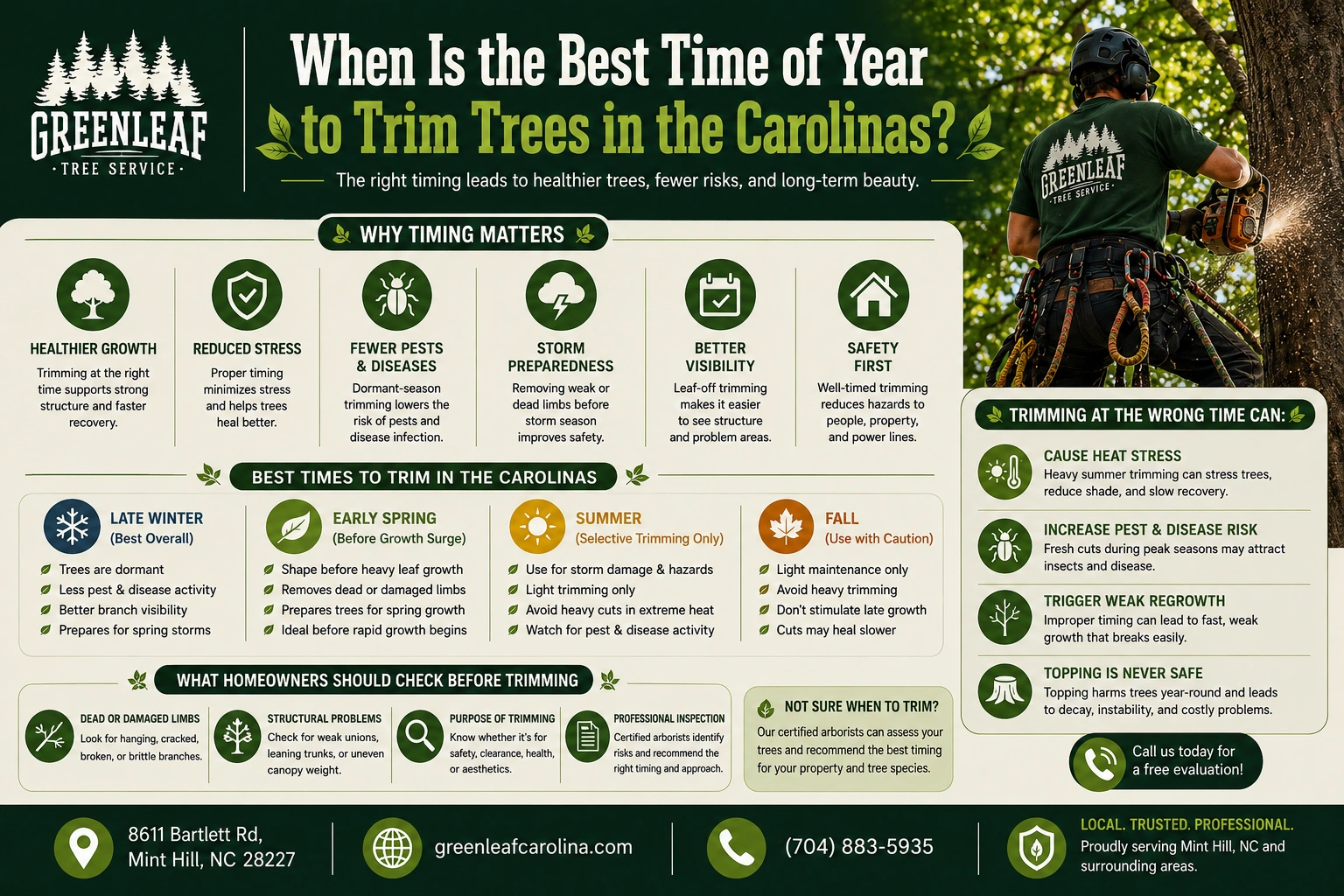
The Best Seasons for Tree Trimming in the Carolinas
The Carolinas experience changing weather patterns throughout the year, so the best trimming season depends on the tree’s condition and the purpose of the work.
Late Winter Is Often Ideal
Late winter is commonly considered the best overall time to trim many trees in North Carolina and South Carolina.
This period usually offers:
- Dormant growth conditions
- Better branch visibility
- Reduced pest activity
- Lower disease pressure
- Easier structural evaluation
Trees are often better prepared for healthy spring growth after winter trimming.
Late winter trimming can also reduce the chance of storm-related failures before spring thunderstorms arrive.
Early Spring Can Work for Many Trees
Early spring is also suitable for many trimming projects, especially before rapid leaf growth begins.
This timing can help remove:
- Dead branches
- Storm-damaged limbs
- Overextended growth
- Branches close to roofs or driveways
However, once growth accelerates, aggressive trimming may place more stress on the tree.
Summer Trimming Should Be Selective
Summer trimming is usually more limited and targeted.
Homeowners may trim during summer to:
- Remove storm damage
- Reduce immediate safety hazards
- Clear blocked areas
- Address broken limbs
Heavy summer trimming is not always ideal because heat and drought stress can affect recovery.
Some species also become more vulnerable to pests or disease during warmer months.
Fall Trimming Requires Caution
Fall trimming can be appropriate in certain situations, but timing matters.
As trees prepare for dormancy, aggressive trimming may stimulate unwanted new growth that struggles during colder weather.
In some cases, fall cuts may also heal more slowly.
Light maintenance trimming may still be reasonable depending on the species and the tree’s condition.

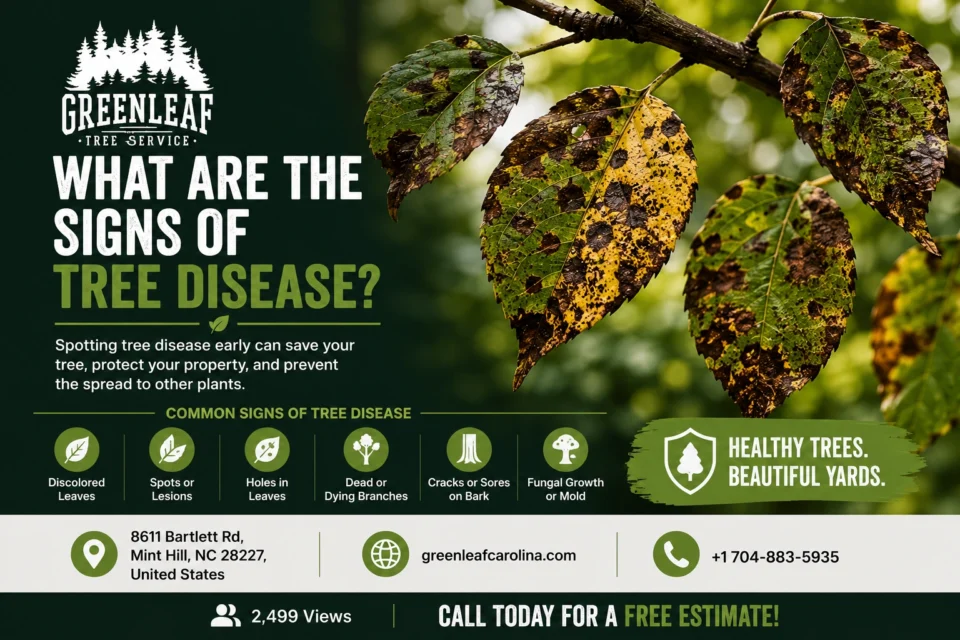
What Are the Signs of Tree Disease?
Common signs of tree disease include discolored leaves, early leaf drop, dead branches, thinning canopy, bark damage, fungal growth, trunk…
Is Trimming at the Wrong Time Harmful?
Yes, trimming at the wrong time can create unnecessary stress and increase certain risks.
Improper timing does not always kill a tree, but it can weaken recovery and create avoidable problems.
Stress During Extreme Heat
Heavy trimming during high summer heat can stress trees already dealing with drought and temperature pressure.
Removing too much canopy reduces shade protection and energy production.
This may lead to:
- Sunscald
- Slower recovery
- Weak regrowth
- Increased decline
Disease and Pest Exposure
Certain diseases and insects are more active during warmer seasons.
Fresh pruning cuts may attract pests or create entry points for fungal issues and decay organisms.
Some tree species are especially sensitive to seasonal disease exposure.
Weak Seasonal Regrowth
Improper timing may trigger fast, weak regrowth instead of stable branch development.
This type of growth often breaks more easily during storms.
Topping Is Harmful Regardless of Season
No season makes tree topping safe.
Topping removes large portions of the canopy indiscriminately and often creates:
- Weak branch attachment
- Structural instability
- Excessive regrowth
- Large wounds
- Increased decay risk
Proper trimming focuses on selective cuts that support long-term tree health and structure.
What Should Homeowners Check Before Trimming?
Before trimming, homeowners should evaluate the tree’s condition, surrounding risks, and the reason trimming is needed.
Check for Dead or Damaged Limbs
Dead branches are one of the most common reasons for seasonal trimming.
Look for:
- Hanging limbs
- Cracked branches
- Limbs over roofs
- Broken storm-damaged sections
- Brittle or leafless branches
Removing hazardous deadwood before storm season can reduce property risk.
Look for Structural Problems
Some trees have weak branch unions, leaning trunks, or uneven canopy weight.
Trimming may help reduce strain, but structural issues should be evaluated carefully before large cuts are made.
Watch for Utility Conflicts
Branches near power lines require professional handling.
Never attempt trimming around energized lines yourself.
Consider Recent Weather
Storms, saturated soil, and high winds can weaken trees even if damage is not obvious.
A tree that appears healthy may still have hidden structural concerns after severe weather.
Know the Species
Different species respond differently to trimming schedules.
Some trees tolerate seasonal trimming well, while others are more vulnerable to stress or disease during certain periods.
If you are unsure about the tree’s condition, scheduling a professional tree inspection can help determine the safest timing and approach.
Why Carolina Storm Seasons Matter
Storm timing is one of the biggest reasons seasonal tree trimming matters in the Carolinas.
North Carolina and South Carolina regularly experience:
- Thunderstorms
- High winds
- Tropical storm remnants
- Heavy rainfall
- Saturated soil
- Ice events in some regions
These conditions increase the chance of branch and tree failure.
Spring and Summer Storm Risks
Strong spring and summer storms place heavy stress on large canopies and weakened limbs.
Overextended branches and deadwood become more dangerous during high winds.
Trimming before peak storm activity can help reduce:
- Broken limbs
- Roof damage
- Fallen branches
- Driveway blockages
- Fence damage
Saturated Soil Affects Stability
Heavy Carolina rain can soften the ground and reduce root support.
Trees with structural weaknesses or imbalanced canopies become more vulnerable when strong winds combine with wet soil.
Charlotte-Area Tree Growth Patterns
In areas like Charlotte, many neighborhoods contain mature trees close to homes, driveways, and streets.
That proximity increases the importance of seasonal maintenance and storm preparation.
Homeowners looking for local support often seek professional guidance through Green Leaf Carolina’s Charlotte tree service area.
When Should You Call a Tree Professional?
You should call a tree professional when trimming involves large limbs, storm damage, structural concerns, or trees near structures and utilities.
Professional evaluation is especially important when:
- Limbs hang over your roof
- Branches touch power lines
- The tree leans
- Large deadwood is present
- Storm damage exists
- The canopy is very dense
- The tree has cracks or decay
- The tree is mature and close to your home
Timing decisions also become more important when trees show signs of stress or disease.
An experienced professional can determine whether trimming should happen immediately, seasonally, or in phases to reduce stress on the tree.
How Green Leaf Carolina Can Help
Green Leaf Carolina helps homeowners understand the safest and healthiest time to trim trees in the Carolinas.
Our team evaluates canopy growth, storm risk, branch structure, seasonal timing, and overall tree condition before recommending trimming work.
Not every tree should be trimmed the same way or during the same season. Timing depends on species, weather conditions, safety concerns, and long-term tree health.
We focus on helping homeowners make informed decisions that support both property safety and healthy tree growth throughout the year.
FAQs
What is the best time to trim trees in NC?
Late winter and early spring are usually considered the best times to trim many trees in North Carolina because trees are dormant and less stressed.
Is summer tree trimming bad?
Not always. Summer trimming can be appropriate for storm damage, hazardous limbs, or selective maintenance, but aggressive trimming during extreme heat may stress some trees.
Should trees be trimmed before storm season?
Yes, removing weak or overextended branches before storm season can help reduce the risk of broken limbs and property damage.
Can trimming trees at the wrong time hurt them?
Yes, improper timing may increase stress, slow healing, encourage weak regrowth, or expose trees to disease and pest activity.
Is fall a good time for tree trimming?
Fall trimming can work in some situations, but heavy trimming late in the season may stimulate vulnerable new growth or slow wound recovery.
Why is winter often recommended for trimming?
Winter trimming is often recommended because many trees are dormant, branch structure is easier to see, and insect and disease activity is lower.
Should mature trees be trimmed regularly?
Mature trees benefit from periodic maintenance and inspections. The schedule depends on species, location, storm exposure, and overall tree condition.
When should I schedule a tree inspection before trimming?
You should schedule an inspection if the tree has dead branches, storm damage, structural concerns, cracks, leaning, or branches near structures or power lines.
Wondering When to Trim Your Trees?
Get expert tree trimming guidance for Carolina yards and keep your trees healthy, safe, and beautiful year-round.