
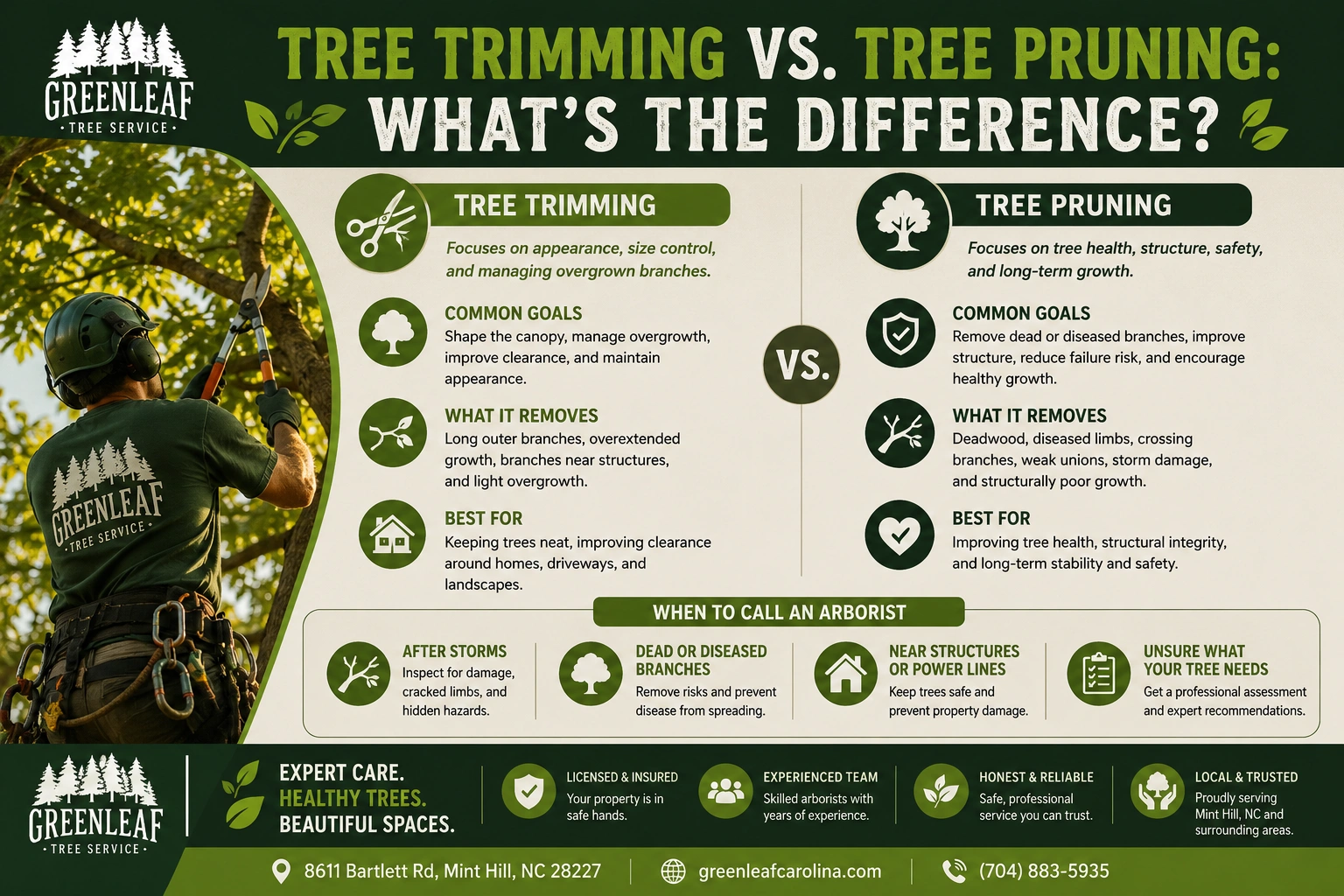
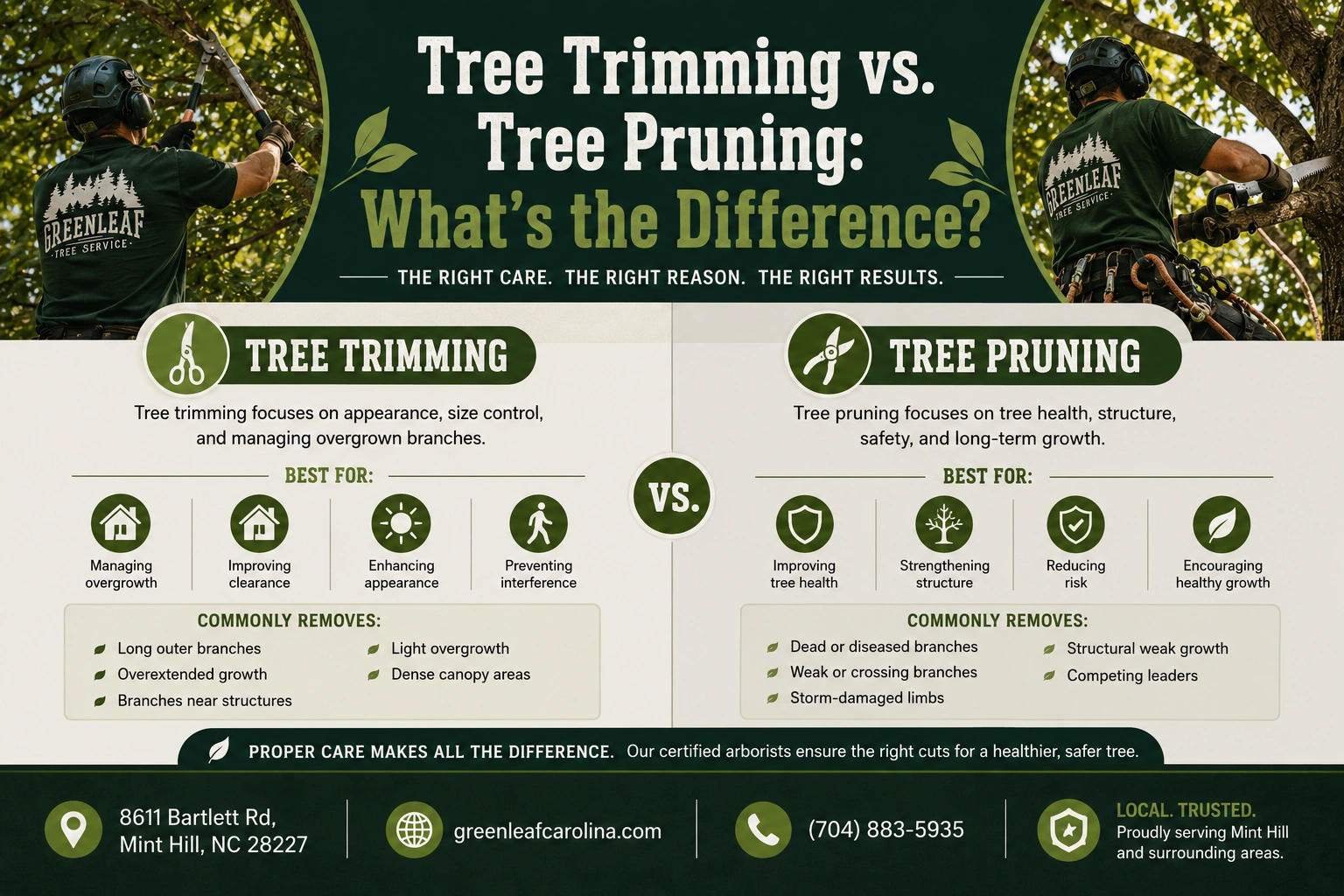
The difference between tree trimming and tree pruning comes down to purpose. Tree trimming mainly focuses on appearance, size control, and managing overgrown branches, while tree pruning focuses on tree health, structure, safety, and long-term growth.
Homeowners often use the terms interchangeably, but they are not the same service. Understanding how trimming and pruning differ can help you choose the right approach for your tree’s condition, growth pattern, and safety needs.
Give Your Trees the Professional Care They Deserve
Whether you need shaping, maintenance, or healthier growth, our tree experts can recommend the right solution for your property.
What Is Tree Trimming?
Tree trimming is the selective removal of branches to manage appearance, shape, spacing, or size. It is commonly used to maintain a neat canopy and prevent overgrowth around homes, driveways, roofs, or utility areas.
Trimming is often more focused on exterior growth than internal tree health.
Common Goals of Tree Trimming
Tree trimming is usually performed to:
- Shape the canopy
- Reduce overgrown branches
- Improve clearance around structures
- Keep limbs away from roofs or driveways
- Improve sunlight penetration
- Maintain appearance
- Prevent branches from interfering with walkways or roads
Some trees grow quickly and become uneven or crowded. Trimming helps manage that growth before branches become too heavy or intrusive.
What Trimming Usually Removes
Tree trimming often targets:
- Long outer branches
- Overextended growth
- Branches touching structures
- Light overgrowth
- Dense canopy areas
Trimming can improve appearance, but it should still follow proper cutting practices. Removing too much growth at once can stress the tree.
Homeowners looking for canopy management or overgrowth reduction often schedule professional tree trimming services.
What Is Tree Pruning?
Tree pruning is the selective removal of branches to improve health, structure, stability, and long-term growth. Pruning is more focused on the biological needs of the tree than on appearance alone.
Pruning is often more precise than trimming and may target specific structural or health concerns.
Common Goals of Tree Pruning
Pruning is commonly used to:
- Remove dead or diseased branches
- Improve structural integrity
- Reduce failure risk
- Encourage healthy growth
- Remove crossing branches
- Improve airflow
- Protect the tree from disease spread
- Correct weak branch structure
Pruning decisions are usually based on how the tree grows and responds over time.
What Pruning Usually Removes
Tree pruning may involve removing:
- Deadwood
- Diseased limbs
- Weak branch unions
- Crossing branches
- Storm-damaged limbs
- Structurally weak growth
- Competing leaders
Pruning can also reduce stress on a tree by improving balance and branch spacing.
In many cases, pruning is connected to overall tree health and long-term care strategies, especially when working with an arborist or healthcare specialist through arborist tree healthcare services.
Is Poor Pruning Dangerous for Trees?
Yes, poor pruning can damage a tree structurally and biologically. Incorrect cuts can weaken branches, expose the tree to disease, and create long-term growth problems.
Improper pruning does not just affect appearance. It can reduce the tree’s ability to recover and defend itself.
Over-Pruning Weakens Trees
Removing too much foliage at once can stress the tree. Leaves produce energy, and excessive removal reduces the tree’s ability to support itself.
Over-pruned trees may show slower growth, canopy thinning, sunscald, or decline over time.
Topping Creates Structural Problems
Tree topping is one of the most harmful cutting practices. Topping removes large sections of the canopy indiscriminately.
This often leads to:
- Weak regrowth
- Large wounds
- Decay entry points
- Poor branch structure
- Increased storm failure risk
Topped trees frequently develop unstable shoots that break more easily later.
Incorrect Cuts Increase Disease Risk
Cuts made too close to the trunk or too far from the branch collar may not heal properly.
Poor cuts can leave wounds exposed longer, allowing decay, insects, or fungal issues to develop.
Timing Matters
Some species respond poorly to pruning during certain seasons. Improper timing can increase stress or disease exposure.
This is one reason professional evaluation matters when larger limbs or mature trees are involved.

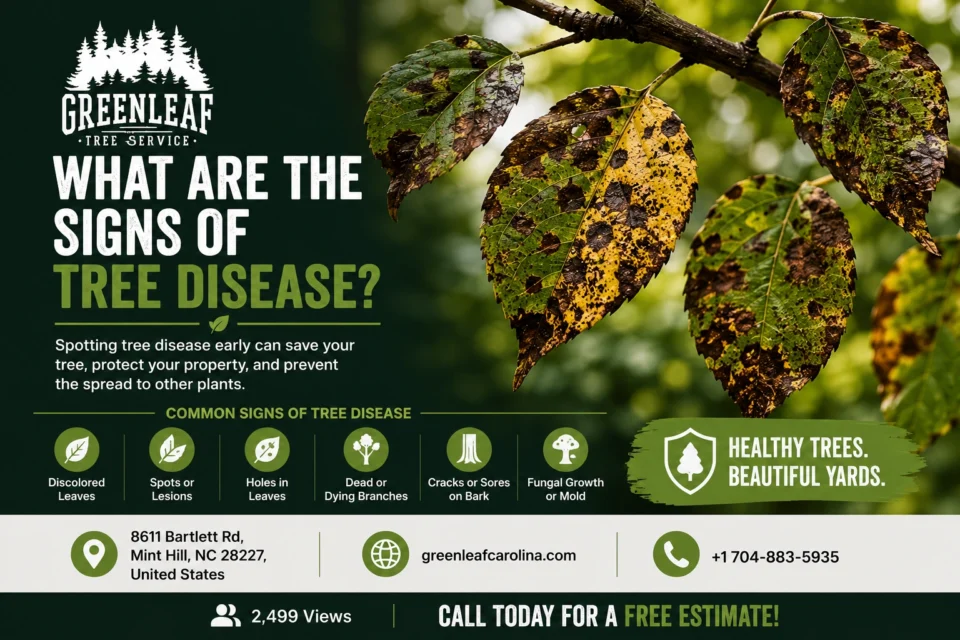
What Are the Signs of Tree Disease?
Common signs of tree disease include discolored leaves, early leaf drop, dead branches, thinning canopy, bark damage, fungal growth, trunk…
What Should Homeowners Know Before Cutting Branches?
Homeowners should understand that branch removal affects the tree’s health, balance, and future growth. Cutting without a plan can create long-term issues.
Not Every Branch Should Be Removed
Some branches may look awkward but still provide structural balance. Removing the wrong limb can shift weight distribution or expose the canopy unevenly.
Before cutting, consider:
- Branch size
- Attachment strength
- Tree species
- Overall canopy balance
- Nearby structures
- Existing tree stress
Large Limbs Require Caution
Large branches hold significant weight and tension. Improper cuts can tear bark, split limbs, or cause sudden branch movement.
This becomes more dangerous when limbs are high above roofs, driveways, fences, or utility lines.
DIY Cutting Has Limits
Small, low branches may be manageable for homeowners. Larger limbs, climbing work, storm damage, or pruning near structures should be left to professionals.
Improper ladder use and falling limbs are common causes of injury during tree work.
Tree Health Should Guide Decisions
Branch removal should support the long-term condition of the tree, not just immediate appearance.
A healthy-looking tree can still have weak branch unions, internal decay, or stress that changes how cuts should be made.
Which Option Is Better by Situation?
The better option depends on the tree’s condition and the homeowner’s goal.
When Trimming Is Usually the Better Fit
Tree trimming is typically better when the goal is:
- Managing overgrowth
- Improving appearance
- Maintaining clearance
- Reducing canopy spread
- Preventing roof or driveway interference
- Keeping landscaping tidy
Trimming is often more maintenance-focused.
When Pruning Is Usually the Better Fit
Tree pruning is usually better when the goal is:
- Improving tree health
- Removing deadwood
- Correcting structural weakness
- Reducing storm risk
- Managing disease
- Encouraging stronger growth
- Removing hazardous limbs
Pruning is more health-focused and structurally focused.
Some Trees Need Both
Many mature trees benefit from both trimming and pruning at different times.
For example, a tree may need pruning to remove dead or weak limbs while also needing trimming to manage canopy spread over a roof or driveway.
The important difference is understanding why each cut is being made.
Tree Age Also Matters
Young trees are often pruned to encourage strong structure early.
Mature trees may need trimming for clearance or pruning to reduce weight on aging limbs.
Older trees with structural concerns usually require more careful evaluation before major cuts are made.
When Should You Hire a Professional?
You should hire a professional when tree work involves height, large limbs, storm damage, structural concerns, or trees near buildings and utilities.
Professional guidance is especially important when:
- Large branches need removal
- The tree is near a home
- Limbs are over a roof
- Branches are close to power lines
- The tree has cracks or decay
- Storm damage is present
- The tree leans
- The canopy is very dense
- The tree is mature or valuable
Professionals understand how different species respond to cuts and how to reduce stress while maintaining structure.
An experienced arborist can also identify whether a tree’s issue is cosmetic, structural, or health-related.
Homeowners in the area often seek professional evaluations before major cutting projects through Green Leaf Carolina’s service coverage in York County, SC.
How Green Leaf Carolina Can Help
Green Leaf Carolina helps homeowners understand whether trimming, pruning, or a combination of both is appropriate for their trees.
Our approach focuses on tree condition, structural integrity, canopy growth, and long-term health instead of unnecessary cutting.
We evaluate overgrowth, deadwood, branch structure, storm damage, and clearance concerns to recommend the safest and healthiest approach for the tree.
If a tree mainly needs shape management or clearance improvement, trimming may be the better option. If the tree has structural weakness, disease concerns, or dead limbs, pruning may be more appropriate.
The goal is to make informed decisions that protect both the tree and the property around it.
FAQs
What is the main difference between tree trimming and pruning?
Tree trimming mainly focuses on appearance, size control, and overgrowth management, while pruning focuses on tree health, structure, safety, and long-term growth.
Is tree trimming bad for trees?
No, proper trimming is not bad for trees. Problems usually happen when too much growth is removed or cuts are made incorrectly.
Does pruning help tree health?
Yes, pruning can improve tree health by removing dead, diseased, weak, or damaged branches and improving airflow and structure.
Can poor pruning kill a tree?
Severe or repeated poor pruning can weaken a tree significantly. Over-pruning, topping, and improper cuts may increase disease, decay, and long-term decline.
Which is more expensive, trimming or pruning?
Costs vary depending on tree size, access, complexity, and risk. Detailed structural pruning may require more precision, while large-scale trimming may involve more canopy work.
Should mature trees be pruned regularly?
Mature trees benefit from periodic inspections and selective pruning when necessary. The timing and amount depend on the species, condition, and surrounding risks.
Is it okay to trim trees yourself?
Minor trimming of small, low branches may be manageable. Larger limbs, high canopy work, storm damage, or structural pruning should be handled professionally.
When is the best time to prune trees?
The best timing depends on the tree species and the purpose of pruning. Some trees respond best during dormant seasons, while others may require seasonal timing to reduce disease risk.
Not Sure if Your Trees Need Trimming or Pruning?
Learn the key differences and discover which service keeps your trees healthier, safer, and looking their best year-round.