
After a major storm, a damaged tree can become a serious safety hazard even if it is still standing. Leaning trunks, cracked limbs, exposed roots, and hanging branches may signal that the tree could fail days later without warning.
Storms can damage trees in ways that are not always visible from the ground. Wind, saturated soil, lightning, and heavy rain can weaken roots, trunks, and large limbs. Knowing what warning signs to look for can help homeowners avoid injuries, property damage, and delayed tree failure after severe weather.
Trees near homes, driveways, fences, sidewalks, or power lines should always be treated as potential hazards until inspected by a professional.
Don’t Wait Until a Weak Tree Falls on Your Property
Find out how to spot dangerous post-storm tree damage and when removal is the safest option for your home and family.
What Causes Trees to Fall or Break During Storms?
Storm damage often happens when strong wind, saturated soil, heavy rain, or lightning weakens a tree’s structure or root system. Severe weather can also expose hidden decay, poor branch structure, shallow roots, or previous pruning problems.
High Winds and Sudden Gusts
Strong winds place heavy stress on trunks and major limbs. Large branches may crack where they attach to the tree, especially if the canopy is uneven or overgrown.
If a tree already has internal decay, hollow sections, or structural weakness, wind can quickly turn it into a serious hazard.
A tree that suddenly leans after a storm should never be ignored. New leaning often means the roots have shifted or lost stability underground.
Saturated Soil and Exposed Roots
Heavy rain softens the soil and weakens root support. When wind catches the canopy, the entire tree may begin to shift.
Exposed roots, cracked ground, or raised soil near the base can indicate that the root plate has started lifting out of the ground.
Lightning and Broken Limbs
Lightning strikes can split bark, scorch wood, or damage roots beneath the soil surface. Some damage appears immediately, while other problems develop over time.
Broken limbs are also common after storms. Large hanging branches can remain caught in the canopy and fall later without warning.
Can a Storm-Damaged Tree Fall Later?
Yes, a storm-damaged tree can fail long after the storm has passed. Structural damage may weaken the tree’s ability to support its own weight, especially during future wind or rain events.
The risk becomes more serious when a damaged tree is close to a home, garage, driveway, sidewalk, playground, or utility line.
Hidden Structural Damage Matters
Not every dangerous tree looks severely damaged from the outside. Cracks in the trunk, split branch unions, or loosened roots can make a tree unstable even if the canopy still appears healthy.
Homeowners should avoid standing beneath damaged limbs or attempting to shake, pull, or cut large branches after a storm.
Power Line Hazards
If a tree or branch is touching a power line, stay away and contact the utility company immediately. Always assume the line is energized.
Tree work near utility lines requires specialized training and equipment and should only be handled by qualified professionals.
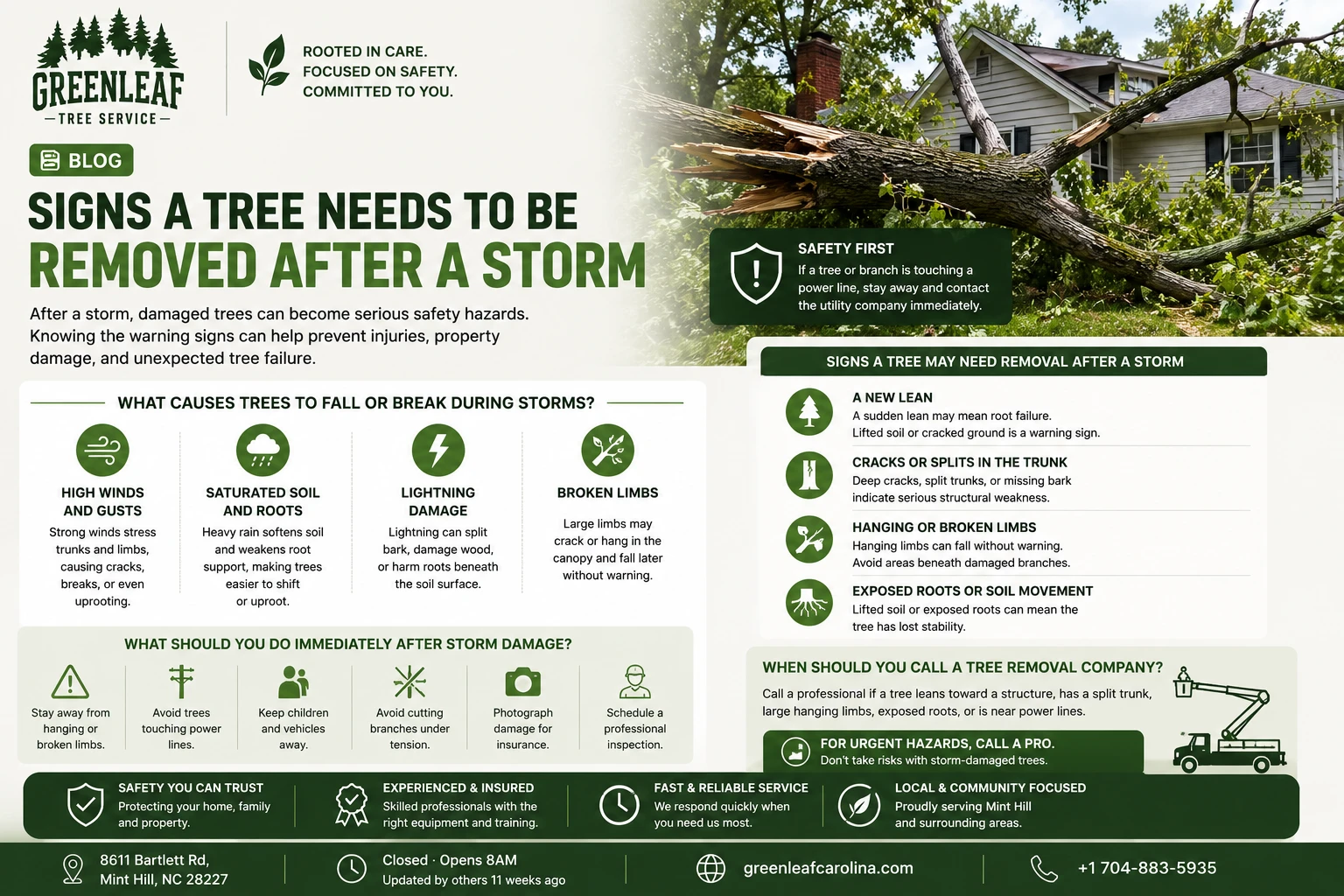
Signs a Tree May Need Removal After a Storm
Homeowners should inspect storm damage from a safe distance once conditions are calm and dry. Several warning signs may indicate the tree is no longer structurally safe.
A New Lean
A tree that suddenly leans after a storm may have root failure underground. Lifted soil, cracked ground, or exposed roots often signal that the tree has shifted.
Some trees naturally lean over time, but a fresh lean toward a structure or roadway is much more concerning.
Cracks or Splits in the Trunk
Deep cracks, split trunks, missing bark, or separation where large branches connect can indicate severe structural weakness.
If damage extends deep into the trunk or major branch unions, the tree may not recover safely.
Hanging or Broken Limbs
Large hanging limbs are one of the most common post-storm hazards. These branches may remain suspended temporarily before falling later.
Avoid parking vehicles, walking, or working beneath damaged branches.
Exposed Roots or Soil Movement
Roots help stabilize the entire tree. If the soil around the base appears lifted, cracked, or disturbed, the root system may be compromised.
When roots lose stability, the entire tree can become dangerous even if the canopy still looks healthy.

Same-Day Tree Removal Services: Are They Worth It?
Trees are essential to our landscapes, but sometimes, they become a hazard. Whether it's due to storm damage, disease, or…
What Should You Do Immediately After Storm Damage?
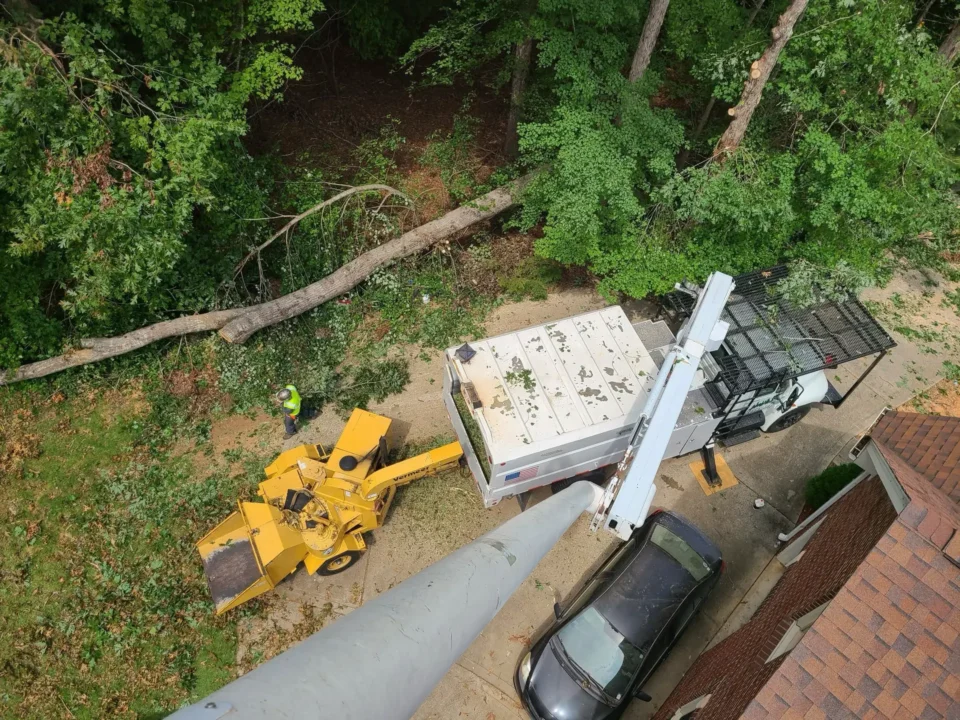
After severe weather, safety should come before cleanup.
Homeowners should:
- Stay away from hanging or partially broken limbs
- Avoid trees touching power lines
- Keep children and vehicles away from damaged trees
- Avoid cutting branches under tension
- Photograph visible damage for insurance purposes if conditions are safe
- Schedule a professional tree inspection for serious damage
Many storm-damaged branches are heavier and more unstable than they appear. Attempting DIY removal can lead to serious injuries.
When Should You Call a Tree Removal Company?
Call a professional tree removal company anytime storm damage creates a risk to people, structures, vehicles, or utilities.
You should schedule an inspection if a tree:
- Leans toward a home or driveway
- Has a split trunk
- Has large hanging limbs
- Shows exposed roots or shifting soil
- Blocks access to your property
- Is touching or threatening power lines
For urgent hazards, homeowners should use professional emergency tree removal services instead of attempting risky cleanup themselves.
Removal May Be Safer Than Trimming
Some storm-damaged trees can recover with pruning and ongoing care. Others become too unstable to remain safely in place.
If the trunk, root system, or major leaders are compromised, removal may be safer than trimming alone.
A professional inspection can help determine the safest long-term option.
What Happens During a Storm Damage Tree Inspection?
A tree service company will inspect the tree’s structure, root stability, canopy damage, and nearby risks to determine whether the tree can safely remain.
Structural Inspection
The inspection may include checking for:
- Trunk cracks
- Hollow sections
- Decay pockets
- Split branch unions
- Broken leaders
- Root movement at the base
These issues can affect the tree’s ability to support weight safely.
Hazard Removal
The crew may remove:
- Hanging limbs
- Broken branches
- Storm debris
- Unsafe sections of the tree
- The full tree if necessary
Professionals also work carefully around nearby homes, fences, landscaping, vehicles, and utility lines.
For non-emergency hazards, homeowners may schedule standard tree removal services after the inspection.
Cleanup and Safe Access
Storm debris can block driveways, entrances, and walkways. Professional crews can safely lower, cut, haul, and remove heavy debris.
This is especially important when branches are tangled, suspended, or carrying heavy tension.
Why Storm Damage Is a Bigger Risk in Charlotte
Storm damage is a common concern in the Charlotte area because weather conditions can change quickly throughout the year.
Strong thunderstorms, tropical storm remnants, heavy rain, ice events, and sudden wind gusts all place stress on trees.
Charlotte also has many mature hardwood trees growing close to homes, roads, and utility lines. Clay-heavy soil can hold excess moisture during storms and shift as conditions dry out afterward.
In older neighborhoods, large trees are often planted near roofs, driveways, sidewalks, and power lines, increasing the risk of damage when limbs break or trunks become unstable.
Because of these conditions, homeowners should take storm damage seriously after repeated rain events or severe weather.
How Green Leaf Carolina Can Help
Green Leaf Carolina helps homeowners identify unsafe trees after storms and choose the safest next step for their property.
The goal is to remove dangerous hazards while preserving healthy trees whenever possible.
Professional inspections can determine whether a tree needs pruning, limb removal, structural support, or complete removal.
Crews can evaluate:
- Leaning trees
- Cracked trunks
- Hanging limbs
- Exposed roots
- Trees near homes or utility lines
Hazards can then be removed carefully and safely using proper equipment and controlled removal methods.
We’re Here When Your Yard Feels Unsafe
At Green Leaf Carolina, we help homeowners make careful decisions after storm damage. Not every damaged tree needs removal, but every potentially dangerous tree deserves a serious inspection.
If you notice a leaning tree, exposed roots, cracked limbs, or branches hanging near your home, schedule a professional inspection before the damage worsens.
Our team can assess the tree, explain the risks clearly, and recommend the safest solution for your property and family.
Key Takeaways
Storm damage can weaken a tree’s trunk, limbs, and root system even when the tree remains standing after severe weather.
Homeowners should watch for warning signs such as:
- Leaning trees
- Cracked trunks
- Hanging limbs
- Exposed roots
- Soil movement near the base
- Trees close to homes or power lines
These conditions can increase the risk of sudden failure.
Avoid standing beneath damaged trees or attempting to remove large branches yourself. A professional inspection can determine whether pruning, support systems, or complete removal is the safest option.
After severe storms in Charlotte, prompt action can help prevent injuries, property damage, and delayed tree failure.
FAQs
How do I know if a tree needs to be removed after a storm?
A tree may need removal if it develops a new lean, split trunk, exposed roots, major broken limbs, or structural damage near the base. Trees threatening homes, vehicles, or power lines should be inspected immediately.
Can a storm-damaged tree recover?
Some storm-damaged trees recover with proper pruning and ongoing care. Recovery depends on the severity of the damage, root stability, species, age, and the tree’s overall health before the storm.
Is a leaning tree always dangerous?
Not always. Some trees naturally lean for years without problems. A new lean after a storm is more serious because it may indicate root movement or soil instability.
Should I remove hanging limbs myself?
No. Hanging limbs can fall unexpectedly and may be heavier or more unstable than they appear. Limbs under tension or high in the canopy should only be handled by trained professionals.
How soon should I schedule an inspection after a storm?
Schedule an inspection as soon as you notice serious warning signs such as leaning trees, cracked trunks, exposed roots, or hanging limbs. Delaying repairs can increase safety risks.
Does homeowners insurance cover storm-damaged tree removal?
Coverage depends on your insurance policy and whether the tree damaged a structure, blocked access, or created a safety hazard. Homeowners should contact their insurance provider to confirm what is covered after a storm.
Worried That Storm-Damaged Trees Could Fall Anytime?
Learn the warning signs of dangerous trees after severe weather and protect your home before the next storm hits.