
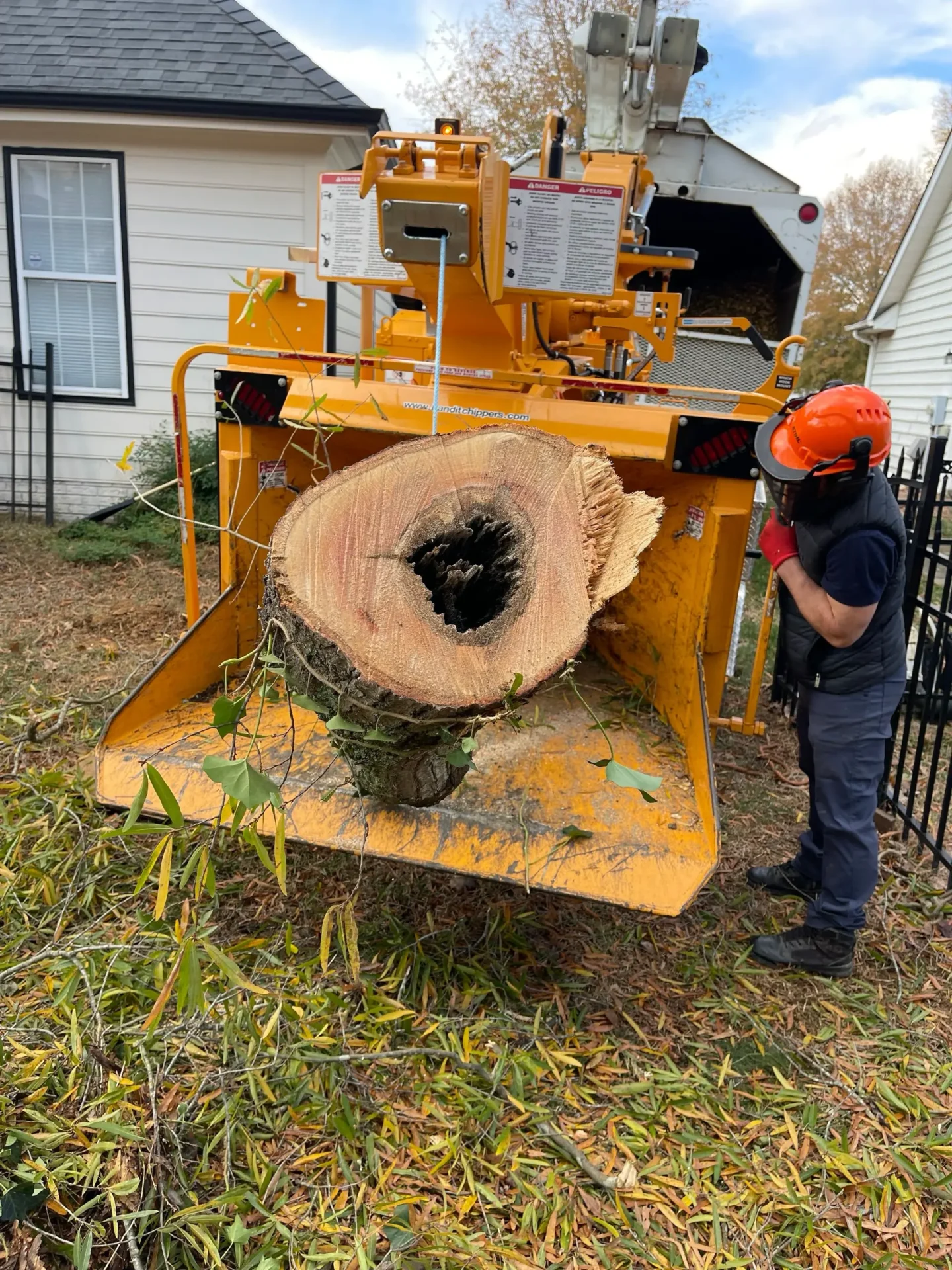
Cutting down a tree is sometimes necessary. Storm damage, disease, overcrowding, or safety concerns can all force the decision. But once the tree is gone, you’re left staring at the stump. Now what?
Some homeowners see a stump as an eyesore. Others see opportunity. The right choice depends on your goals, your budget, and the condition of the stump itself. Below, we’ll walk through both creative ways to repurpose a stump and practical methods for removing it safely and effectively.
Creative Tree Stump Ideas to Elevate Your Yard
Before you schedule removal, consider whether your stump can become a feature instead of a flaw.
1. Hollow It Out Into a Planter
A short stump can easily become a rustic planter. By hollowing out the center and adding drainage holes, you create a natural container for flowers, herbs, or succulents. Add gravel at the bottom for drainage, then top with quality planting soil.
This option works especially well in cottage-style gardens or natural landscapes.
2. Use It as a Pot Stand
If hollowing feels like too much work, keep it simple. Place potted plants on top and around the stump. Layer different heights and textures to create visual interest. A coat of exterior sealant can slow deterioration if you want it to last longer.
3. Turn It Into a Gnome Home
For a playful touch, transform a taller stump into a miniature woodland home. Add a small wooden roof, decorative windows, and a painted door. It’s a fun weekend project and a great way to add personality to your yard.
4. Build a Fairy House
Take the whimsical idea a step further with a fairy house. Moss roofs, tiny pebble pathways, and soft landscape lighting can turn a simple stump into a magical focal point. This works especially well in family yards where kids can enjoy the creativity.
5. Create an Outdoor Board Game Table
If the stump has a wide surface, sand it smooth and etch a tic tac toe grid or checkerboard into the top. Burned or carved designs hold up well outdoors. It’s a simple way to encourage outdoor fun.
6. Design a Kids’ Play Feature
Larger stumps can anchor a natural play space. Arrange smaller cut sections into a stepping path, or use a sturdy stump as a base for imaginative play. Compared to plastic playsets, natural elements often blend better into the landscape.
7. Carve a Bird Bath or Birdhouse Base
Carving a shallow basin into the top creates a bird bath that supports local wildlife. If carving isn’t your thing, use the stump as a pedestal for a premade basin. You can also mount a small birdhouse on top.
8. Transform It Into a Garden Table
Sand the top smooth, apply stain, and seal it with polyurethane. With minimal effort, you have a rustic outdoor table. Smaller stumps can even be repurposed indoors as side tables or accent pieces.
9. Make a DIY Garden Chair
With careful carving, a large stump can become a sturdy garden seat. Add armrests if there’s enough material. Surround it with native plants and it becomes a peaceful corner of your yard.
When Should You Remove a Tree Stump?
Repurposing isn’t always practical. In some cases, removal makes more sense.
Safety Concerns
Stumps can be tripping hazards, especially in high-traffic areas. They can also attract pests like termites or ants as they decay.
Landscaping and Property Value
If you’re leveling the yard, installing sod, building a patio, or planting a new tree, the stump may need to go. A clean, open lawn often improves curb appeal.
Tree Stump Removal Methods Explained
There are several ways to remove a stump, ranging from DIY to professional solutions.
Manual Removal (Best for Small Stumps)
Small stumps, typically under 3 to 6 inches in diameter, can sometimes be removed by hand. Leave a few feet of trunk for leverage. Rock it back and forth to loosen the soil, expose the major roots, and cut them with pruning loppers. With patience, the stump can be twisted free without leaving a large hole.
Mechanical Removal
For larger stumps, heavy equipment like excavators or loaders may be required. These machines sever roots and extract the stump completely. This method is effective but may disturb surrounding landscaping and increase costs.
Stump Grinding
Stump grinding is one of the most common professional services. A specialized machine grinds the stump down below soil level. While it doesn’t remove the root system entirely, it eliminates the visible portion and allows you to level the area.
Keep in mind that leftover wood chips mixed into soil can temporarily reduce nitrogen levels, which may affect new grass growth.
Burning a Tree Stump
In some areas, burning is allowed. A controlled charcoal “stove” built on top of the stump can gradually burn it down. However, this method requires careful monitoring and compliance with local regulations. High heat can also damage surrounding soil.
Chemical Stump Removal
Products containing potassium nitrate can help dry and accelerate stump decomposition. These treatments take time and must be applied according to label instructions. They won’t dissolve the stump overnight, but they can speed up the breakdown process.
How to Speed Up Natural Stump Decay
If immediate removal isn’t necessary, you can encourage natural decomposition.
Increase Surface Area
Cut the stump as low as possible. Drill large holes in the top and sides. Expose roots and create cracks or grooves. The more surface area available, the faster microbes can work.
Improve Soil Aeration
Loosen the soil around the stump to increase oxygen flow. Microbes responsible for decay require oxygen to function effectively.
Manage Moisture Levels
Keep the stump moist but not waterlogged. Proper drainage is important. A layer of mulch can help retain moisture while protecting beneficial organisms.
Add Nitrogen to Boost Microbial Activity
Wood is carbon-rich and low in nitrogen. Adding a slow release nitrogen fertilizer around the stump can accelerate decay. Apply in moderate amounts and split applications throughout the year.
Encourage Healthy Soil Biology
Adding compost or healthy topsoil introduces beneficial microbes that assist in decomposition.
Ongoing Maintenance
Every few months, drill new holes or break apart softened sections. Continued disruption speeds up the process.
Small Tree Stump Removal Without Heavy Equipment
For small invasive trees at field edges or yard borders, a simple approach works well:
- Cut the tree 4 to 5 feet above ground.
- Remove lower branches.
- Rock the trunk in all directions to loosen soil.
- Expose and cut primary roots.
- Twist and pull the stump free.
This method leaves only a slight depression and avoids the need for machinery.
Frequently Asked Questions About Tree Stumps
How long does it take for a tree stump to rot naturally?
Depending on species, size, and environment, it can take three to seven years or longer.
Can a tree stump grow back after being cut down?
Yes. Some species resprout from the root system. Treating fresh cuts with an appropriate herbicide can prevent regrowth.
Is stump grinding better than full stump removal?
Grinding is less invasive and more affordable in many cases. Full removal eliminates the entire root mass but can disrupt landscaping.
What is the cheapest way to remove a tree stump?
For small stumps, manual removal is the most cost-effective. For larger ones, grinding is often less expensive than full excavation.
Do tree stumps attract termites or other pests?
Decaying wood can attract insects, especially if the stump is close to a structure.
Can you plant a new tree where a stump was removed?
Yes, but it’s best to remove grindings and amend the soil before replanting.
Final Thoughts: Repurpose or Remove?
There’s no single right answer. A stump can become a planter, table, wildlife feature, or playful garden accent. It can also become a hazard or obstacle if left unchecked.
Consider the size, location, and condition of the stump. Think about your long term landscaping plans. If removal feels overwhelming or the stump is too large to manage safely, consulting a professional tree service is often the smartest move.
Whether you choose creativity or complete removal, the key is making a decision that improves both the function and appearance of your yard.