
You seed. You topsoil. You roll. You wait. And somehow, your lawn still looks uneven year after year. Many homeowners assume the problem is poor soil, bad drainage, or just “one of those yards.”
In reality, the issue is often buried beneath the surface. Old tree stumps and hidden root flares are two of the most overlooked reasons lawns refuse to level out. They don’t just disappear with time. They shift, decay, and interfere with soil and grass in ways that quietly undo your hard work.
Understanding the difference between them explains why some lawns never quite settle.
What is the difference between a root flare and an old stump in a lawn?
At first glance, a root flare and an old stump might seem like the same problem. They’re not.
Key differences include:
- A stump is the remaining base of a removed tree
- A root flare is the widened base where roots meet the trunk
- Stumps are often cut flat below grade
- Root flares spread outward unevenly
- Stumps decay slowly over time
- Root flares stay structurally rigid
- Both disrupt soil differently
An old stump is what’s left when a tree is cut down but not fully removed. Even if it’s ground down, much of the wood often remains underground. Over time, that wood decomposes, creating voids.
A root flare, on the other hand, is part of the original tree structure. It doesn’t decay the same way. Instead, it resists compression. When soil is added over it, the ground may appear level temporarily, but it won’t stay that way. Knowing which one you’re dealing with is critical because they cause uneven lawns for very different reasons.
Why do old tree stumps cause lawns to stay uneven over time?
Old stumps create a slow, ongoing settling problem.
They cause uneven lawns because:
- Wood decomposes gradually
- Soil collapses as material breaks down
- Moisture accelerates decay unevenly
- Roots rot at different rates
- Voids form beneath the surface
- Grass loses stable footing
- Depressions reappear after rain
When a stump is buried or partially removed, it doesn’t just vanish. It breaks down over years, not months. As the wood softens and collapses, the soil above it sinks. That’s why lawns can look fine one season and suddenly develop dips the next.
This settling is unpredictable. One side may drop faster than another. After heavy rain, the problem becomes more obvious. Homeowners often add more soil, but that only masks the issue temporarily. Until the stump is fully removed or addressed, the lawn will continue to shift.
How can a buried stump affect soil settling and grass growth?
Grass needs consistent soil support to thrive.
Buried stumps interfere with growth by:
- Creating unstable soil layers
- Interrupting root development
- Holding excess moisture
- Encouraging fungal growth
- Preventing even nutrient distribution
- Causing repeated soil collapse
- Stressing turf roots
As a stump decomposes, it absorbs and releases moisture unevenly. That can lead to soggy spots or dry pockets, depending on conditions. Grass roots struggle to establish in these areas because the soil below isn’t stable.
Over time, turf thins out, discolors, or dies back. Homeowners may assume the grass type is wrong or blame watering schedules. In reality, the problem is structural. Healthy lawns depend on consistent soil density. Buried stumps undermine that foundation from below.
What problems can a hidden root flare create when trying to level a yard?
Root flares cause resistance, not collapse.
Hidden root flares create problems like:
- Soil refusing to compact properly
- Raised areas that won’t stay covered
- Uneven mower contact
- Poor water runoff
- Exposed roots after rainfall
- Repeated grading failure
- Long-term surface irregularities
Unlike stumps, root flares don’t decay quickly. They remain solid and push back against added soil. When you try to level over them, the soil settles everywhere except where the flare sits.
This creates high spots that reappear even after repeated leveling. Over time, erosion exposes the flare again, especially on slopes. Mowing becomes difficult, drainage suffers, and the yard never feels truly finished. The only real solution is proper identification and removal or modification of the root structure before leveling begins.
Why this problem is so often misdiagnosed?
Most lawn issues look the same from above.
Homeowners often misdiagnose uneven lawns because:
- The cause is underground
- Symptoms appear slowly
- Seasonal changes mask the issue
- Quick fixes seem to work briefly
- Lawn care focuses on surface solutions
- Tree removal history is forgotten
- Settling is mistaken for erosion
Years may pass between tree removal and visible lawn problems. By then, the connection isn’t obvious. Many people treat the symptoms instead of the cause, spending time and money on reseeding, rolling, and regrading that never lasts.
Uneven lawns tied to stumps or root flares don’t respond to cosmetic fixes. They require structural solutions. Identifying what’s under the surface is the first step toward a lawn that finally stays level.
Why proper removal makes a long-term difference?
Addressing the root of the problem changes everything.
Proper removal helps by:
- Eliminating future settling
- Restoring consistent soil density
- Supporting healthy grass growth
- Improving drainage
- Making grading permanent
- Protecting nearby landscaping
- Increasing overall property appearance
When stumps are fully removed and root flares properly handled, soil behaves predictably again. Grass establishes evenly. Maintenance becomes easier. The lawn finally holds its shape through rain, seasons, and time.
This isn’t just about aesthetics. Uneven lawns create trip hazards, mowing issues, and drainage problems. Fixing the underlying cause protects both safety and long-term property value.
Stop Fighting the Same Lawn Problems Every Year
Uneven lawns aren’t always a landscaping issue. Often, they’re a tree removal issue that was never fully resolved.
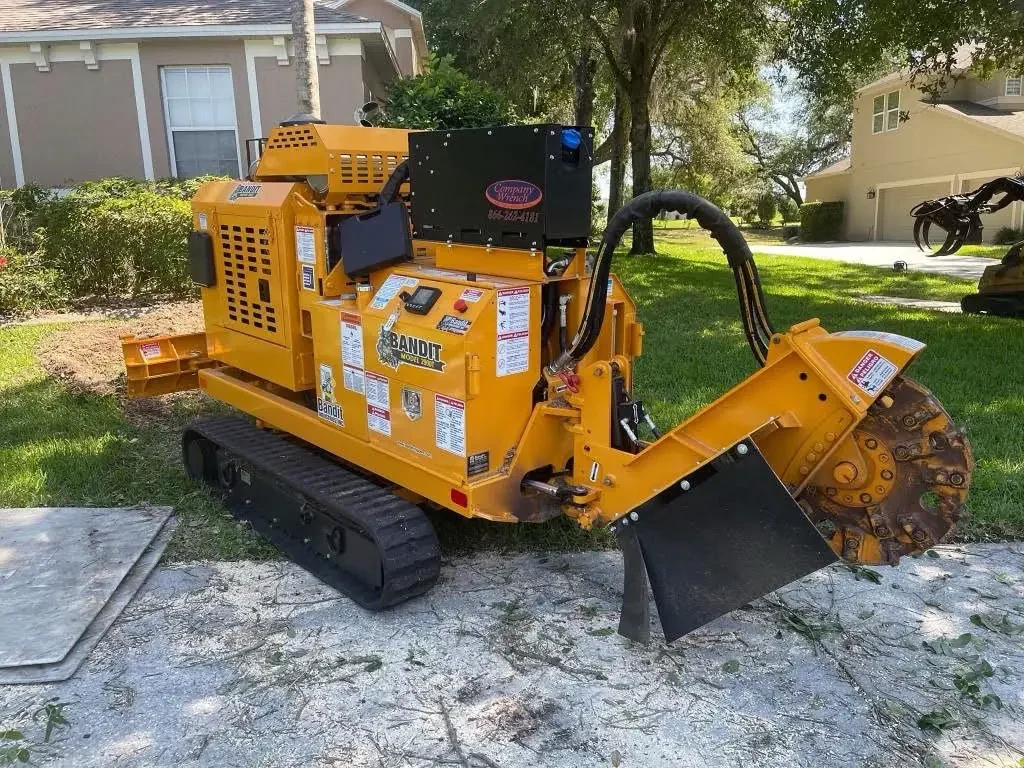
At Green Leaf Tree Service, we help homeowners identify hidden stumps, root flares, and underground obstacles that keep yards from leveling out. Our team focuses on proper removal and long-term solutions, not temporary fixes.
If your lawn keeps sinking, rising, or shifting no matter what you try, it may be time to look below the surface. We’re here to help you finally create a yard that stays smooth, stable, and frustration-free.