
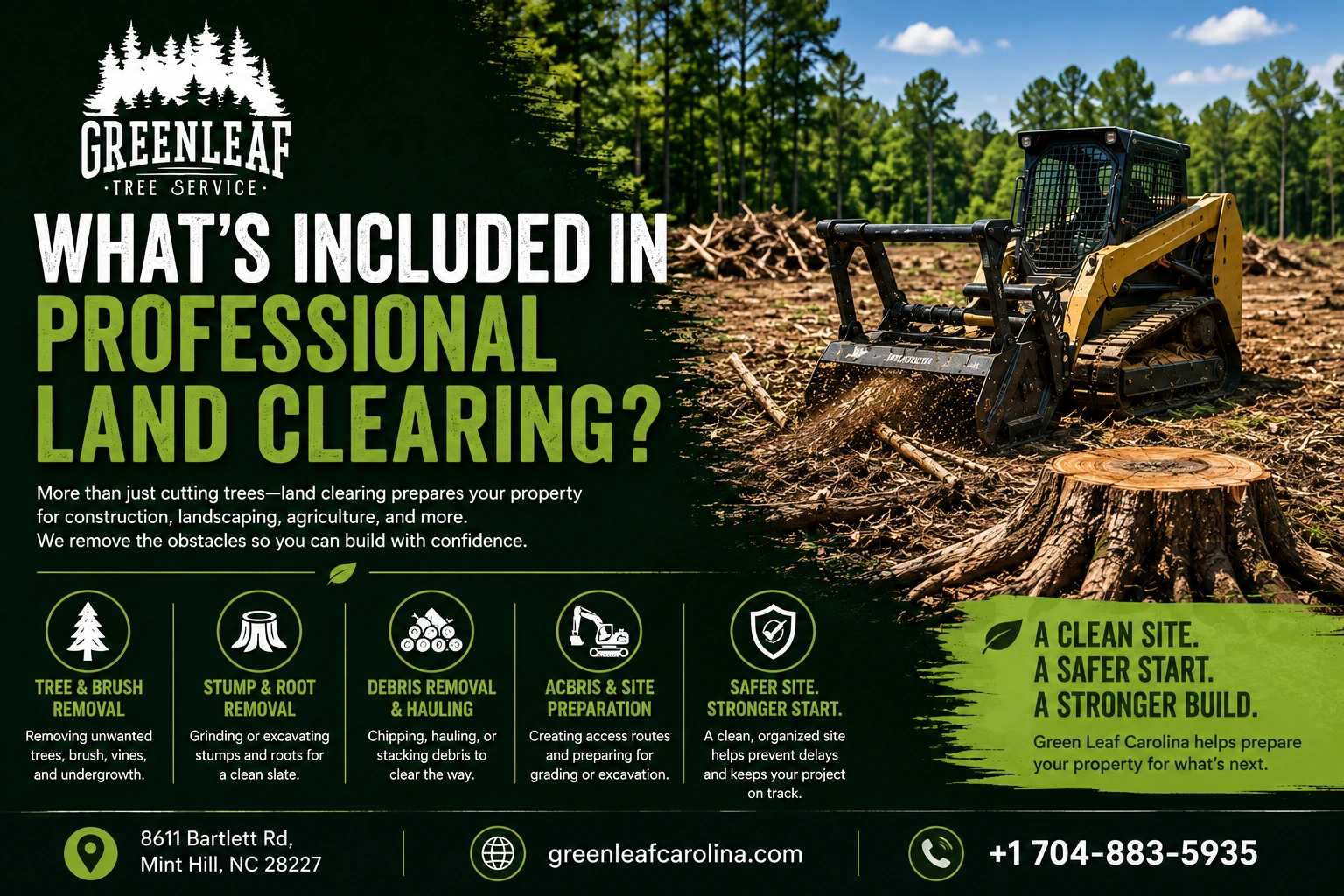
Professional land clearing prepares a property for construction, landscaping, agriculture, improved access, or another planned use. It involves more than cutting down trees. A complete clearing project may include removing brush, stumps, undergrowth, fallen timber, rocks, debris, and other obstacles that prevent the land from being used safely and efficiently.
The exact scope depends on the condition of the property and what the owner plans to do with it. A small residential lot may only need selective clearing and brush removal, while a larger wooded property may require heavy equipment, stump extraction, debris hauling, and rough site preparation. Understanding what is included helps property owners set realistic expectations and plan the next stage of their project.
What Is Included in Professional Land Clearing?
Professional land clearing is a coordinated process designed to make a property usable for its intended purpose. The work may focus on a building area, driveway, pasture, yard expansion, access road, or an entire parcel.
Common land clearing tasks include:
- Removing unwanted trees
- Cutting and removing thick brush
- Clearing vines and dense undergrowth
- Removing stumps and large root systems
- Collecting fallen trees and timber
- Moving rocks and surface-level obstacles
- Removing old fencing or abandoned materials
- Chipping, mulching, hauling, or stacking debris
- Creating access routes for equipment
- Preparing the area for grading or excavation
Some projects require complete clearing, while others benefit from selective clearing. Selective clearing removes specific trees and vegetation while preserving healthy trees, natural privacy, shade, or erosion control in other areas.
The intended use of the property usually determines how thoroughly the land must be cleared. A future building pad requires more complete stump and root removal than a walking trail or recreational area. Land planned for agriculture may need vegetation removed over a wide area, while landscaping projects may only require brush removal and limited tree thinning.
Professional crews evaluate the site before deciding which methods and equipment are appropriate. They consider terrain, soil conditions, vegetation density, nearby structures, drainage patterns, access limitations, and environmental restrictions.
Is Land Clearing Different From Tree Removal?
Land clearing and tree removal are related, but they are not the same service.
Tree removal typically focuses on one tree or a small group of trees. The main goal is to take down trees that are dead, damaged, hazardous, unwanted, or located too close to a structure. Depending on the project, the stump may be ground or left in place.
Land clearing focuses on preparing an area for future use. It may include tree removal, but it also addresses the other obstacles across the site. Brush, saplings, vines, stumps, roots, rocks, fallen logs, and debris may all need to be removed before the property is usable.
For example, removing three trees from a backyard would generally be considered tree removal. Clearing a portion of that yard for a garage, driveway, garden, or home addition would involve broader site preparation.
Land clearing may also require decisions about:
- Where equipment will enter the property
- Which areas must remain undisturbed
- How debris will be handled
- Whether stumps need to be excavated
- How the work may affect drainage
- What must be completed before grading begins
- Which trees should be preserved
This larger planning process is what separates professional land clearing from basic tree cutting. The objective is not simply to remove vegetation. It is to leave the property ready for the next phase of work.
What Should Property Owners Prepare First?
Property owners should complete several planning steps before clearing begins. These preparations help reduce delays, prevent property damage, and ensure the work supports the intended use of the land.
Confirm the Property Boundaries
Property lines should be clearly identified before trees or vegetation are removed. Fences, old posts, landscaping features, and tree lines do not always match the legal boundary.
A current survey may be needed when boundary markers are missing or unclear. This is especially important when trees grow near a neighboring property. Accidentally clearing beyond the property line can lead to disputes and unexpected costs.
Identify the Intended Use
The clearing contractor needs to know what will happen after the land is cleared. The process may differ depending on whether the property will be used for:
- A new home or commercial building
- A driveway or access road
- A yard expansion
- Agricultural use
- A pasture
- Landscaping
- Utility installation
- A pond or drainage project
- Recreational space
A site plan, building layout, or marked clearing area can help the contractor remove only what is necessary.
Locate Utilities and Private Systems
Underground utilities should be marked before digging, stump removal, or heavy equipment operation begins. Public utility location services may identify electrical, gas, water, sewer, and communication lines.
Property owners should also point out private systems that may not appear in public records, including:
- Septic tanks
- Drain fields
- Private wells
- Irrigation lines
- Outdoor lighting cables
- Propane lines
- Drainage pipes
- Invisible pet fences
Knowing where these systems are located helps the crew plan safer equipment routes.
Check Permit and Environmental Requirements
Some clearing projects require permits or local approval. Regulations may apply to large trees, protected species, wetlands, streams, steep slopes, flood-prone areas, or properties located within certain zoning districts.
Property owners should check local requirements before work begins. Clearing without approval can result in delays, fines, restoration requirements, or changes to the project plan.
Environmental considerations may also affect how much vegetation can be removed. Trees and plants may help stabilize soil, protect waterways, and manage stormwater runoff. In some cases, preserving a buffer of vegetation is required or strongly recommended.
Plan for Equipment Access
Large equipment needs a safe way to enter, move around, and exit the property. Narrow gates, soft ground, overhead branches, steep slopes, and nearby structures can limit access.
The contractor may need to create a temporary access path before the main clearing work starts. Property owners should move vehicles, trailers, outdoor furniture, and other items away from the work area.
How Brush, Trees, and Debris Are Removed
Professional land clearing may involve several removal methods. The right approach depends on the type of vegetation, the terrain, the size of the project, and how the land will be used afterward.
Brush and Undergrowth Removal
Dense brush, vines, weeds, and small saplings may be cut, mulched, or pulled from the ground. Forestry mulchers and brush cutters are often used to process vegetation quickly.
Mulching grinds plant material into smaller pieces that can remain on the soil. This method reduces hauling and may help limit exposed soil in areas that do not require complete excavation.
For construction sites or areas that need precise grading, the remaining mulch and roots may need to be removed later.
Tree Removal
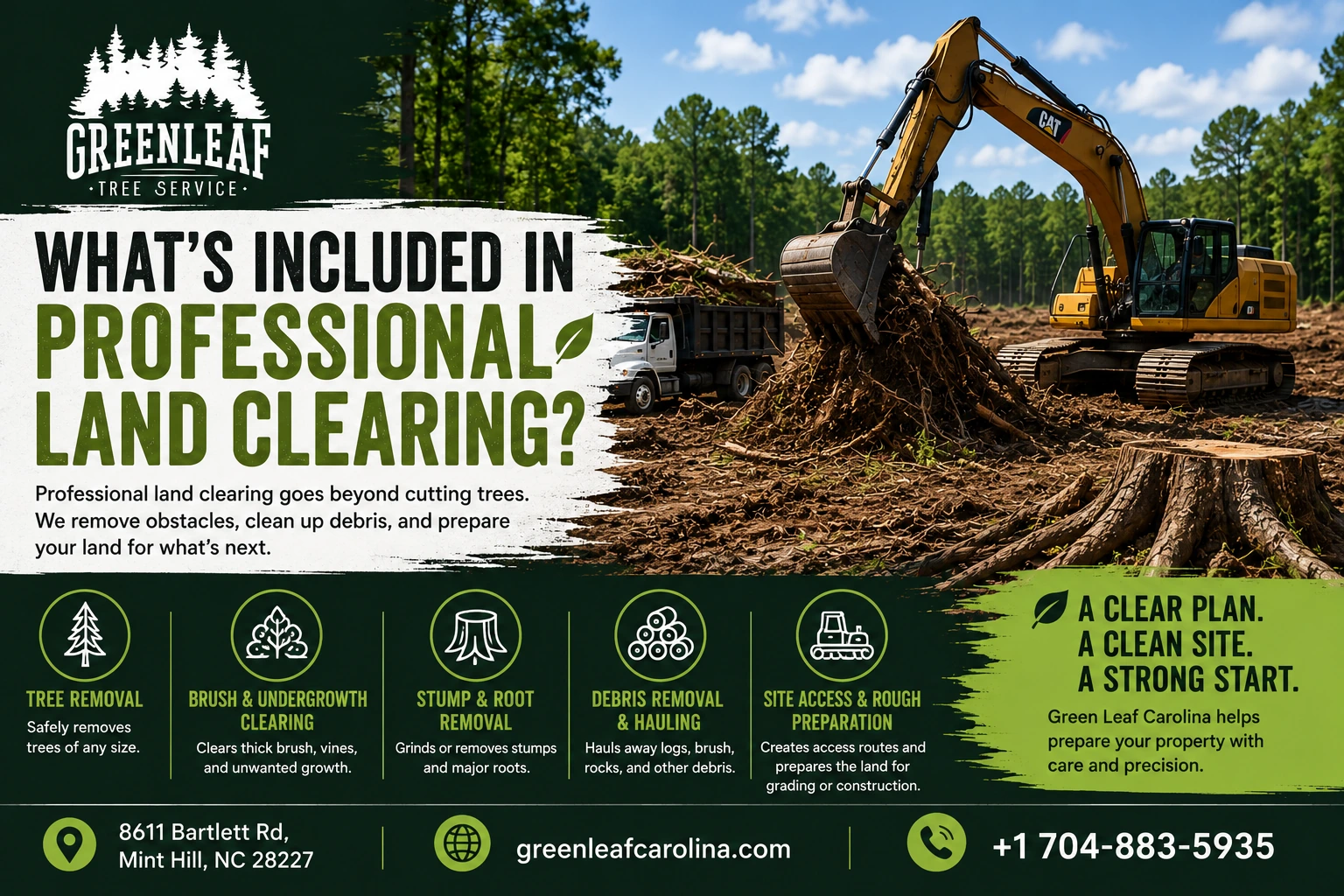
Trees may be cut in sections or felled in a controlled direction. The removal method depends on the tree’s size, condition, lean, and proximity to buildings, roads, utility lines, or neighboring property.
Larger trees may require specialized equipment to control limbs and trunks. Logs can be hauled away, cut for firewood, stacked, chipped, or processed based on the property owner’s preference and available space.
Stump and Root Removal
Stumps may be ground below the soil surface or fully excavated. Stump grinding is often suitable for landscaping, lawns, or areas where deep excavation is unnecessary.
Complete stump and root removal may be needed when the area will contain a foundation, road, driveway, utility trench, retaining wall, or another permanent feature. Buried wood can decay over time and cause the surrounding soil to settle.
Rock and Obstacle Removal
Surface rocks, concrete pieces, old fencing, discarded materials, and other obstacles may be moved or hauled away. Larger buried rocks may require excavation equipment.
The contractor should be informed about any known dumping areas, abandoned structures, wells, or buried materials before clearing begins.
Debris Processing and Disposal
Cleared material must be managed safely and responsibly. Depending on the project, debris may be:
- Chipped
- Mulched
- Hauled away
- Stacked in a designated area
- Cut into firewood
- Loaded into containers
- Recycled or processed off-site
Burning may be restricted or require permits, so it should not be assumed to be an available disposal method.
The cleanup level should be discussed before the project starts. Some property owners only need vegetation pushed into piles, while others need the site cleared of logs, brush, wood chips, and loose debris.
When Should You Schedule Land Clearing?
Land clearing should be scheduled after the property owner understands the site boundaries, permit requirements, utility locations, and future layout of the land.
Clearing too early can create problems. Vegetation may begin growing back before construction starts, exposed soil may erode, and the owner may remove more trees than the final plan requires.
For construction projects, clearing is usually completed before:
- Detailed grading
- Foundation excavation
- Utility trenching
- Driveway installation
- Drainage work
- Material deliveries
- Heavy construction activity
Weather and soil conditions can also affect scheduling. Extremely wet soil may be damaged by heavy equipment, creating deep ruts or compaction. Dry conditions may provide better access, although dust and fire risk may need to be managed.
The best time of year depends on the property, climate, vegetation, environmental restrictions, and project timeline. Some wildlife or protected-area regulations may limit clearing during certain seasons.
Professional clearing should also be scheduled when the property has become difficult or unsafe to use. Fallen trees, dense brush, blocked access roads, storm debris, and uncontrolled vegetation can prevent owners from reaching parts of the property or maintaining it properly.
What Happens After Clearing Is Finished?
A cleared property is not always ready for immediate construction or landscaping. The next steps depend on the intended use and how thoroughly the site was prepared.
After clearing, the property may contain exposed soil, wood chips, small roots, tire tracks, or disturbed areas. This is normal for many clearing projects, especially when large trees and stumps have been removed.
The site may then need:
- Rough or final grading
- Soil compaction
- Erosion-control measures
- Drainage improvements
- Topsoil installation
- Excavation
- Utility installation
- Seeding or landscaping
- Surveying or staking
- Soil testing
Construction sites often require grading to create the correct elevations and direct water away from future structures. Low spots may need to be filled, while raised areas may need to be reduced.
Areas not intended for immediate development may need seed, straw, mulch, or another ground cover to reduce erosion. Sloped properties and areas near waterways may require additional stabilization.
Property owners should inspect the cleared site and confirm that the agreed-upon work has been completed. They should check whether stumps were removed to the required depth, debris was handled properly, access routes are usable, and preserved areas were protected.
The finished appearance will vary based on the scope of work. A forestry-mulched area may have a layer of processed vegetation across the ground. A fully cleared construction area may be mostly bare soil and ready for grading. A selectively cleared property may retain mature trees while gaining improved access and visibility.
How Green Leaf Carolina Can Help
Green Leaf Carolina helps homeowners and landowners prepare overgrown, wooded, or obstructed property for future use. The clearing approach can be based on the property’s condition, terrain, access, and the owner’s plans for construction, landscaping, agriculture, or improved access.
The process may include removing unwanted trees, brush, undergrowth, fallen timber, stumps, and other obstacles. Areas that do not need to be disturbed can be identified and preserved when appropriate.
Careful planning helps reduce unnecessary clearing, protect useful vegetation, and create a more practical site for the next contractor or project phase. It also allows property owners to address potential access, drainage, utility, and debris-management concerns before heavy work begins.
Green Leaf Carolina can evaluate the site and help property owners understand the type of clearing needed to prepare the land safely and efficiently.
FAQs
What does professional land clearing usually include?
Professional land clearing may include removing trees, brush, vines, saplings, stumps, roots, fallen timber, rocks, old fencing, and other surface obstacles. It may also include debris hauling, mulching, access-path creation, and rough site cleanup. The exact scope depends on the property and its intended use.
Is stump removal always included?
Not always. Some projects include stump grinding, while others require complete stump and root excavation. Property owners should confirm how stumps will be handled, especially if the land will be used for foundations, roads, utilities, driveways, or other permanent improvements.
Does land clearing include grading?
Land clearing and grading are separate services, although they are often completed as part of the same site-preparation process. Clearing removes vegetation and obstacles. Grading reshapes the soil and establishes the elevations needed for drainage, construction, or landscaping.
Can some trees be saved during land clearing?
Yes. Selective clearing can preserve healthy trees, privacy screens, shade, or vegetation that helps prevent erosion. Trees that should remain must be clearly marked and protected before equipment enters the site.
What factors affect the scope of land clearing?
The scope may be affected by property size, vegetation density, terrain, soil condition, equipment access, tree size, stump quantity, debris volume, environmental restrictions, utility locations, and the future use of the land.
How should property owners mark the clearing area?
Property owners can use stakes, flags, paint, fencing, or a site plan to identify the work area. Property boundaries, trees to preserve, utilities, septic systems, wells, and sensitive areas should also be clearly marked.
What equipment is commonly used for land clearing?
Equipment may include excavators, bulldozers, forestry mulchers, skid steers, compact track loaders, stump grinders, brush cutters, chippers, grapples, dump trucks, and trailers. The contractor should select equipment based on the site rather than using the largest available machine.
What happens to the wood and brush?
Wood and brush may be chipped, mulched, hauled away, stacked, cut into firewood, or placed in a designated area. Disposal options should be discussed before work begins because they can affect the project timeline and cost.
Can land clearing damage the soil?
Heavy equipment can compact soil or create ruts, particularly when the ground is wet. Professional operators plan travel paths and choose equipment that matches the terrain. Areas intended for gardens, landscaping, or septic systems may require additional protection.
How long does professional land clearing take?
The timeline varies based on acreage, vegetation, terrain, access, weather, equipment needs, and debris disposal. A small, lightly wooded area may be cleared quickly, while a larger or heavily overgrown property may require multiple stages.
Is a permit required for land clearing?
Permit requirements vary by location and project type. Approval may be required for removing certain trees, disturbing large areas of soil, working near waterways, or clearing environmentally sensitive land. Property owners should verify local rules before scheduling work.
Is the property ready to use immediately after clearing?
It depends on the intended use. A recreational area or access path may be usable after basic cleanup. A construction site may still need grading, compaction, drainage work, erosion control, surveying, excavation, or utility installation before building begins.