
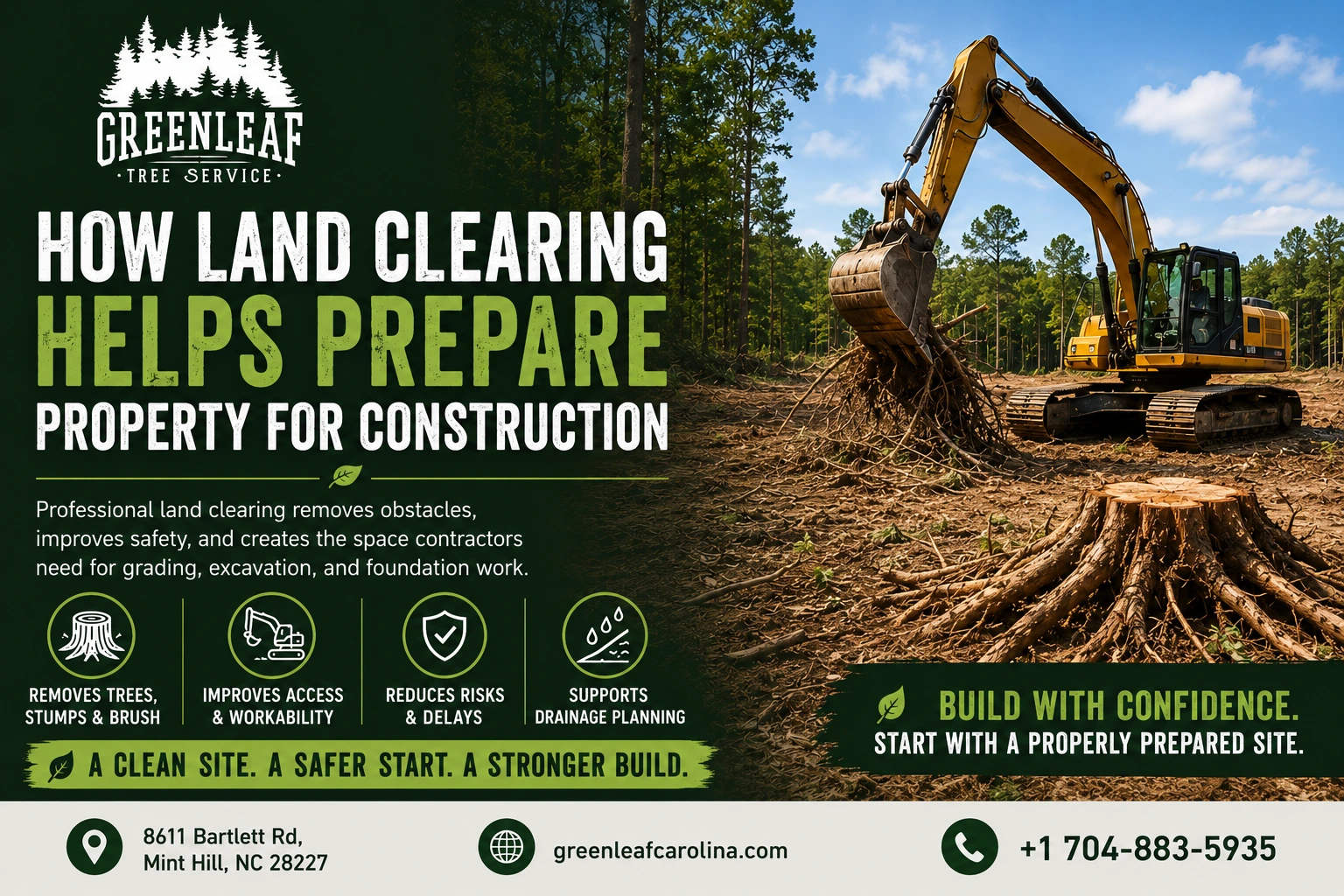
Building a home, office, retail space, or other structure requires more than choosing a design and pouring a foundation. The property must first be made safe, accessible, and suitable for construction. Professional land clearing for construction removes obstacles, identifies potential site problems, and creates the working space contractors need to begin grading, excavation, and foundation work.
Land clearing is not simply cutting down a few trees. It is a planned site preparation process that may include removing brush, stumps, roots, debris, unwanted vegetation, and other materials that could interfere with construction. When handled correctly, clearing helps reduce safety risks, improve drainage, protect equipment, and keep the overall building project moving efficiently.
Why Land Clearing Matters Before Construction
Construction crews need a stable and accessible site before heavy equipment, building materials, and workers can safely enter the property. Thick vegetation, unstable trees, hidden stumps, and uneven ground can make even basic site inspections difficult.
Proper clearing creates room for surveyors, engineers, grading contractors, utility crews, and builders to evaluate and prepare the property. It also makes it easier to locate drainage problems, soil concerns, property boundaries, and elevation changes that may affect the building plan.
Removing unwanted vegetation before construction can help:
- Create safe access roads and equipment paths
- Provide space for grading and excavation
- Expose uneven or unstable ground
- Reduce interference with utility installation
- Improve visibility across the jobsite
- Make drainage planning easier
- Remove roots and stumps from building areas
- Reduce delays caused by overlooked obstacles
Clearing also helps the construction team understand the true condition of the property. A heavily wooded or overgrown lot may hide rocks, abandoned materials, drainage channels, erosion, or changes in elevation. Once the area is cleared, these conditions can be evaluated before they become expensive construction problems.
Is DIY Land Clearing Risky?
Small amounts of brush may be manageable for a property owner, but larger clearing projects can involve serious risks. Cutting mature trees, operating heavy machinery, removing stumps, and working around utility lines require experience and careful planning.
One of the biggest risks of DIY clearing is not knowing what is beneath or around the work area. Underground electrical lines, water pipes, septic components, gas lines, and communication cables may be damaged by digging or stump removal. Repairs can be expensive and may create dangerous conditions.
Tree removal also becomes unpredictable when trees are leaning, damaged, close to buildings, or tangled with surrounding vegetation. Without proper equipment and controlled removal methods, a falling tree or limb could damage vehicles, nearby structures, fences, or neighboring property.
Other common DIY risks include:
- Equipment rollovers on uneven ground
- Injuries from chainsaws or falling limbs
- Damage to underground utilities
- Uncontrolled erosion after vegetation removal
- Removing trees outside the property boundary
- Clearing protected areas without approval
- Improper disposal of logs, brush, and debris
- Soil compaction from incorrect equipment use
Property owners should also consider the time involved. Clearing a construction site with rented equipment may take much longer than expected, especially when stumps, dense undergrowth, steep slopes, or wet soil are present. Delays during clearing can affect surveying, permitting, grading, and the construction schedule.
What Should Property Owners Check Before Clearing?
Land clearing should begin with research and site planning, not immediate tree removal. Property owners need to understand the boundaries, restrictions, and physical conditions of the land before work starts.
Confirm Property Boundaries
Visible fences, tree lines, and old markers do not always represent the legal property boundary. A current survey can help identify where clearing is permitted and prevent accidental work on neighboring land.
Boundary confirmation is especially important when trees grow along property lines. Removing a shared or neighboring tree without permission can create legal and financial complications.
Locate Underground Utilities
Utility lines should be identified before digging, stump grinding, excavation, or heavy equipment operation. Even a shallow line can be damaged by machinery.
Property owners should also identify private systems that may not appear in public utility records, including:
- Septic tanks
- Drain fields
- Irrigation lines
- Private wells
- Outdoor electrical wiring
- Propane lines
- Drainage pipes
Marking these areas allows the clearing crew to plan safer equipment routes and removal methods.
Review Permit Requirements
Permit rules differ depending on the property location, acreage, tree size, zoning classification, and environmental conditions. Some areas require approval before clearing large trees, disturbing soil, working near waterways, or removing vegetation from protected zones.
The property owner should check with the appropriate local planning, zoning, building, or environmental department before clearing begins.
Identify Environmental Concerns
Wetlands, streams, drainage channels, wildlife habitats, steep slopes, and erosion-prone soil may affect how much of the property can be cleared. Removing too much vegetation near sensitive areas can increase runoff, erosion, and sediment movement.
A planned approach may preserve selected trees or vegetation where they help stabilize soil, provide drainage control, or meet local requirements.
Review the Construction Plan
Clearing should support the actual building layout. Removing every tree from the property may be unnecessary and could increase costs. The site plan should show the future structure, driveway, parking area, utility routes, drainage features, and construction access points.
Using the construction plan helps determine which areas must be fully cleared and which areas can remain undisturbed.
How Tree and Brush Removal Prepares the Site
Tree and brush removal improves more than the appearance of an overgrown lot. It prepares the property for the physical work required during construction.
Dense brush can block access for surveyors and equipment operators. It can also hide holes, rocks, unstable soil, discarded materials, and other hazards. Removing undergrowth creates better visibility and allows crews to move around the site more safely.
Trees located within the future building footprint must usually be removed along with their stumps and major roots. Leaving a stump beneath a driveway, slab, foundation, or landscaped area can cause problems as the wood decays. The surrounding soil may settle, creating depressions or unstable areas.
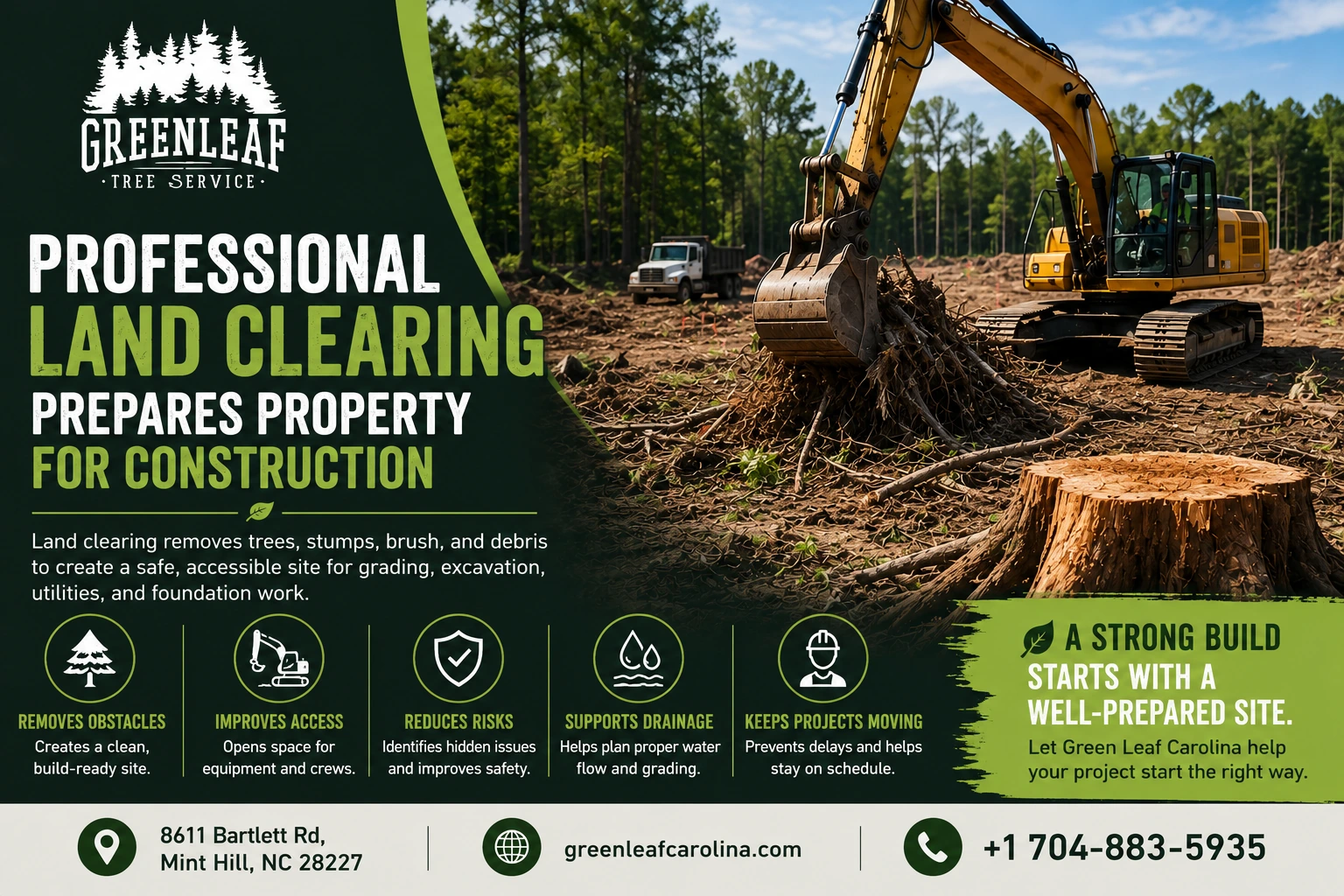
Roots may also interfere with:
- Foundation excavation
- Utility trenches
- Drainage systems
- Sidewalks and driveways
- Retaining walls
- Parking areas
- Grading plans
Professional clearing may involve removing the entire stump, grinding it below grade, or excavating the root system, depending on the planned use of that area.
Brush and vegetation removal also helps crews shape the site for proper drainage. Water needs to move away from future buildings and toward approved drainage areas. Thick vegetation can make it difficult to evaluate the natural slope of the land or identify low areas where water collects.
Land clearing differs from basic tree removal because the goal is not just to eliminate individual trees. The goal is to prepare an organized, accessible, and workable construction site.
When Should You Hire a Land Clearing Company?
Professional help is usually the safest choice when the project involves more than light brush removal. A land clearing company should be considered when the property contains mature trees, large stumps, dense vegetation, uneven terrain, limited access, or a significant amount of debris.
Professional clearing is also valuable when construction deadlines are involved. Experienced crews can coordinate equipment, removal methods, debris management, and site access more efficiently than a property owner using rented machinery.
Hiring a company may be especially important when:
- Multiple trees must be removed
- Trees are close to roads, structures, or utilities
- Large stumps need to be excavated
- The lot has steep or unstable terrain
- Heavy vegetation blocks property access
- The site requires selective clearing
- Brush and debris must be hauled away
- Construction equipment needs an access route
- Drainage or erosion is a concern
- The clearing must follow a site plan
A professional company can also help prevent over-clearing. Removing only what is necessary may preserve useful shade trees, natural privacy, erosion control, and attractive landscape features.
Before hiring a contractor, property owners should ask about insurance, equipment, debris disposal, site protection, and experience with construction preparation. It is also helpful to confirm exactly what is included, such as stump removal, brush hauling, rough grading, or access-road preparation.
What Equipment Is Used During Clearing?
The equipment used for land clearing depends on the size of the property, vegetation density, terrain, soil condition, and construction plan. No single machine is appropriate for every site.
Excavators
Excavators are commonly used to remove stumps, roots, rocks, and large debris. Their digging power makes them useful for clearing areas where complete root removal is necessary.
Attachments can be changed depending on the task. Buckets, grapples, and specialized clearing attachments allow the operator to dig, lift, sort, and load materials.
Bulldozers
Bulldozers are used to push vegetation, move soil, open access paths, and perform rough site shaping. They are effective on larger properties but must be operated carefully to avoid unnecessary soil disturbance or compaction.
Forestry Mulchers
Forestry mulchers grind brush, saplings, and smaller trees into mulch. This method can reduce the need for hauling and may leave organic material on the ground.
Mulching is often useful for clearing overgrown areas, creating access routes, and managing dense vegetation. However, it may not remove large stumps or prepare every area for foundation work.
Skid Steers and Compact Track Loaders
These versatile machines can operate in tighter areas than larger equipment. With the right attachments, they can remove brush, move logs, grade soil, grind stumps, and load debris.
Compact track loaders are particularly useful where the ground is soft or uneven because their tracks distribute weight more evenly than tires.
Stump Grinders
Stump grinders reduce stumps to wood chips below the soil surface. Grinding may be appropriate for landscaped areas or locations where complete excavation is not required.
For building footprints, roads, or structural areas, full stump and root removal may be recommended to reduce the risk of future settlement.
Chippers, Grapples, and Hauling Equipment
Chippers process branches and smaller vegetation, while grapples help lift and sort logs, brush, and debris. Dump trucks, trailers, or roll-off containers may be used to remove material from the property.
The clearing contractor should select equipment that matches the site rather than using unnecessarily large machines that could disturb areas intended to remain intact.
How Green Leaf Carolina Can Help
Green Leaf Carolina helps property owners prepare wooded and overgrown land for upcoming construction projects. The clearing process can be planned around the future building footprint, driveway, utility routes, drainage needs, and equipment access points.
Rather than treating land clearing as simple tree removal, the focus is on creating a safer and more workable property for the next phase of development. This may include removing unwanted trees, brush, stumps, roots, and site debris while preserving areas that do not need to be disturbed.
Professional planning can help property owners avoid common problems such as accidental utility damage, blocked equipment access, incomplete stump removal, and excessive soil disturbance. It can also make coordination with surveyors, grading contractors, builders, and other construction professionals more efficient.
Property owners preparing for residential or commercial construction can contact Green Leaf Carolina to discuss the condition of the land, the planned project, and the clearing work needed to create a build-ready site.
FAQs
What is included in land clearing for construction?
Land clearing for construction may include tree removal, brush removal, stump removal, root excavation, debris cleanup, vegetation management, and the creation of equipment access paths. The exact scope depends on the construction plan and site conditions. Grading, erosion control, and material hauling may be included separately.
Is land clearing the same as tree removal?
No. Tree removal focuses on taking down one or more trees. Land clearing prepares a larger area for a specific use, such as construction. It may involve removing trees, stumps, brush, roots, rocks, debris, and other obstacles that interfere with grading, utilities, foundations, roads, or drainage.
Should the entire property be cleared?
Not necessarily. Selective clearing may be a better option when only part of the property will be developed. Preserving healthy trees and vegetation can maintain privacy, reduce erosion, provide shade, and lower clearing costs. The construction plan should guide which areas need to be disturbed.
Does land clearing include grading?
Land clearing and grading are separate but closely related steps. Clearing removes vegetation and obstacles, while grading reshapes and levels the soil. Some companies provide both services, while others prepare the site for a separate grading contractor.
Why do stumps need to be removed before construction?
Stumps and roots can interfere with excavation, foundations, utility lines, driveways, and drainage systems. As buried wood decays, the surrounding soil may settle. Removing stumps from structural and high-traffic areas helps create a more stable construction surface.
How long does land clearing take?
The timeline depends on the size of the property, number of trees, vegetation density, terrain, weather, equipment access, and debris disposal requirements. A small lot may take a short period, while a heavily wooded or difficult site may require several stages.
Can land clearing affect drainage?
Yes. Removing vegetation changes how water moves across the property. Improper clearing can increase runoff or erosion. Construction clearing should be coordinated with grading and drainage plans so water is directed away from buildings and neighboring properties.
What happens to the trees and brush after clearing?
Logs, brush, and vegetation may be hauled away, chipped, mulched, stacked, processed for firewood, or disposed of according to local requirements. The best option depends on the amount of material, available space, and the property owner’s plans.
When should land clearing begin?
Clearing should begin after property boundaries, utility locations, permit requirements, environmental restrictions, and the construction layout have been reviewed. Starting too early may result in unnecessary clearing or conflicts with the final site plan.
Can construction begin immediately after clearing?
Additional preparation is usually required. After clearing, the property may need surveying, soil testing, grading, drainage work, erosion control, excavation, and utility installation. Proper clearing creates access and working space for these next steps.