
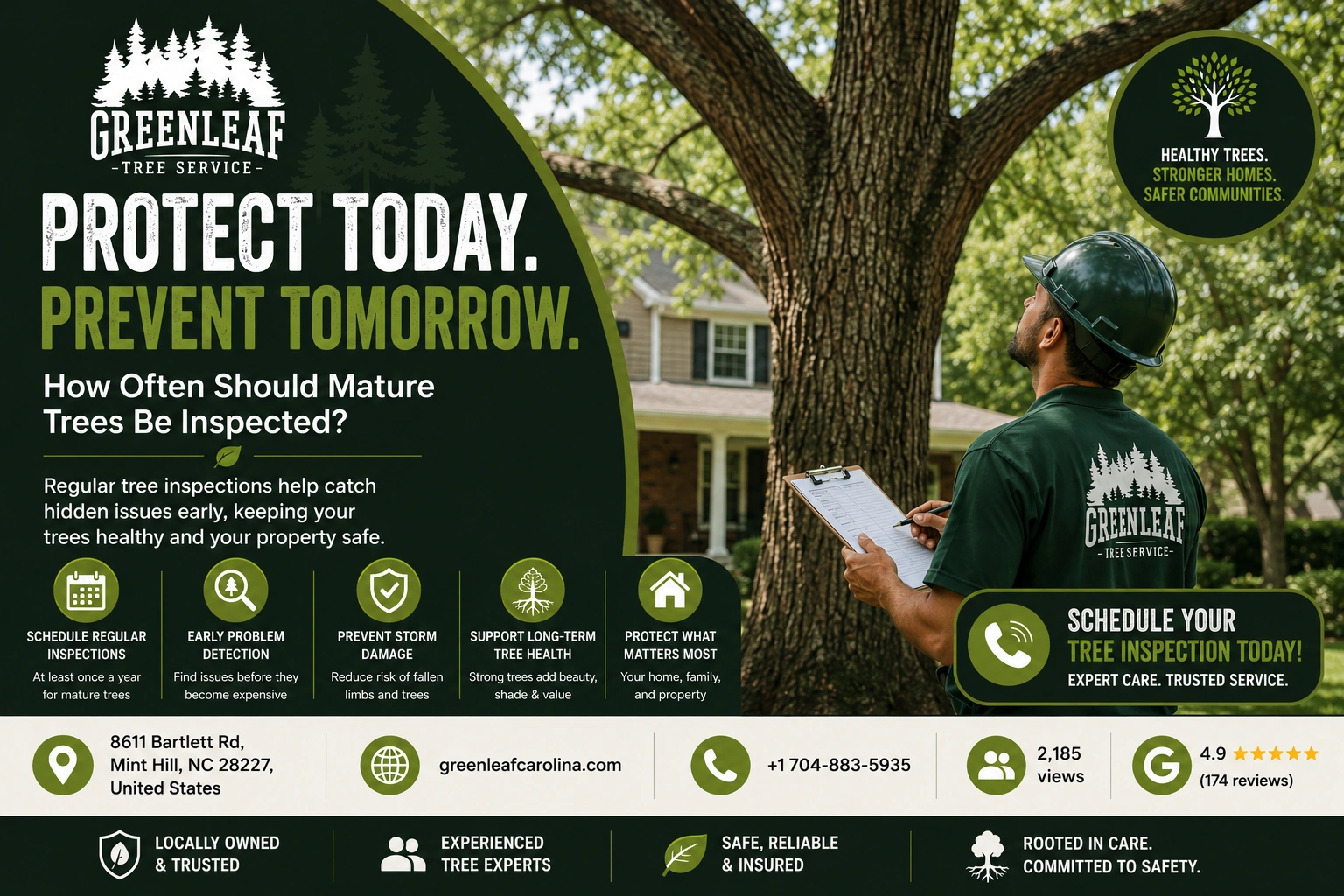
Mature trees are some of the most valuable features in a residential landscape. They provide shade during hot Carolina summers, improve curb appeal, enhance outdoor living spaces, and can even contribute to property value. Because these trees often take decades to reach maturity, protecting their health and structural integrity is an important part of long-term property maintenance.
One question many homeowners ask is how often mature trees should be inspected. While there is no single schedule that applies to every tree, regular evaluations can help identify potential concerns before they become significant problems. Understanding tree inspection frequency can help homeowners make informed decisions about preventive tree care and long-term landscape management.
Don't Wait for a Falling Limb
Schedule a professional tree inspection today to catch hidden hazards before they become costly or dangerous.
Fast Answer: How Often Should Mature Trees Be Inspected?
Many mature trees benefit from periodic professional evaluations, even when they appear healthy. Additional inspections are often recommended after major storms, construction activity, noticeable changes in tree condition, or when trees are located near homes and other structures.
The ideal inspection schedule depends on factors such as tree age, health, location, species, and overall risk level. Regular monitoring can help identify structural concerns, disease symptoms, pest activity, and other issues before they become more serious.
Why Mature Trees Need Regular Inspections
Mature trees may appear strong and healthy from the outside, but aging trees can develop structural issues that are not always obvious to homeowners.
As trees age, they experience natural changes that can affect their health and stability. Branches may weaken, internal decay can develop, root systems may become compromised, and environmental stress can gradually affect overall condition.
One of the challenges with tree care is that many problems begin internally. A tree may have a full canopy and healthy-looking leaves while hidden defects continue developing inside the trunk or root system.
Regular inspections help identify concerns early, including:
- Structural weaknesses
- Early disease symptoms
- Pest activity
- Root-related issues
- Declining branch health
- Storm-related damage
Preventive monitoring often allows homeowners to address issues before they progress into larger safety or health concerns.
Is Skipping Inspections Risky?
Skipping routine evaluations does not automatically mean a tree will develop problems, but it can make early detection more difficult.
Trees change gradually over time. Without regular observation, important warning signs may go unnoticed until they become more significant.
Potential concerns that may develop include:
Undetected Decay
Internal decay often progresses without obvious external symptoms during the early stages.
Weak Branch Attachments
Certain branch unions may become structurally compromised as trees mature, increasing the likelihood of limb failure.
Root Problems
Root damage, root decay, soil compaction, and other underground issues can affect tree stability without being immediately visible.
Structural Instability
Cracks, cavities, and trunk defects can weaken a tree’s overall structure over time.
Increased Storm Vulnerability
Trees with existing weaknesses may be more susceptible to damage during severe weather events.
The goal of routine inspections is not to create concern but to support proactive tree care. Small issues are often easier to manage when identified early.
What Homeowners Should Watch for Each Year
Homeowners play an important role in monitoring tree health between professional evaluations.
A simple annual visual inspection can help identify noticeable changes that may warrant closer attention.
Watch for:
Dead Branches
Dead limbs can indicate declining health and may become more likely to fail during storms.
Cracks in the Trunk
Visible cracks may suggest structural stress or internal weaknesses.
Leaning Trees
While some trees naturally lean, sudden changes in lean angle can indicate stability concerns.
Thinning Canopy
A canopy that appears less full than previous years may signal health issues.
Early Leaf Loss
Premature leaf drop can be associated with environmental stress, disease, or root problems.
Fungal Growth
Mushrooms or fungal structures near the base of a tree may indicate decay beneath the surface.
Bark Abnormalities
Peeling bark, missing bark sections, or unusual bark patterns can sometimes signal health concerns.
Root Exposure
Visible roots, soil erosion, or lifting soil around the base may indicate changes in root stability.
Regular observations throughout the year are valuable because homeowners are often the first to notice gradual changes.
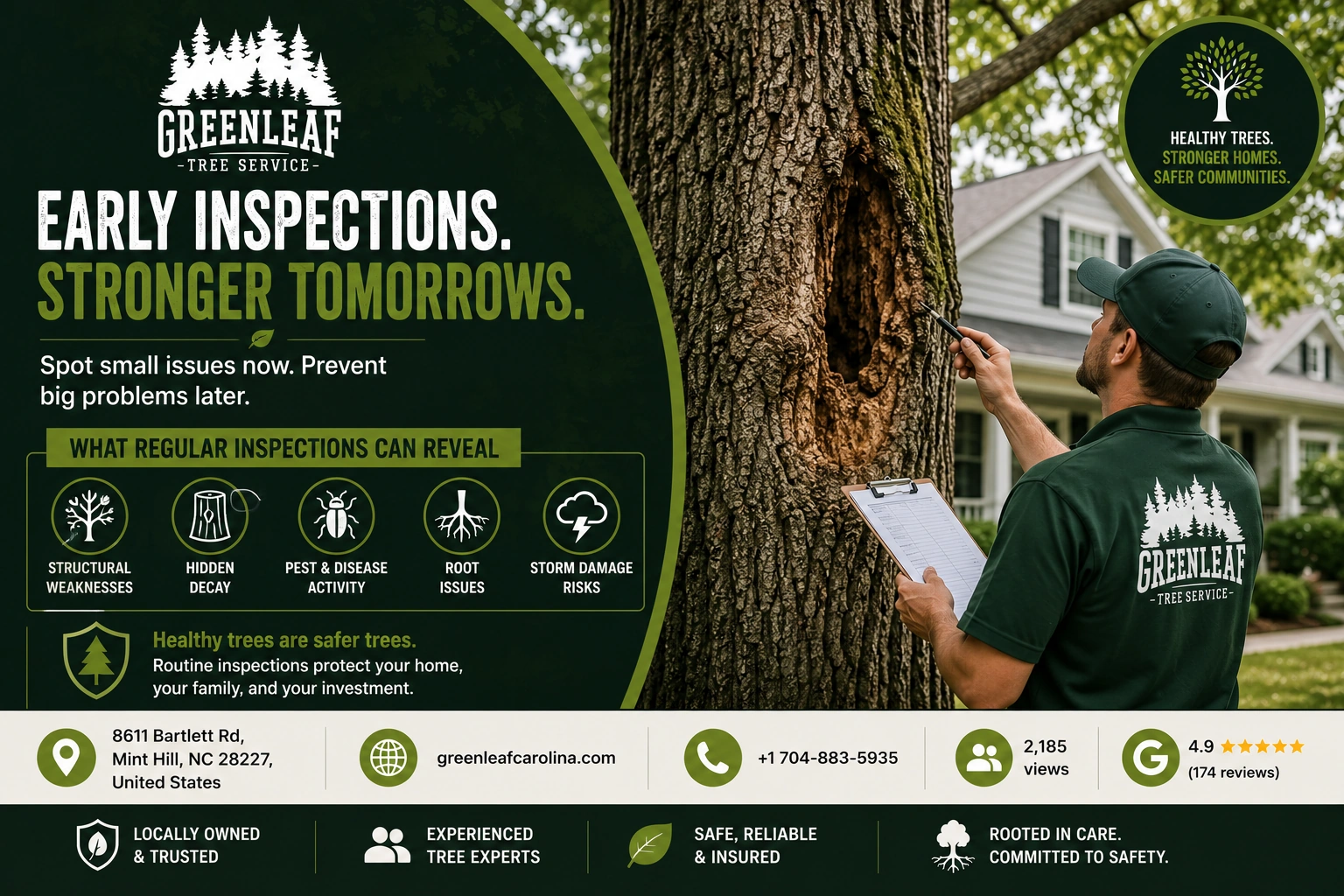
Why Healthy-Looking Trees Can Still Have Problems
One of the most common misconceptions about tree care is that a tree must look unhealthy before it requires attention.
In reality, many tree issues begin internally. Decay, root damage, structural weaknesses, and certain diseases can develop long before visible symptoms appear in the canopy.
A mature tree may have green leaves and a full canopy while hidden problems continue affecting its stability and long-term health.
This is one reason routine inspections can be valuable, even when trees appear healthy from the ground.

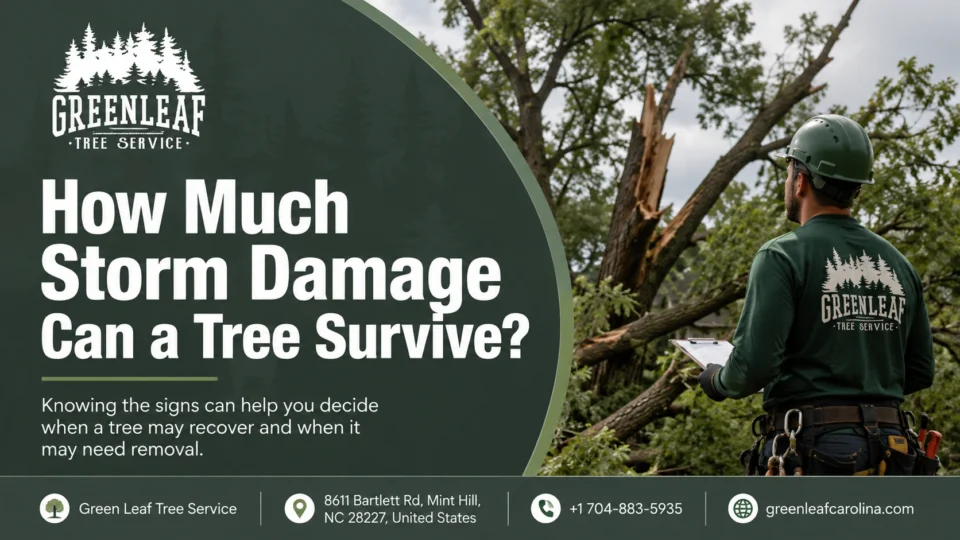
How Much Storm Damage Can a Tree Survive?
A tree may recover from broken branches, moderate canopy loss, minor bark wounds, or limited root disturbance when its trunk,…
When Storms or Construction Increase Tree Risks
Certain events can increase tree risk levels and justify additional inspections outside a routine schedule.
Severe Weather
High winds, lightning strikes, heavy rainfall, and ice accumulation can create hidden structural damage. A tree may remain standing after a storm while internal cracks, weakened branch attachments, or root disturbances continue developing.
Construction Activities
Construction projects can affect trees even when direct contact never occurs.
Excavation work may sever roots, while grading and trenching can alter soil conditions around the tree.
Soil Compaction
Heavy equipment operating near trees can compact soil and reduce root access to oxygen and water.
Large Limb Failures
The loss of a major branch can alter weight distribution and create new structural stresses throughout the tree.
Additional inspections may be beneficial after:
- Major storms
- Lightning strikes
- Excavation projects
- Utility installations
- Significant grading work
- Soil compaction events
- Large limb failures
Because tree conditions can change quickly after these events, timely evaluations are often helpful.
When Should Trees Be Professionally Evaluated?
The ideal inspection schedule depends on the tree’s age, condition, location, and risk profile.
As a general guideline, many mature trees benefit from periodic professional evaluations even when they appear healthy.
More frequent evaluations may be appropriate for:
Advanced-Age Trees
Older trees often require closer monitoring because age-related structural changes become more common over time.
Trees With Visible Defects
Cracks, cavities, dead wood, or leaning trunks may justify additional evaluations.
Trees With Previous Storm Damage
Past damage can create long-term vulnerabilities that deserve continued monitoring.
High-Value Landscape Trees
Trees that contribute significantly to landscape aesthetics or property value may benefit from proactive care.
Trees Near Structures
Trees located near homes, driveways, sidewalks, garages, pools, and other structures often warrant closer attention because of the potential consequences of failure.
A healthy mature tree in an open area may require less frequent evaluation than an older tree growing near a home or heavily used area.
What Will an Arborist Look For?
Professional evaluations focus on understanding both tree health and structural stability.
During an assessment, an arborist may evaluate:
Structural Integrity
Inspecting trunks, branch unions, and overall architecture for weaknesses.
Branch Condition
Identifying dead, damaged, or declining limbs.
Canopy Health
Assessing leaf density, growth patterns, and overall vigor.
Root Stability
Looking for root damage, root decay, soil movement, and anchoring concerns.
Disease Symptoms
Searching for indicators of fungal infections, bacterial diseases, and other health issues.
Pest Activity
Evaluating evidence of insect infestations or pest-related stress.
Soil Conditions
Reviewing soil quality, drainage, compaction, and environmental factors affecting tree health.
These evaluations help create a clearer picture of the tree’s current condition and potential future risks.
How Green Leaf Carolina Can Help
Routine monitoring is one of the most effective ways to support the long-term health and stability of mature trees. Regular evaluations help identify structural concerns, environmental stress, disease symptoms, and other issues that may affect tree performance over time.
Green Leaf Carolina assists homeowners by providing professional assessments and guidance focused on preventive tree care. Understanding a tree’s condition today can help support healthier growth and safer landscapes in the future.
For homeowners throughout Rock Hill and the surrounding area, local knowledge of regional tree species, soil conditions, weather patterns, and common health concerns can provide valuable insight into long-term tree management.
If you are unsure whether your mature trees should be evaluated, Green Leaf Carolina can help assess their condition, identify potential concerns, and recommend appropriate next steps. Our team helps homeowners protect valuable landscape trees through proactive monitoring and informed tree care decisions.
FAQs About Mature Tree Inspections
How often should mature trees be inspected?
Many mature trees benefit from periodic professional evaluations, with additional inspections recommended after major storms, construction activity, or noticeable changes in tree condition.
Should healthy trees still be inspected?
Yes. Healthy-looking trees can sometimes contain hidden structural defects, decay, or root problems that are not visible during routine observation.
Do older trees require more frequent evaluations?
Often, yes. As trees age, they may become more susceptible to structural issues, decay, and environmental stress, making regular monitoring increasingly valuable.
Should trees be inspected after storms?
Yes. Severe weather can create hidden damage that may not be immediately visible. An inspection can help identify potential concerns before they worsen.
What are the warning signs of tree decline?
Common warning signs include dead branches, thinning canopies, fungal growth, bark abnormalities, root exposure, cracks in the trunk, and premature leaf loss.
Can inspections help prevent tree failures?
While no inspection can eliminate all risks, routine evaluations can identify many structural and health concerns early, allowing homeowners to take proactive steps before problems become more serious.
Proactive Monitoring Helps Protect Valuable Trees
Mature trees are long-term investments that contribute beauty, shade, and value to a property. Regular inspections help identify potential concerns before they develop into larger safety or health issues.
By monitoring trees consistently and addressing problems early, homeowners can support healthier landscapes, reduce potential risks, and help preserve the benefits that mature trees provide for years to come.
Spot Tree Problems Before They Spread
Regular inspections help identify decay, disease, and weak branches before they cause damage.