
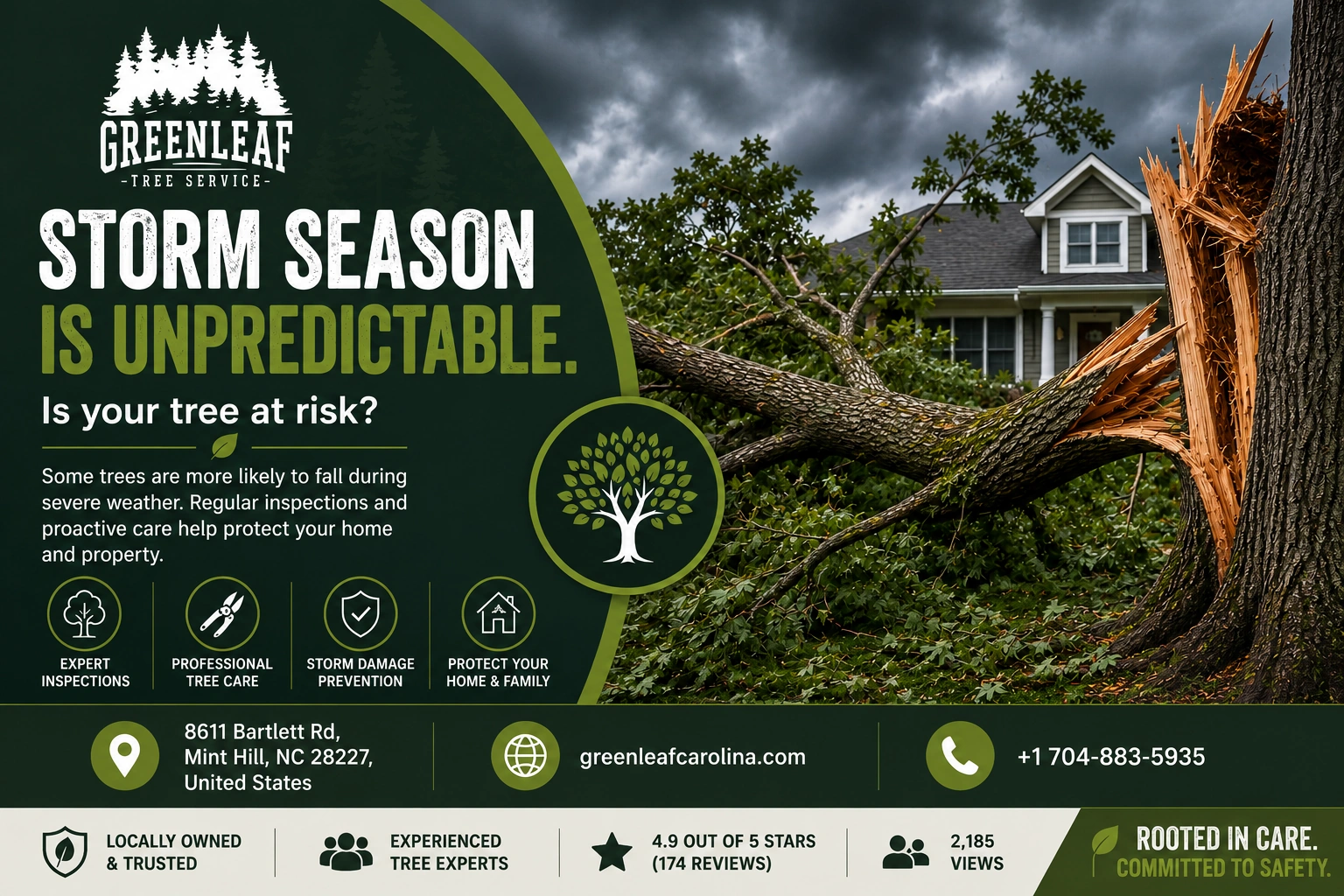
The Carolinas experience a wide range of severe weather conditions, including thunderstorms, tropical storms, hurricanes, heavy rainfall, and strong wind events. While no tree is completely immune to storm damage, some species tend to experience failures more often than others due to their growth habits, wood strength, root structure, and overall storm resistance.
Understanding which trees commonly fall during storms can help homeowners make informed decisions about tree maintenance and property safety. However, it is important to remember that species alone does not determine whether a tree will fail. Tree health, age, structure, soil conditions, and maintenance history all play significant roles in how a tree performs during severe weather.
Worried About a Dangerous Tree?
Don't wait for the next storm. Schedule a professional tree inspection and protect your home today.
Fast Answer: What Trees Commonly Fall During Carolina Storms?
Several tree species are commonly associated with storm-related damage throughout North and South Carolina, including Bradford Pear, Silver Maple, Water Oak, Pine Trees, Sweetgum, and some mature Willow Oaks.
However, these species are not automatically dangerous. Healthy, well-maintained trees from these species can remain stable for decades. In many cases, factors such as decay, root damage, structural defects, poor maintenance, and saturated soil contribute more to storm failures than species alone.
The most effective way to reduce storm-related tree risks is through regular inspections, proactive maintenance, and addressing structural concerns before severe weather arrives.
Common Trees That May Be Vulnerable During Storms
Certain tree species are more frequently involved in storm-related damage throughout the Carolinas.
Bradford Pear
Bradford Pear trees are known for their rapid growth and attractive spring blooms. Unfortunately, they often develop weak branch attachments and crowded growth patterns. As the tree matures, these structural weaknesses can make it more vulnerable to splitting during high winds or ice events.
Silver Maple
Silver Maples grow quickly and provide abundant shade, but rapid growth often results in weaker wood compared to slower-growing species. Large limbs may become more susceptible to breakage during severe weather, particularly as trees age.
Water Oak
Water Oaks are common throughout the Southeast and can grow into impressive shade trees. However, they often develop decay issues as they mature and may experience limb failures if structural problems go undetected.
Willow Oak
Willow Oaks are generally considered strong trees, but large mature specimens can become vulnerable during severe storms if they develop structural defects, decay, or excessive canopy weight.
Pine Trees
Pine trees are frequently involved in storm-related property damage across the Carolinas. Their height and evergreen canopies expose them to significant wind forces. In saturated soil conditions, some pines may become vulnerable to uprooting.
Sweetgum
Sweetgum trees can develop large canopies and substantial branch weight. While many remain healthy and stable, mature trees with structural defects or storm damage may experience limb failures during severe weather.
Ultimately, age, health, maintenance history, and structural condition often influence storm performance more than species alone.
Why Tree Condition Matters More Than Species Alone
Tree species can influence storm vulnerability, but condition is often more important.
A healthy tree with strong structure, balanced growth, and a stable root system may perform better than a neglected tree from a traditionally stronger species.
Homeowners should pay close attention to signs such as:
- Decay
- Dead limbs
- Cracks
- Leaning
- Root damage
- Dense overgrowth
These issues can make almost any tree more vulnerable during storms.
Routine inspections and proactive maintenance often play a larger role in storm resistance than species alone.
Are Certain Tree Traits More Risky During Storms?
Some tree characteristics can increase vulnerability during storms, but that does not necessarily make a tree dangerous.
Weak Branch Attachments
Trees with narrow branch unions or included bark may be more prone to splitting when exposed to strong winds.
Brittle Wood
Certain species naturally produce wood that is more susceptible to cracking or breaking under stress.
Rapid Growth Habits
Fast-growing trees often develop wood that is less dense and structurally weaker than slower-growing species.
Shallow Root Systems
Trees with limited root depth may have reduced anchoring strength during periods of saturated soil.
Dense Canopies
Large, dense canopies create greater wind resistance. During storms, this can increase stress on branches, trunks, and root systems.
Healthy trees belonging to traditionally vulnerable species can still perform exceptionally well when properly maintained. Likewise, even highly resilient species may fail if they suffer from decay, root damage, or poor growing conditions.
What Homeowners Should Check Before Storm Season
Routine inspections can help identify potential concerns before severe weather arrives.
Homeowners should perform visual evaluations and watch for:
Dead Limbs
Dead branches often fail first during storms because they have already lost structural strength.
Cracked Branches
Visible cracks can indicate existing weaknesses that may worsen during high winds.
Leaning Trunks
While some trees naturally lean, sudden or increasing lean may signal stability concerns.
Root Exposure
Exposed roots can indicate soil erosion, root damage, or reduced support.
Decay Cavities
Hollow sections, cavities, and visible decay can weaken structural integrity.
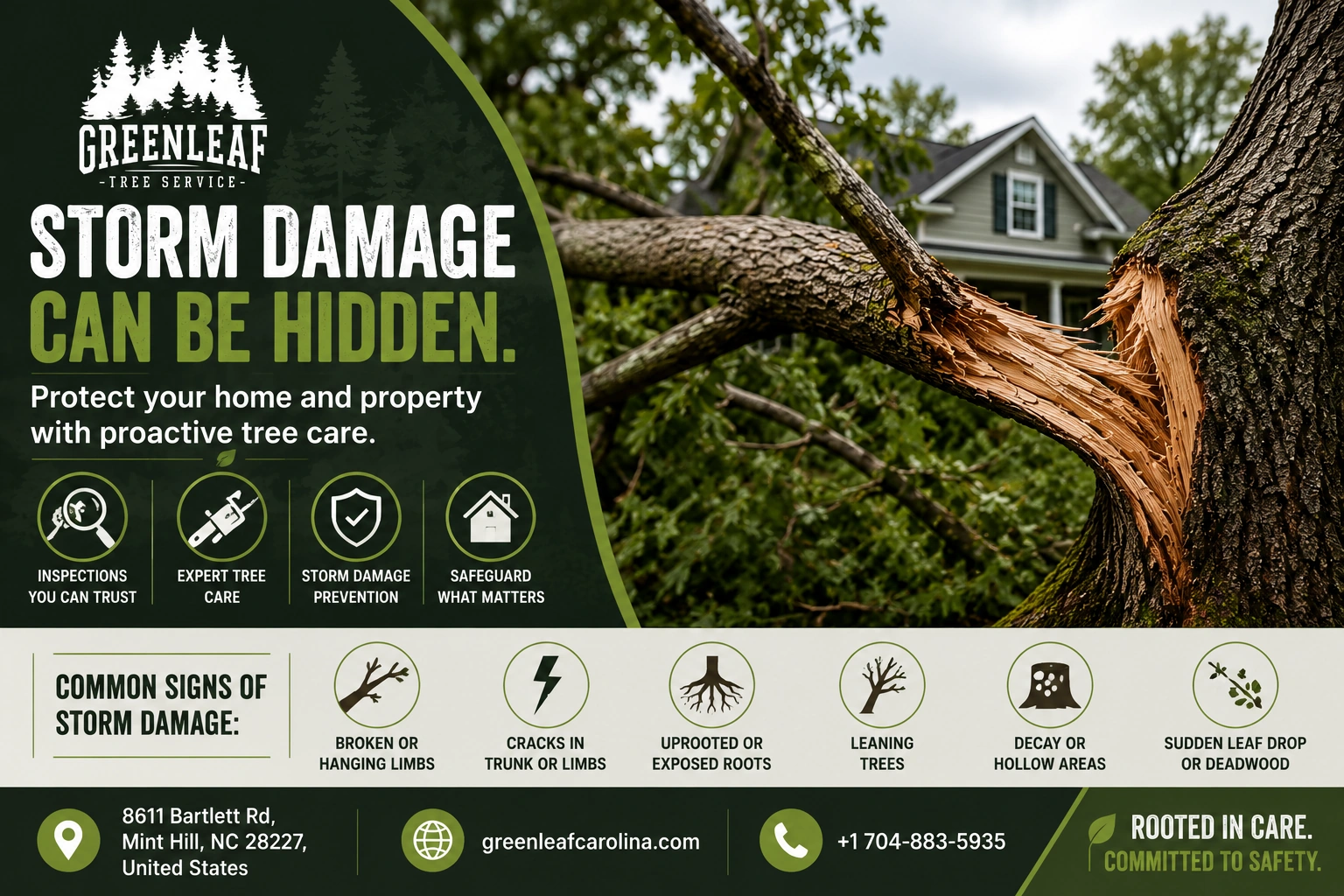
Dense Overgrown Canopies
Heavy canopies may place additional stress on branches and increase wind resistance.
Routine inspections before hurricane season and severe weather periods allow homeowners to identify concerns early and address potential risks before they become emergencies.
Preventive maintenance often helps reduce the likelihood of storm-related failures.

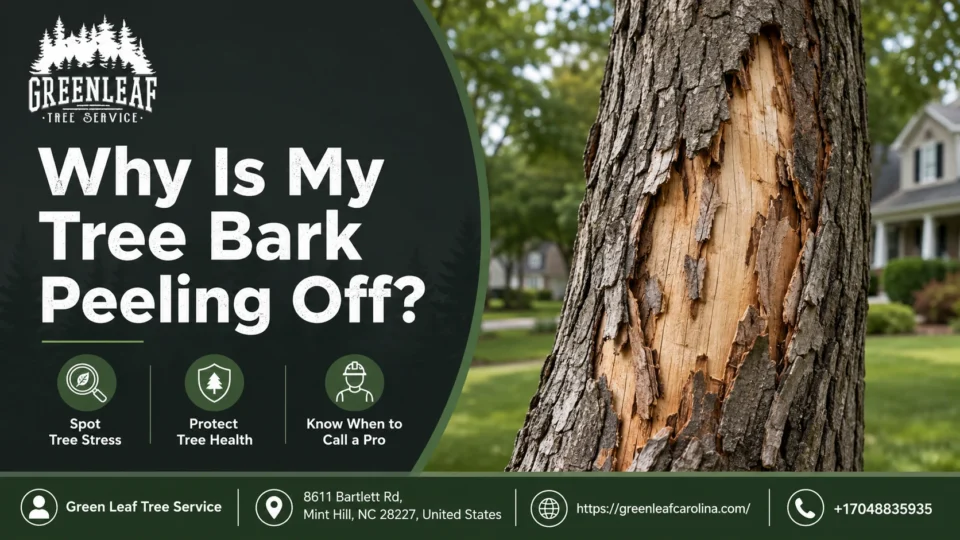
Why Is My Tree Bark Peeling Off?
Common peeling tree bark causes include natural shedding, drought stress, sunscald, frost damage, fungal or bacterial disease, insect activity, mechanical…
How Saturated Soil Increases Falling Risks
Many homeowners focus on wind speed during storms, but prolonged rainfall is often a major contributor to tree failures.
When soil becomes saturated, roots lose some of their ability to firmly anchor the tree. The surrounding soil becomes softer and less supportive, increasing the likelihood of uprooting.
Several factors can further increase risk:
Shallow Root Systems
Trees with shallow root structures often rely heavily on upper soil layers for support. Saturated soil can reduce that stability.
Poor Drainage
Properties with drainage issues may remain waterlogged long after rainfall ends, prolonging root stress.
Compacted Soils
Compacted soil can limit root development and reduce overall anchoring strength.
Previous Root Damage
Construction activity, trenching, grading, and previous root injuries may weaken a tree’s support system before a storm even occurs.
This is why some trees fall during heavy rain events even when winds are relatively moderate. Root stability often plays a critical role in storm survival.
When Should You Trim or Remove a Tree?
Not every tree requires removal after showing signs of vulnerability. In many situations, proactive maintenance can help improve safety and reduce future risks.
Homeowners may consider professional evaluation when trees exhibit:
- Significant structural defects
- Repeated storm damage
- Dead or declining branches
- Hazardous lean
- Extensive decay
- Growth too close to structures
- Root instability concerns
In some cases, trimming may reduce canopy weight, remove defective limbs, and improve overall structure. In others, the level of risk may warrant complete removal.
The most appropriate solution depends on the tree’s condition, location, and potential impact on nearby structures or people.
What Will a Tree Company Inspect?
A professional tree evaluation focuses on understanding the tree’s overall condition and vulnerability to future storms.
Common assessment areas include:
Structural Integrity
Inspecting trunk condition, branch unions, and overall architecture.
Root Health
Evaluating root stability, soil conditions, and evidence of root damage.
Canopy Density
Assessing canopy size, weight distribution, and wind resistance.
Branch Attachment Strength
Identifying weak unions, included bark, and potential failure points.
Signs of Decay
Looking for cavities, fungal growth, dead wood, and internal deterioration.
Storm Vulnerability Factors
Considering species characteristics, site conditions, previous damage, and overall risk exposure.
A comprehensive evaluation helps identify issues that may not be obvious during routine property inspections and provides homeowners with a clearer understanding of potential storm-related risks.
How Green Leaf Carolina Can Help
Storm preparation often begins long before severe weather arrives. Understanding which trees may be more vulnerable and identifying structural concerns early can help homeowners reduce potential property risks.
Green Leaf Carolina assists homeowners by evaluating tree health, structural stability, and site-specific conditions that may influence storm performance. Professional risk assessments can help identify concerns that are not always obvious during routine property inspections.
For homeowners throughout Charlotte and the surrounding area, local knowledge of regional tree species, weather patterns, and storm-related risks can provide valuable insight when planning long-term tree care and property maintenance strategies.
If you are concerned about trees near your home before storm season, Green Leaf Carolina can evaluate their condition, structure, and risk factors. Our team helps homeowners identify vulnerable trees, address hazardous limbs, and make informed decisions before severe weather arrives.
FAQs About Trees That Fall in Storms
What trees are most likely to fall during storms in North Carolina?
Species commonly associated with storm damage include Bradford Pear, Silver Maple, Water Oak, Pine Trees, Sweetgum, and some mature Willow Oaks. However, tree health and structural condition are often more important than species alone.
Are pine trees prone to storm damage?
Pine trees can be vulnerable during severe storms due to their height and exposure to wind. Saturated soil may also increase the risk of uprooting.
Why do Bradford Pear trees break so easily?
Bradford Pear trees often develop weak branch attachments and crowded growth structures that make them more susceptible to splitting under stress.
Can healthy trees still fall during severe storms?
Yes. Extreme wind speeds, saturated soil, lightning strikes, and falling debris can sometimes cause even healthy trees to fail.
How does saturated soil affect tree stability?
Saturated soil reduces root anchoring strength by softening the soil around the root system, making uprooting more likely during high winds.
Should I have my trees inspected before hurricane season?
Routine inspections before hurricane season can help identify dead limbs, structural weaknesses, root issues, and other conditions that may increase storm-related risks.
Preparing Before the Storm Is the Best Defense
While certain tree species are more commonly involved in storm-related failures, species alone rarely determines whether a tree will fall. Structural condition, root health, maintenance history, and site conditions often play an even larger role in storm performance.
By identifying potential risks early and maintaining trees proactively, homeowners can reduce the likelihood of storm-related damage and make more informed decisions about protecting their property before severe weather arrives.
Storm-Damaged Trees Can Fall Without Warning
Get fast, reliable tree removal and emergency service before the next storm causes costly damage.