
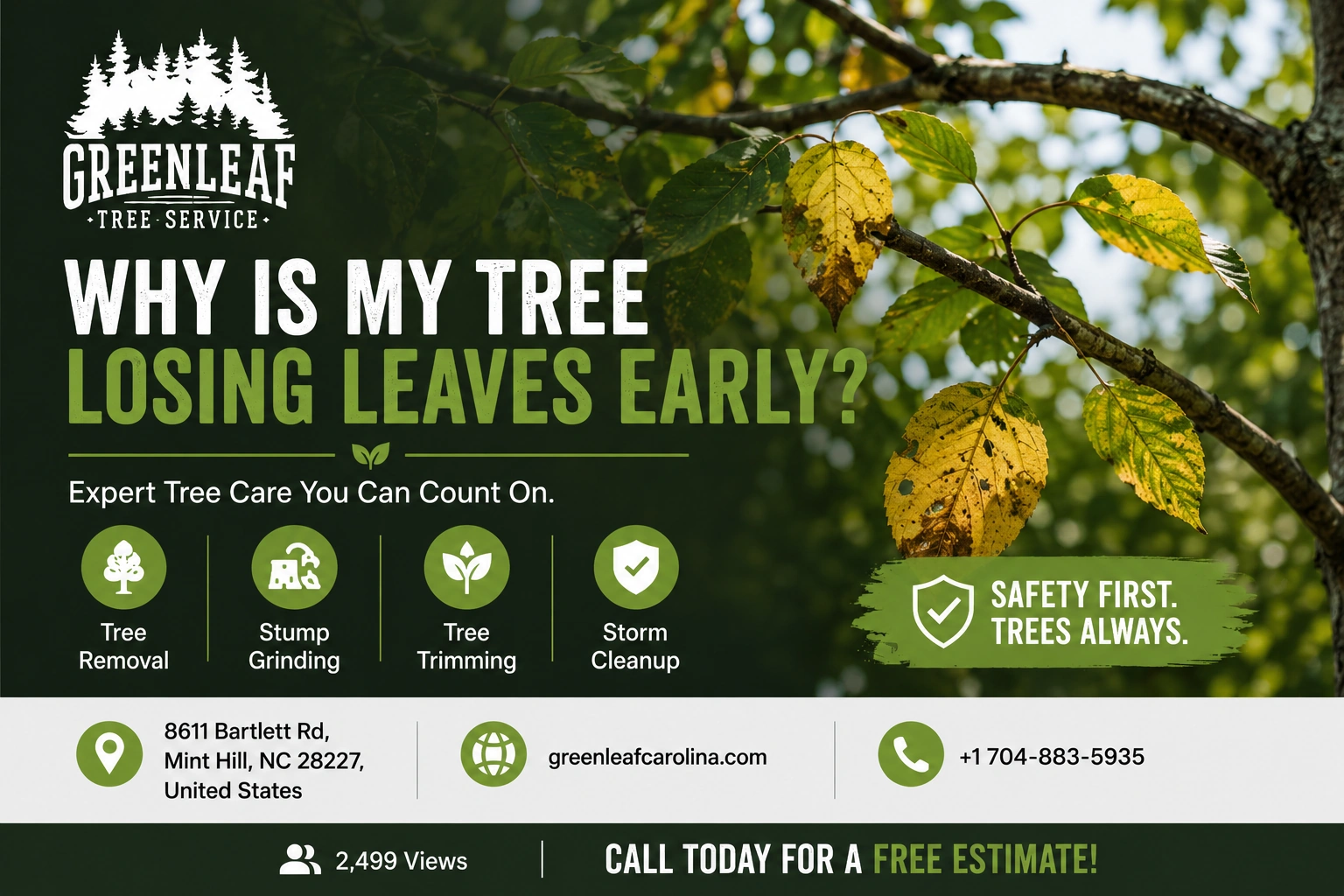
A tree may lose leaves early because of drought stress, extreme heat, too much water, pests, disease, root damage, soil problems, or sudden weather changes. Sometimes early leaf drop is the tree’s way of conserving energy during stressful conditions. Other times, it can be a warning sign that the tree needs closer attention.
A few fallen leaves during seasonal changes are normal. Sudden, heavy, or repeated leaf loss in spring, summer, or early fall is more concerning, especially if the leaves are yellow, brown, spotted, curled, or dropping from only one part of the canopy.
If your tree is losing leaves early in York County, SC, start by observing the timing, pattern, leaf condition, and overall tree health. If the issue is severe, sudden, or keeps happening year after year, a professional tree inspection can help determine what is going on.
Don't Ignore Early Leaf Drop
Protect your trees with fast, expert diagnosis and treatment. Call today before a minor issue becomes a costly problem.
Common Causes of Early Leaf Loss
Early leaf loss happens when a tree sheds leaves before its normal seasonal cycle. In some cases, this is a temporary response to stress. In others, it may be connected to disease, pests, root damage, or soil problems.
Common causes include:
- Drought stress
- Extreme heat
- Too much water or poor drainage
- Sudden weather changes
- Insect activity
- Fungal leaf disease
- Root damage
- Soil compaction
- Nutrient deficiencies
- Construction disturbance near the root zone
- Herbicide or chemical exposure
- Natural species behavior
Some trees naturally drop a small number of leaves during hot or dry periods as a survival response. By shedding leaves, the tree reduces water loss and protects itself from further stress.
However, when a tree loses a large percentage of its canopy, drops leaves from only one side, or shows other symptoms like dead branches or spotted leaves, there may be more going on.
The timing also matters. Leaf drop in late fall is expected for many deciduous trees. Leaf drop in midsummer, especially during drought or extreme heat, may indicate stress.
Is Premature Leaf Drop Dangerous for a Tree?
Premature leaf drop is not always dangerous, but it should not be ignored. A tree can sometimes recover from one season of early leaf loss, especially if the cause is temporary weather stress. However, repeated or severe leaf loss can weaken the tree over time.
Leaves are how trees produce energy. When a tree loses too many leaves too early, it has less ability to photosynthesize, store energy, and prepare for future growth. If the tree is already stressed by drought, insects, disease, or root damage, premature leaf loss may make recovery harder.
Early leaf drop becomes more concerning when it is paired with:
- Thinning canopy
- Dead or brittle branches
- Spotted, curled, or yellowing leaves
- Peeling or cracked bark
- Fungal growth on the trunk or branches
- Insect holes or sawdust-like material
- Leaf loss on only one side of the tree
- Small or undersized leaves
- Weak spring growth
- Repeated early leaf drop each year
A single stressful season does not always mean the tree is in serious decline. But if symptoms continue, worsen, or appear with dead branches, fungal growth, bark damage, or pest activity, the tree should be inspected.
What Homeowners Should Check First
Before assuming the tree is dying, take a closer look from the ground. You do not need to climb the tree or cut into branches. A simple visual check can help you gather useful information.
Start by checking:
- Timing: Did the leaves drop in spring, summer, early fall, or close to normal fall timing?
- Pattern: Is the whole tree dropping leaves, or only one section?
- Leaf color: Are leaves yellow, brown, spotted, curled, or scorched?
- Soil moisture: Is the soil very dry, soggy, compacted, or eroded?
- Recent weather: Has there been drought, heat, heavy rain, or sudden temperature swings?
- Root area: Has there been digging, paving, trenching, or construction near the tree?
- Branches: Are there dead limbs, cracks, or thinning areas in the canopy?
- Bark: Do you see peeling bark, cankers, holes, or fungal growth?
- Pests: Are there insects, webbing, sticky residue, or sawdust-like material?
- Recent lawn or chemical treatments: Has herbicide, fertilizer, or another product been applied nearby?
Also compare the tree to others nearby. If several trees of the same species are dropping leaves at the same time, weather or seasonal behavior may be involved. If only one tree is affected, especially if it looks worse than nearby trees, it may have a more specific health issue.
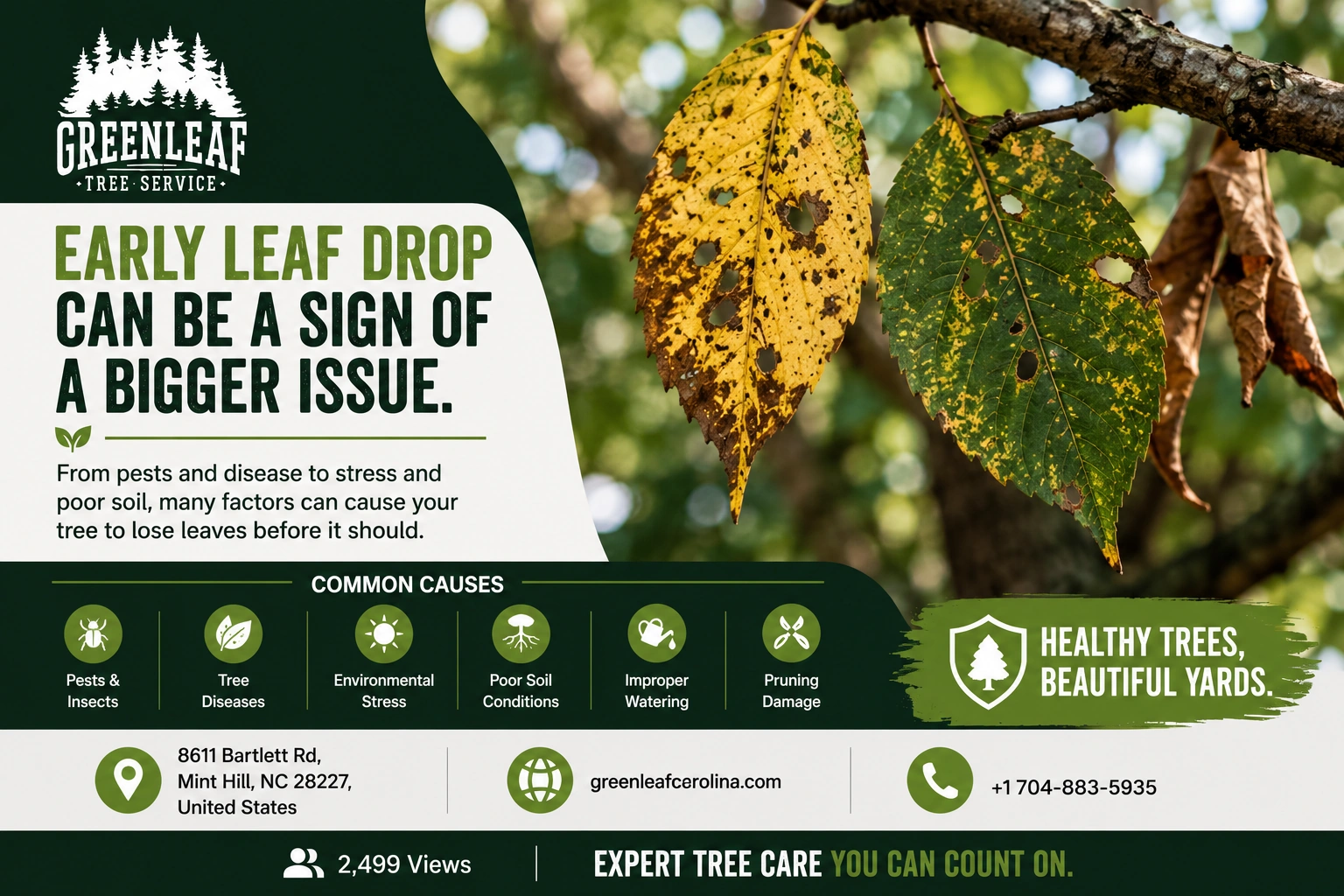
How Drought, Disease, Pests, and Root Problems Affect Trees
Drought is one of the most common reasons trees lose leaves early. When water is limited, a tree may drop leaves to reduce moisture loss. Leaves may turn yellow or brown, curl at the edges, or appear scorched before falling.
Young trees, newly planted trees, and trees growing in compacted or shallow soil are often more vulnerable to drought stress. Trees near pavement, driveways, buildings, or exposed areas may also dry out faster during hot weather.
Too much water can cause problems too. Poor drainage and saturated soil can reduce oxygen around the roots. When roots cannot function properly, the canopy may thin, leaves may yellow, and the tree may drop foliage early.
Disease can also lead to premature leaf drop. Fungal leaf spots, blights, anthracnose, rust, and other diseases may cause spots, blotches, curling, browning, or early shedding. Some diseases are mostly cosmetic in mild cases, while others can weaken a tree if they happen repeatedly or affect an already stressed tree.
Pests may damage leaves, branches, or the tree’s vascular system. Insects can chew leaves, suck sap, bore into wood, or spread disease. Signs may include holes in leaves, sticky residue, webbing, sawdust-like material, bark damage, or thinning canopy.
Root problems are another major concern. Construction, trenching, soil compaction, grade changes, and root cutting can reduce the tree’s ability to take up water and nutrients. Leaf loss may appear weeks or months after the damage occurs.

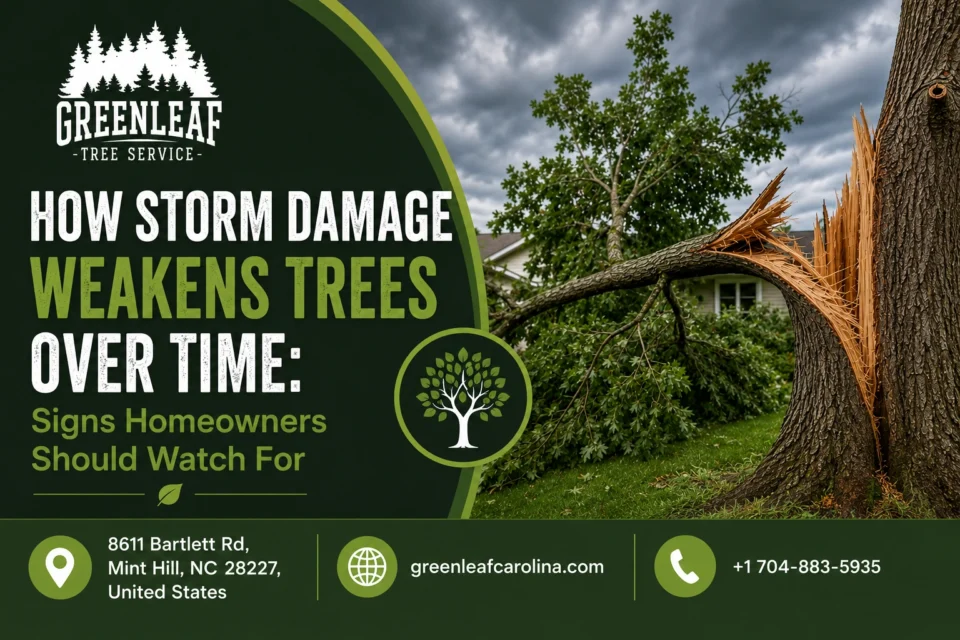
How Storm Damage Weakens Trees Over Time: Signs Homeowners Should Watch For
After a major storm passes, many homeowners check for obvious problems like fallen branches, damaged fences, or debris across the…
When to Call an Arborist About Early Leaf Drop
You should call an arborist or professional tree care provider when early leaf loss is severe, sudden, recurring, or paired with other signs of stress. Some leaf drop can be monitored, but certain symptoms deserve professional attention.
Schedule an evaluation if:
- The tree loses leaves much earlier than usual
- More than one-third of the canopy appears thin or bare
- Leaf loss happens repeatedly each year
- Leaves are spotted, curled, scorched, or discolored
- Branches are dying back
- The tree has cracks, cavities, or peeling bark
- Fungal growth appears on the trunk, roots, or branches
- You notice insect damage or boring holes
- The tree is near your home, driveway, fence, or walkway
- Recent construction disturbed the root zone
- The tree looks noticeably worse than others nearby
An arborist or professional tree care provider can help determine whether the tree is reacting to temporary stress or showing signs of decline. Early evaluation may also provide more options. In some cases, watering adjustments, pruning, soil care, pest management, or disease treatment may help improve tree health.
What an Arborist Evaluates During a Tree Inspection
An arborist or professional tree care provider will look at the whole tree and its growing environment. Early leaf loss is a symptom, not a diagnosis by itself. To understand the cause, the inspection usually considers the leaves, branches, trunk, roots, soil, and recent site conditions.
A tree inspection may include:
- Leaf color, spotting, curling, and scorch patterns
- Timing and severity of leaf drop
- Canopy density and branch dieback
- Tree species and normal seasonal behavior
- Signs of disease or fungal infection
- Insect activity or pest damage
- Bark condition, cracks, cankers, or cavities
- Root flare visibility and root zone condition
- Soil moisture, compaction, and drainage
- Mulch depth and placement
- Recent construction, trenching, or grade changes
- Nearby stress factors such as pavement, heat, or runoff
The goal is to identify the most likely cause and recommend a practical next step. That may include monitoring, pruning deadwood, improving watering habits, correcting soil or mulch issues, treating pests or disease, or evaluating structural concerns if the tree appears unstable.
Early Leaf Loss in York County, SC: How Green Leaf Tree Service Can Help
Green Leaf Tree Service helps homeowners understand what early leaf loss may mean for their trees. If your tree is losing leaves early, dropping foliage suddenly, or showing signs of stress such as thinning, discoloration, dead branches, or bark changes, our team can provide a professional evaluation.
For homeowners in York County, SC and nearby areas, we can inspect the tree, look for visible health concerns, and explain whether the issue appears seasonal, environmental, pest-related, disease-related, or structural. Our tree healthcare services can help identify potential causes and guide the next step.
Early leaf loss does not always mean a tree is dying, but it is worth checking when symptoms are unusual or recurring. A professional evaluation can help protect your tree, your landscape, and your property.
FAQs
Why is my tree losing leaves early?
A tree may lose leaves early because of drought, heat, too much water, disease, pests, root damage, nutrient issues, or weather stress. Some trees also shed leaves early as a natural response to difficult growing conditions.
Is early leaf drop a sign my tree is dying?
Not always. A tree may recover from temporary stress, especially if the cause is weather-related. However, severe, sudden, or repeated early leaf loss can be a sign of a deeper health problem.
Why are my tree’s leaves turning yellow and falling off?
Yellow leaves may point to drought stress, overwatering, poor drainage, nutrient issues, root problems, or disease. The pattern of yellowing can help determine the likely cause.
Can drought cause trees to drop leaves early?
Yes. During dry or hot periods, trees may shed leaves to conserve moisture. This is especially common in young trees, stressed trees, and trees growing in compacted or shallow soil.
What does disease-related leaf loss look like?
Disease-related leaf loss may include spots, blotches, curling, browning, wilting, or early shedding. Some fungal diseases affect leaves first, while others may also cause branch dieback or bark changes.
Should I water a tree that is losing leaves early?
Water may help if drought stress is the cause, but overwatering can make root problems worse. Check the soil moisture first. If the soil is dry several inches down, deep watering may help. If the soil is soggy, drainage or root stress may be the issue.
When should I worry about early leaf loss?
You should be concerned if the tree loses many leaves suddenly, has dead branches, shows bark damage, has fungal growth, drops leaves every year earlier than expected, or looks much thinner than nearby trees.
Who should inspect a tree losing leaves early?
A professional tree care provider or arborist can inspect the tree, identify likely causes, and recommend practical next steps for improving tree health or reducing risk.
Tree Losing Leaves Too Soon?
Early leaf loss could signal disease, pests, or stress. Schedule a professional tree inspection before the damage spreads.