
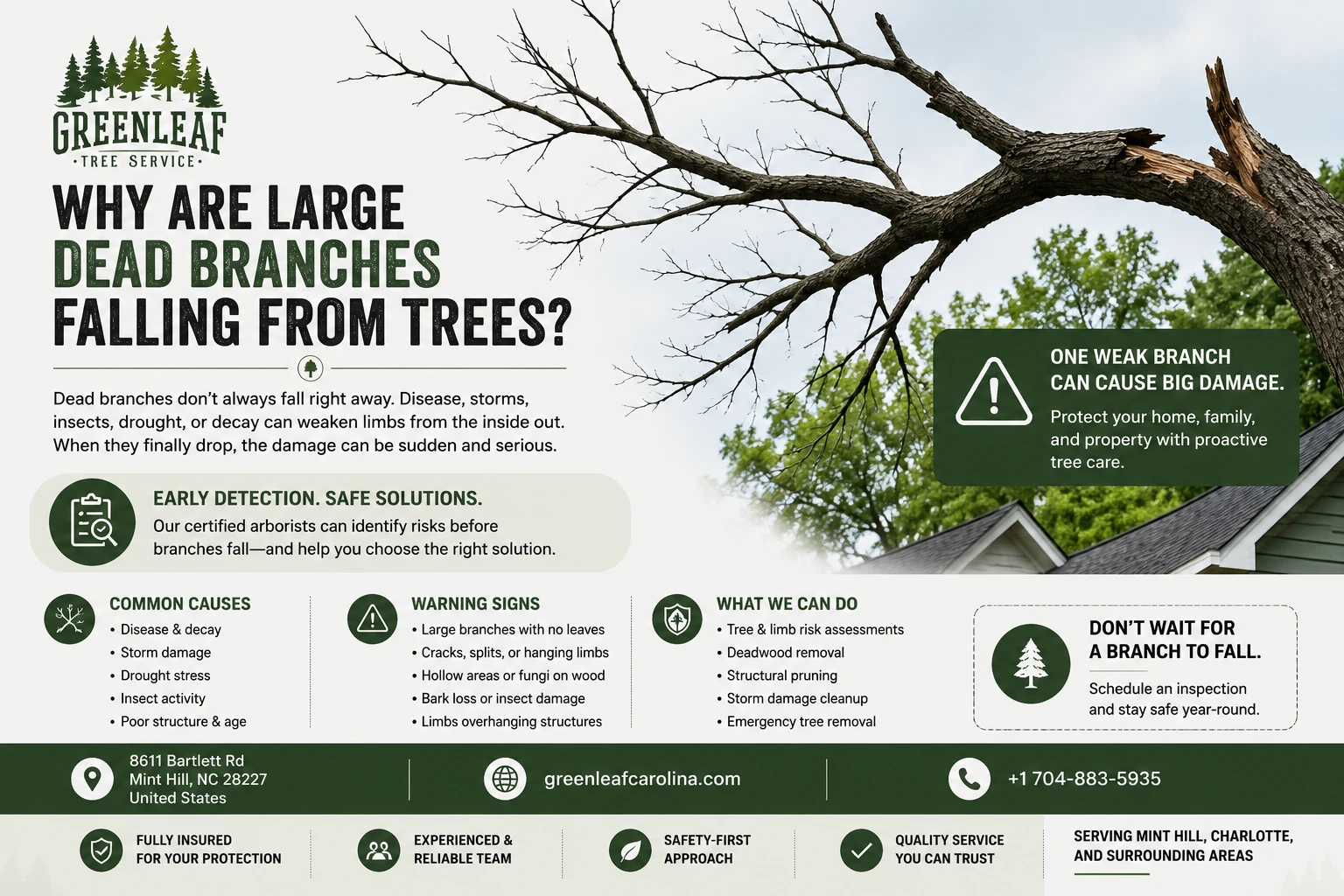
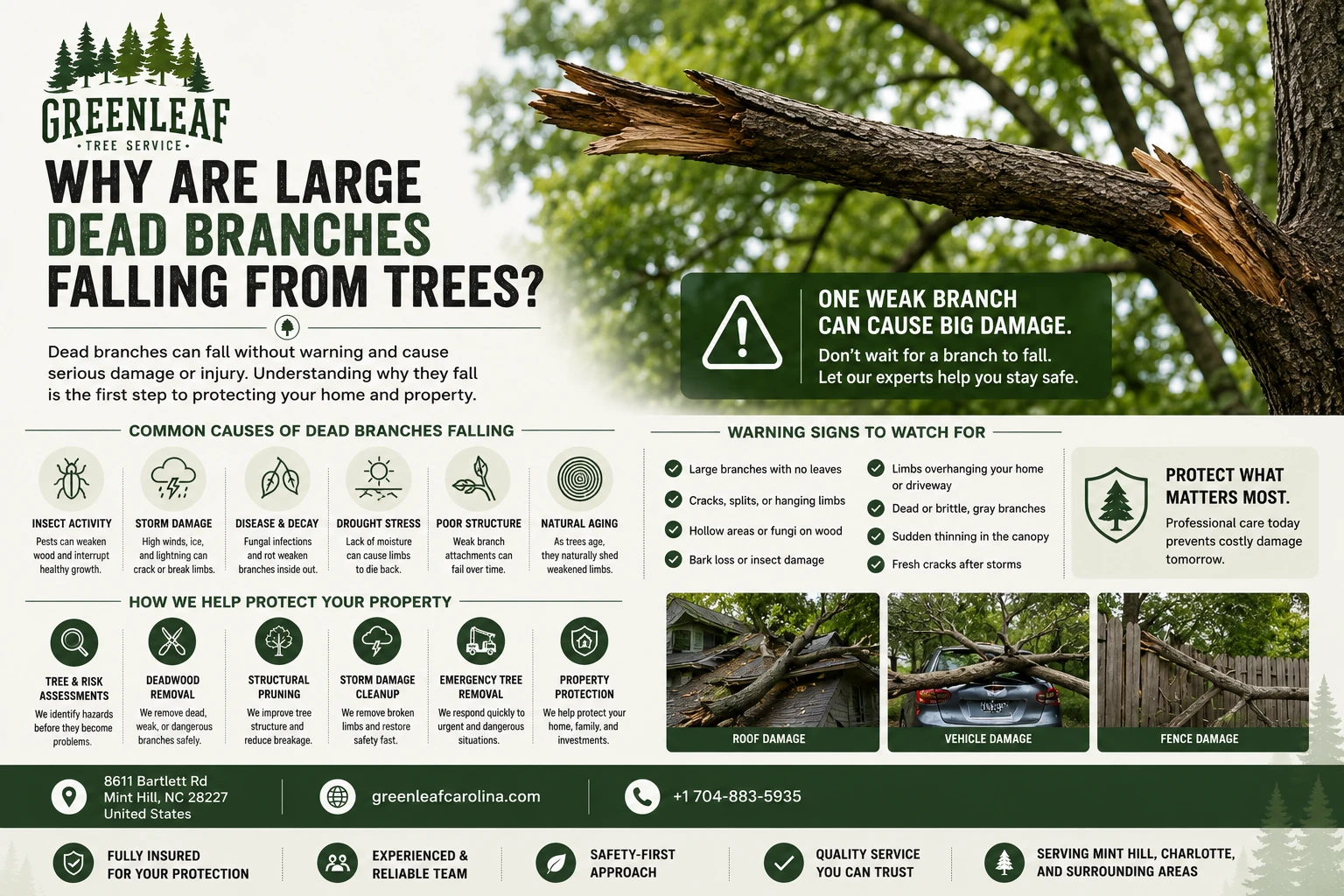
Large dead branches can fall because of disease, storm damage, drought stress, insects, decay, poor structure, or age. A tree may look strong from the ground while one or more limbs are already weak, brittle, cracked, or dying inside the canopy.
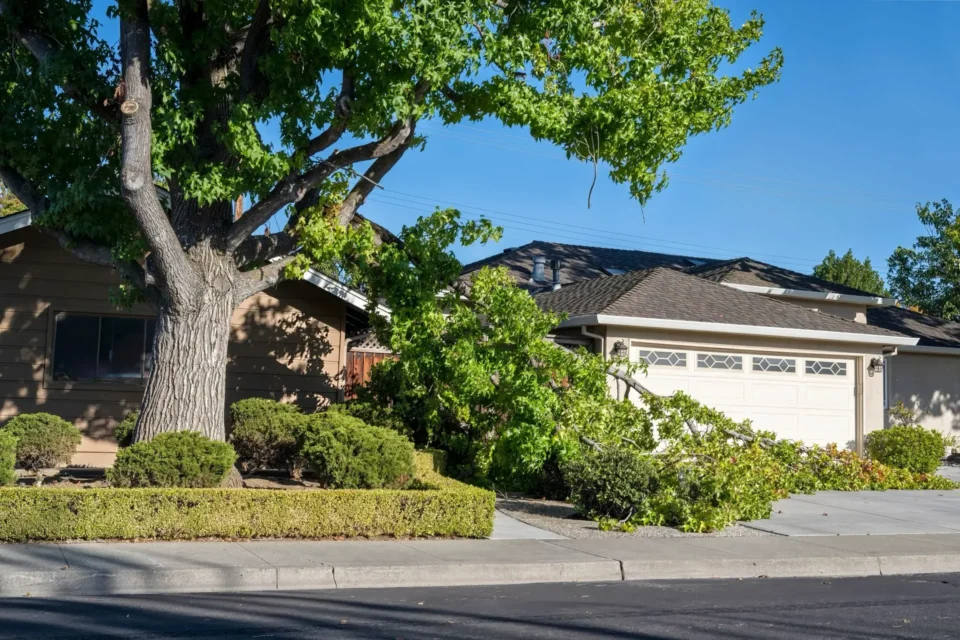
When large branches fall, they can damage roofs, vehicles, fences, sheds, driveways, landscaping, and outdoor living areas. In more serious cases, falling limbs can create safety risks for people and pets.
For homeowners in Rock Hill, SC, the goal is not to panic every time a twig or small branch drops. Trees naturally shed small material over time. However, if large dead branches are falling, hanging, or appearing in the canopy, it is time to schedule a professional tree evaluation.
Large Dead Branches Falling From Your Trees?
Get safe, professional tree inspection and branch removal today. Call now before the next limb comes down.
Common Causes of Dead Branches Falling
Dead branches fall when the wood can no longer support its own weight or withstand wind, rain, decay, or movement within the tree. A branch may die slowly over months or years, then drop suddenly during a storm, after heavy rain, or even on a calm day.
Common causes include:
- Natural aging: Older trees may lose limbs as part of their natural life cycle.
- Disease: Fungal infections, cankers, and decay can weaken branches from the inside.
- Insect activity: Borers, beetles, and other pests can damage wood and interrupt nutrient flow.
- Drought stress: Lack of moisture can cause certain limbs to decline or die back.
- Storm damage: Wind, lightning, ice, and heavy rain can crack or partially break branches.
- Poor structure: Branches with weak attachments may fail as they grow larger.
- Root problems: Damaged or stressed roots can reduce the tree’s ability to support healthy growth.
- Previous improper cuts: Poor pruning can leave wounds that invite decay or weak regrowth.
A dead branch does not always fall immediately. It may remain attached for a while, especially if it is caught in the canopy or partially supported by surrounding limbs. This can make it harder for homeowners to judge the level of risk from the ground.
Are Falling Tree Limbs Dangerous?
Yes, falling limbs can be dangerous, especially when they are large, heavy, or located above areas people use often. A branch does not have to be the size of a full tree to cause serious damage. Even one dead limb can damage a roof, dent a vehicle, break a fence, damage outdoor furniture, or injure someone walking underneath.
The danger increases when dead branches hang over:
- Driveways
- Sidewalks
- Rooflines
- Decks and patios
- Play areas
- Parking areas
- Utility lines
- Fences
- Outdoor seating spaces
- Neighboring property
Falling limbs are also unpredictable. A branch may look stable one day and fall after a gust of wind, heavy rainfall, or a shift in weight. Dead wood becomes brittle over time, and once decay begins, the branch may lose strength faster than it appears.
Homeowners should be especially cautious after storms. If a limb is cracked, hanging, split, or resting on another branch, it should not be pulled down by hand. This kind of work can be dangerous without the right equipment and experience.
In more urgent cases, emergency tree removal may be needed if a tree or large limb is threatening a home, vehicle, utility area, driveway, or access point.
Warning Signs a Tree May Drop Large Branches
Homeowners can often spot early warning signs before a large branch falls. You do not need to climb the tree or inspect it closely. A careful visual check from the ground can reveal many common concerns.
Look for these signs:
- Large branches with no leaves during the growing season
- Dead limbs mixed into an otherwise healthy canopy
- Cracked or split branches
- Hanging or broken limbs caught in the tree
- Bark missing from large branches
- Hollow areas or cavities in limbs
- Fungal growth on branches or the trunk
- Branches that look dry, brittle, or gray
- Peeling bark around branch unions
- Limbs rubbing against each other
- Branches extending over the roof, driveway, or walkway
- Fresh cracks after storms
- Sawdust-like material or small holes from insects
- Sudden thinning in one section of the canopy
One of the easiest clues is leaf growth. During the growing season, a large branch with no leaves while the rest of the tree is full may be dead or declining. However, some trees leaf out unevenly, so it is best not to assume without an inspection.
Also pay attention to what is happening under the tree. If you keep finding large fallen limbs, bark pieces, or dead branches on the ground, the tree may be shedding weakened wood. That does not automatically mean the entire tree is unsafe, but it does mean the tree deserves a closer look.
How Storm Damage, Disease, and Drought Weaken Branches
Storms can cause immediate and hidden damage. A branch may snap completely during high winds, or it may crack just enough to weaken its attachment. Sometimes, the damage is not visible from the ground until the branch starts to droop, split, or die back weeks later.
Wind can twist limbs and put pressure on weak branch unions. Heavy rain can add weight to the canopy. Lightning can damage internal wood. Ice or saturated conditions can make already weak limbs more likely to fail. Even if the tree stays standing after a storm, individual branches may still be compromised.
Disease can weaken branches more slowly. Fungal decay may begin inside a limb before the outside shows obvious symptoms. Cankers can interrupt the movement of water and nutrients. Bark loss can expose wood to insects and decay. Over time, the branch may become hollow, brittle, or poorly attached.

What Happens After Emergency Tree Cutting
When a tree comes down unexpectedly, it’s rarely a calm situation. Maybe it was a late-night storm. Maybe high winds…
Drought stress can also play a role. When a tree does not get enough water, it may sacrifice certain branches to conserve resources. This can lead to deadwood in the canopy, especially in older or already stressed trees.
Insect activity may make the problem worse. Some pests tunnel into wood or feed beneath the bark, weakening the branch structure. Others take advantage of trees that are already stressed by drought, disease, soil compaction, or root damage.
When to Call a Tree Company About Falling Branches
You should call a tree company when large dead branches are visible, when branches are falling repeatedly, or when a limb is located above an area where people, vehicles, or structures could be hit.
It is especially smart to schedule an evaluation when:
- A large branch has already fallen
- A branch is cracked, split, or hanging
- Dead limbs are located over your home, driveway, or walkway
- The tree has visible decay, hollow sections, or fungus
- The canopy has large bare areas during the growing season
- You notice signs of insect activity
- A storm recently damaged the tree
- The tree leans more than it used to
- Branches are touching or scraping the roof
- You are unsure whether a limb is dead or dormant
If dead limbs are high in the canopy, hanging over a structure, or difficult to reach safely, professional tree trimming is the safest next step.
Preventive trimming is often safer and less stressful than waiting for a limb to fall. Removing dead or weakened branches can reduce hazards and improve the tree’s overall structure when done correctly. However, trimming should be handled carefully. Removing the wrong branch, cutting too much at once, or making improper cuts can stress the tree and create future problems.
A professional tree crew can determine whether the concern is limited to one branch, several limbs, or the overall condition of the tree.
What a Tree Service Crew May Remove
A tree service crew may remove dead, cracked, hanging, diseased, storm-damaged, or structurally weak branches that pose a concern. The exact work depends on the tree’s condition, the location of the limbs, and the risk to nearby property.
During trimming, a crew may address:
- Dead branches in the canopy
- Broken limbs from storm damage
- Hanging branches caught in other limbs
- Branches rubbing against each other
- Limbs growing too close to the roof
- Weakly attached branches
- Diseased or decaying limbs
- Branches blocking access areas
- Hazardous limbs over driveways or walkways
The goal is not to strip the tree or remove branches without purpose. Good trimming focuses on safety, tree health, structure, and clearance. In many cases, only selected limbs need to be removed.
If the tree is severely damaged, unstable, heavily decayed, or no longer safe to preserve, the crew may recommend removal as a separate option. That recommendation should be based on condition and risk, not simply the presence of a few dead branches.
Falling Branches in Rock Hill, SC: How Green Leaf Tree Service Can Help
At Green Leaf Tree Service, we help homeowners identify tree hazards before they turn into bigger problems. If you are seeing dead branches falling from trees, large limbs with no leaves, cracked branches, or storm-damaged limbs, it may be time for a professional evaluation.
Our team can inspect the tree, identify visible hazards, and recommend the right next step. In many cases, selective tree trimming can remove unsafe deadwood while helping the tree maintain a healthier structure. If a limb or tree creates an urgent safety concern, we can also help with emergency tree removal when needed.
For homeowners in Rock Hill, SC and nearby communities, early action can help protect your home, yard, vehicles, and family from preventable limb failures.
If you are unsure whether a branch is dead, damaged, or dangerous, it is always better to have it checked than to wait for it to fall.
FAQs
Why are dead branches falling from my tree?
Dead branches may fall because of disease, drought stress, insects, storm damage, decay, aging, or weak branch structure. Sometimes only one limb is affected, but repeated falling branches may point to a larger tree health issue.
Are dead branches a sign that the whole tree is dying?
Not always. A tree can have a few dead branches and still be healthy overall. However, large areas of deadwood, thinning canopy, fungal growth, bark loss, or repeated limb failure may indicate a more serious problem.
Can I remove dead branches myself?
Small branches that are easy to reach from the ground may be manageable for some homeowners. Large limbs, hanging branches, branches near utility lines, or limbs over structures should be handled by professionals for safety.
What does a dead branch look like?
A dead branch may have no leaves during the growing season, missing bark, brittle wood, cracks, fungal growth, or a gray, dry appearance. It may also snap easily or appear hollow.
Why do branches fall after storms?
Storms can crack, twist, or weaken branches. Some limbs fall immediately, while others remain hanging or partially attached before falling later. After strong winds or heavy rain, it is a good idea to check trees from the ground for broken or suspended limbs.
Is tree trimming enough to stop branches from falling?
Tree trimming can reduce the risk by removing dead, damaged, or weak limbs. However, if the entire tree is unstable, diseased, or structurally compromised, additional action may be needed.
When is falling branch damage an emergency?
It may be an emergency if a large branch is hanging over a home, vehicle, driveway, utility line, or area people use often. It is also urgent if a limb has already fallen and damaged a structure or blocked access.
Don’t Ignore Dead Branches Overhead
Schedule fast tree care service and remove dangerous limbs before they cause costly damage.